
You can bury your dog in your backyard in many states, but laws vary substantially by location. Some states like Georgia and Illinois permit home burial if you follow specific guidelines—typically a 3-foot depth with 2 feet of soil coverage, positioned away from water sources and property lines. However, HOA rules, city ordinances, and local health codes may prohibit it entirely. Your best move? Contact your county health department to confirm what’s allowed in your area before making plans.
Can You Bury Your Dog in Your Backyard?
Whether you can bury your dog in your backyard depends on where you live. Your local laws determine what’s permissible. Some states allow backyard burial under specific conditions, while others prohibit it entirely. You’ll want to check your local ordinances before making plans.
Georgia permits backyard burial if you follow their guidelines to prevent health hazards. Illinois allows at-home pet disposal through the Dead Animal Disposal Act. However, your HOA or neighborhood restrictions might override state permissions.
If backyard burial isn’t an option, you’ve got alternatives. Pet cemetery services provide dignified resting places. Individual cremation offers another respectful choice. Many veterinary clinics arrange disposal options tailored to your needs and preferences.
Research your specific location first. Understanding your local laws ensures you’re honoring your beloved companion properly.
How to Research Your State’s Pet Burial Laws
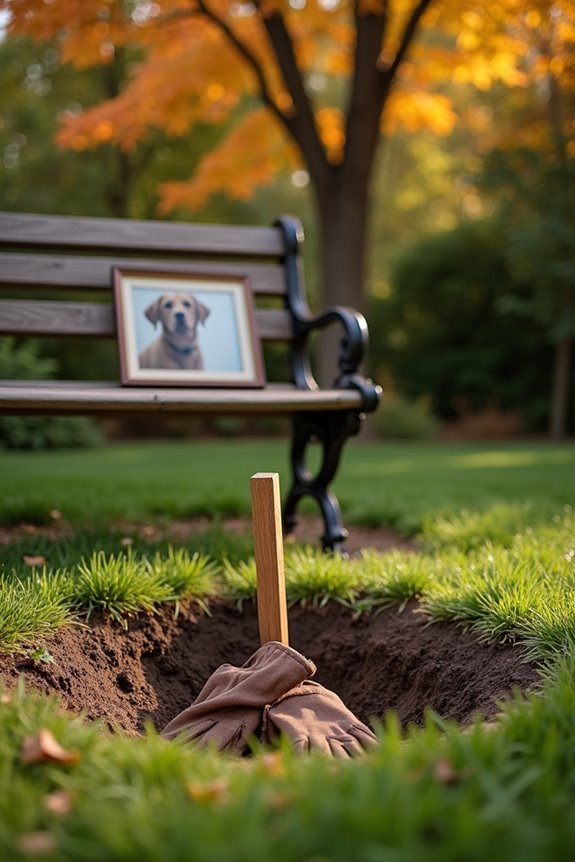
Where do you start when you’re trying to figure out if backyard burial is legal for your dog? Contact your local animal control office or county health department first. They’ll explain your state laws and any specific pet disposal regulations you must follow.
Search your state’s official government website for dead animal disposal act details. Look for burial depth requirements, distance from water sources, and restrictions near property lines.
Check Georgia’s pet burial guidance or Illinois’s disposal act requirements if you live there. Illinois demands burial at least 200 feet from neighbors’ homes and streams, with six inches of soil coverage minimum.
Don’t skip this research. Your diligence protects your community and honors your dog’s memory properly.
Timing: When to Bury Your Pet After Death
Once you’ve confirmed that backyard burial is legal in your area, you’ll need to act quickly. Most states require burial within 24 to 48 hours after death, though local regulations may differ. This timing window exists for important health and safety reasons.
You’ll want to dig a deep grave—at least 2 to 3 feet down—to protect your pet and prevent scavengers from disturbing the site. If you can’t meet these burial timing requirements, cremation alternative options are worth considering. Cremation works especially well if your pet had a contagious disease, as it minimizes environmental risks before any backyard burial occurs.
Check your specific local regulations early. This preparation ensures you’re ready when you need it most.
How Deep Should Your Dog’s Grave Be?
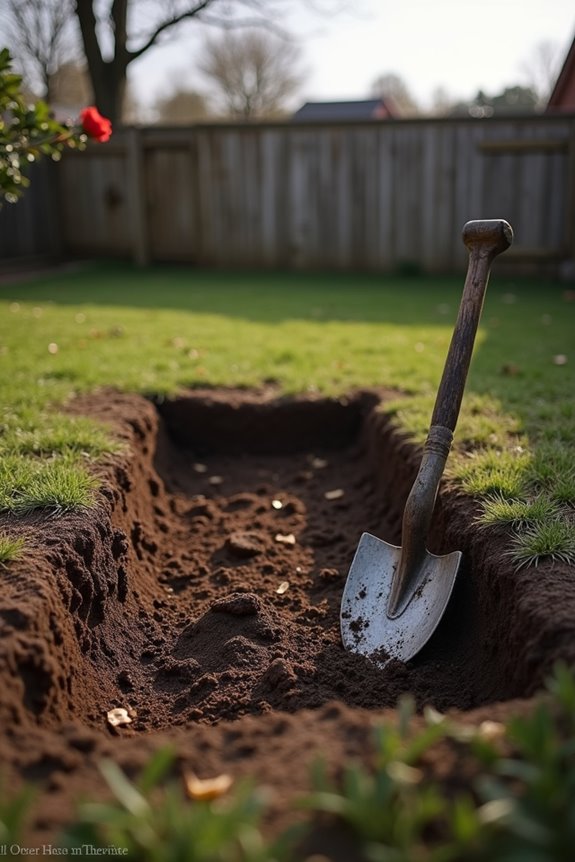
You’ll need to dig deeper than you might think—most states require a minimum of 2 to 4 feet of soil above your dog’s remains, with some jurisdictions like Georgia specifying at least 3 feet total depth. The exact requirement depends on your location and local regulations, so you’ll want to check with your city or county before you start digging. Getting the depth right protects groundwater, deters scavengers, and keeps you on the right side of the law.
Minimum Depth Requirements
Getting the depth right matters—a lot. You’ll want to dig deep enough that scavengers can’t disturb your pet’s remains. Most states recommend a minimum burial depth of two to three feet, though some require even more.
Georgia suggests three to four feet total. Illinois asks for at least six inches of compacted soil above the burial site. Washington and Texas typically require two to three feet, depending on local regulations.
Deeper soil depth protects your pet and prevents groundwater contamination near water sources. Consider using biodegradable containers and protective covers like wire grating before adding final soil. These layers create a secure resting place.
Check your local regulations first—requirements vary by location. You’re creating a respectful memorial that honors your companion.
Soil Coverage Standards
The right amount of soil on top of your dog’s grave matters just as much as the depth below. Proper soil coverage protects your pet and the environment while preventing unwanted disturbances. Here’s what you need to know about soil depth:
- Use at least six inches of compacted soil above the burial site
- Georgia recommends two feet of dirt on top for environmental safety
- Add extra layers if you’re near water sources or utilities
- Choose biodegradable containers to reduce toxicity and percolation risk
Your backyard burial depth guidelines should include sufficient soil coverage standards. These soil coverage practices minimize contamination and protect groundwater. By following proper burial depth guidelines, you’re ensuring environmental safety and showing respect for your companion’s final resting place.
Maximum Depth Limitations
How deep’s deep enough when you’re digging your dog’s final resting place?
You’ll want to aim for a burial depth between 2 and 4 feet, though most jurisdictions recommend hitting that 3-foot mark. Georgia specifies a minimum of 3 feet with at least 2 feet of dirt on top, but your grave shouldn’t exceed 8 feet total. Illinois keeps things tighter, requiring 6 inches of compacted soil above the site with locality-specific depth limits.
These depth limits exist for solid reasons. They create safety thresholds that protect groundwater and deter scavengers from disturbing your pet’s final resting spot. Check your local regulations first—they’ll guide your specific requirements. When contagious disease concerns arise, skip backyard burial entirely and choose cremation instead to avoid health risks.
Prohibited Burial Areas and Distance Rules
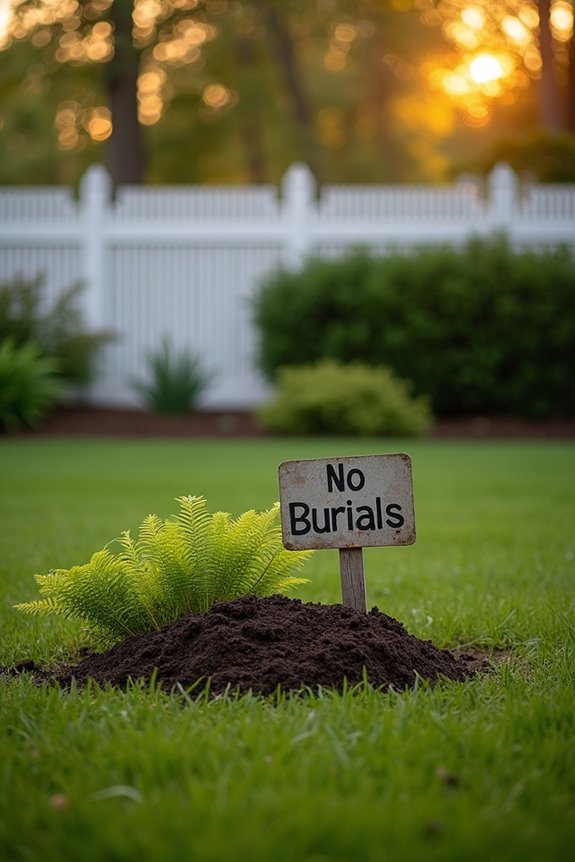
You’ll need to keep your dog’s grave at least 200 feet away from your neighbors’ homes, streams, private wells, and other water sources—distances that create a real buffer zone on most properties. Your burial site must also respect property lines and stay entirely on land you own, since burying on public property or your neighbor’s land is illegal and can result in fines. Before you dig, check whether your city or homeowners association prohibits backyard burials altogether, because some municipalities like Seattle and Columbus require cremation or licensed disposal services instead.
Water Source Proximity Requirements
Where you dig matters just as much as how deep you dig. You’ll want to keep your backyard burial far from water sources because groundwater contamination poses real environmental safety risks. Local ordinances spell out exact distance requirements that vary by state.
Here’s what you need to know about proximity to water:
- Illinois demands at least 200 feet from streams, private wells, and potable water sources
- Washington requires safeguarded distances from all water bodies to protect groundwater
- New Jersey mandates burial away from water sources entirely
- Missouri specifies minimum distances from water sources alongside burial depth standards
Your burial depth matters too. Washington requires three feet minimum, while Missouri allows six inches. Check your local ordinances first—they’re stricter than you’d think, especially near community wells and ponds.
Neighborhood Property Line Boundaries
Distance from your neighbor’s property isn’t just a courtesy—it’s often a legal requirement. You’ll need to maintain substantial burial distance from property lines, typically at least 200 feet away from neighboring homes. This separation protects you from nuisance boundary disputes and potential legal conflicts.
Your local zoning ordinances likely specify exact requirements for your area. Check municipal rules before selecting your burial site on private property. Even if your backyard seems spacious, neighbors can challenge placements that feel too close. Some jurisdictions require even greater distances depending on density and community standards.
Understanding these regulations prevents costly conflicts. You’re not just following rules—you’re being a considerate neighbor while respecting your own property rights.
Public Land and Property Restrictions
While your backyard might seem like the obvious choice, not all land is actually yours to use for burial. Understanding where you can’t bury your dog keeps you legally compliant and part of a responsible pet-owning community.
You’ll encounter several restrictions when planning backyard burial:
- Public parks and government property strictly prohibit pet burial of any kind
- Municipal land requires explicit permits before any burial activity
- Distance from water sources (typically 100+ feet from wells and streams) protects groundwater
- Local ordinances may impose stricter rules than state health regulations allow
Your county or city likely has specific distance requirements and zoning laws governing private property burials. Check with your local health department about permits and regulations in your area. These rules exist to protect everyone’s health and environment. Respecting these boundaries demonstrates your commitment to responsible pet care and community standards.
Choosing a Biodegradable Burial Container for Your Dog
Selecting the right container for your dog’s burial is one of the most important decisions you’ll make during this difficult time. You’re not just choosing a final resting place; you’re honoring your pet while protecting the environment.
A biodegradable container is your best option for home burial. Wooden caskets and eco-friendly pods break down naturally, reducing soil contamination and supporting environmental safeguards. Wrap your dog in soft cotton or a beloved blanket instead of plastic—these materials decompose safely underground.
When buried at home, your container needs strength to maintain grave integrity while remaining earth-friendly. Check local pet burial laws first; some jurisdictions actually require biodegradable materials. Your thoughtful choice reflects your commitment to responsible pet burial practices that benefit both your dog and the earth.
Preparing Your Dog’s Burial Site
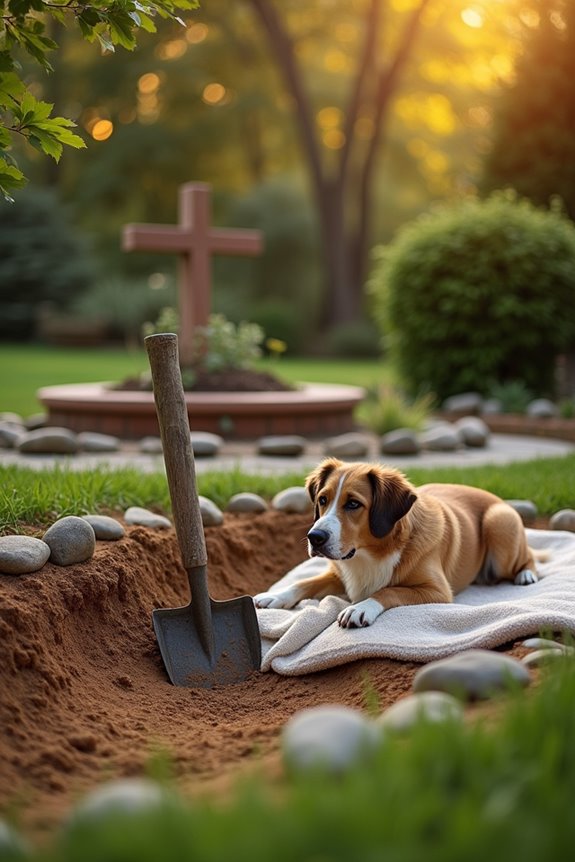
You’ll need to select a location that’s away from water sources, utilities, and garden areas while ensuring it’s inaccessible to other animals. Your burial site must be at least three feet deep with two feet of soil coverage on top, meeting Georgia’s state guidelines for safe and responsible pet burial. Getting these fundamentals right—the right spot and proper depth—protects both your property and the environment around it.
Choosing The Right Location
Where should you actually dig? You’ll want to pick a spot that keeps your beloved pet safe and protects your family’s health. Here’s what matters most:
- Select an area at least 100 feet away from any water sources, wells, or streams
- Avoid digging near underground utilities, septic systems, or property lines
- Choose a location where other animals can’t easily discover or disturb the site
- Check local regulations before finalizing your backyard burial plans
The ideal spot combines privacy with practicality. You’ll need at least 3 feet of burial depth with 2 feet of soil covering the biodegradable container. This distance deters scavengers and reduces health hazards markedly. Consider future yard work too—pick somewhere you won’t accidentally unearth the site later. Taking time now prevents regret and complications.
Meeting Depth And Material Standards
How deep does your dog’s burial actually need to be? In Georgia, you’ll need to dig at least three feet down, then cover it with two feet of soil on top. Your total backyard burial shouldn’t exceed eight feet deep.
These measurements matter. They protect environmental safety by keeping groundwater safe and deterring scavengers from disturbing the site.
Choose a biodegradable container—wood or eco-friendly pods work perfectly. Avoid plastic or non-biological materials that harm the environment.
Consider your soil depth carefully. After placing your dog in the container, add that protective two-foot soil layer. You might add extra topsoil or a protective grate for additional security.
Check local regulations first. Your area may require deeper burial depths or greater distance requirements from property lines.
What Happens if You Bury a Dog Illegally?
Burying your dog in the backyard without following local laws can trigger serious consequences—and they’re often more substantial than most pet owners realize. You’re exposing yourself to real risks that extend beyond simple fines.
Here’s what you might face:
- Fines and criminal charges from local authorities enforcing pet burial ordinances
- Environmental hazards like groundwater contamination near water sources or underground utilities
- Landowner liability if the burial harms neighbors, wildlife, or future property buyers
- Forced removal of remains to permitted facilities with remediation costs
An illegal burial doesn’t just affect you today. Local authorities can investigate environmental health violations, impose substantial penalties, and require relocation of your pet’s remains. Disclosure issues arise when selling your property too. Understanding your area’s specific regulations protects your family legally and environmentally.
Memorializing Your Dog’s Burial Spot
Creating a lasting tribute to your dog right in your own backyard transforms grief into something tangible and comforting. You can personalize the memorial in countless meaningful ways that honor your pet’s memory.
Marking and Decorating
Place a stone marker, wooden plaque, or engraved memorial at the burial site. Plant flowers, shrubs, or a small tree above the grave to create a living tribute. Add a small bench nearby where you can sit and remember your companion.
Safety Considerations
Ensure your memorial respects burial depth guidelines—typically 3 feet of soil coverage minimum. Keep the site secure from wildlife disturbance and future development by documenting its location.
Honoring Local Compliance
Check your local ordinances before installing permanent fixtures. Your respectful approach to memorializing your pet’s final resting place demonstrates care for both your pet’s remains and your community standards.
Creating a Burial Plan for Your Property
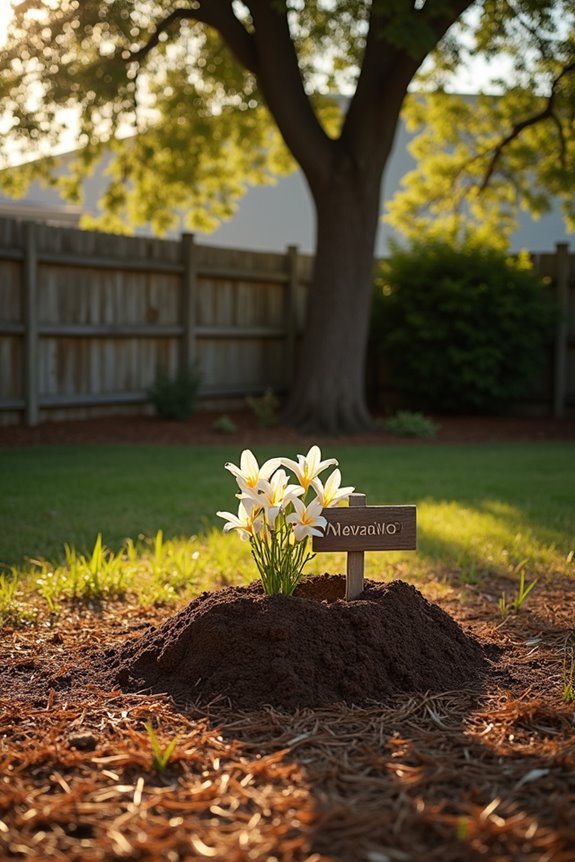
Before you decide where and when to bury your dog, you’ll want to think through the practical details that’ll make the process respectful and legally sound.
Creating a solid burial plan protects your property and honors your pet. Start by tackling these essential steps:
- Check local approvals – Contact your city or county to confirm backyard burial regulations apply to your area.
- Select the right location – Choose a spot at least 100 feet from water sources, away from scavengers and future construction.
- Prepare depth requirements – Dig at least 3 feet deep with biodegradable containers to minimize health hazards and environmental concerns.
- Plan your timing – Arrange burial within 24 to 48 hours after death to prevent decomposition issues.
These environmental considerations ensure your backyard burial remains a dignified tribute.
Cremation and Pet Cemetery Alternatives

When backyard burial isn’t the right fit for your family, you’ve got other meaningful options worth considering. Cremation offers a practical solution, especially if legal requirements restrict backyard burial in your area. You’ll receive your dog’s ashes in an urn, which you can keep at home or place in a pet cemetery.
Pet cemeteries provide dedicated, legal resting places with professional memorial services. They’re designed specifically for honoring pets, offering headstones and remembrance gatherings that bring communities together.
For environmentally conscious families, aquamation presents an eco-friendly alternative to traditional cremation. Local animal services often provide free or low-cost disposal options too.
Each choice lets you memorialize your companion meaningfully while respecting environmental health and legal requirements. Consider what feels right for your family’s values and needs.
When to Call a Professional Pet Burial Service
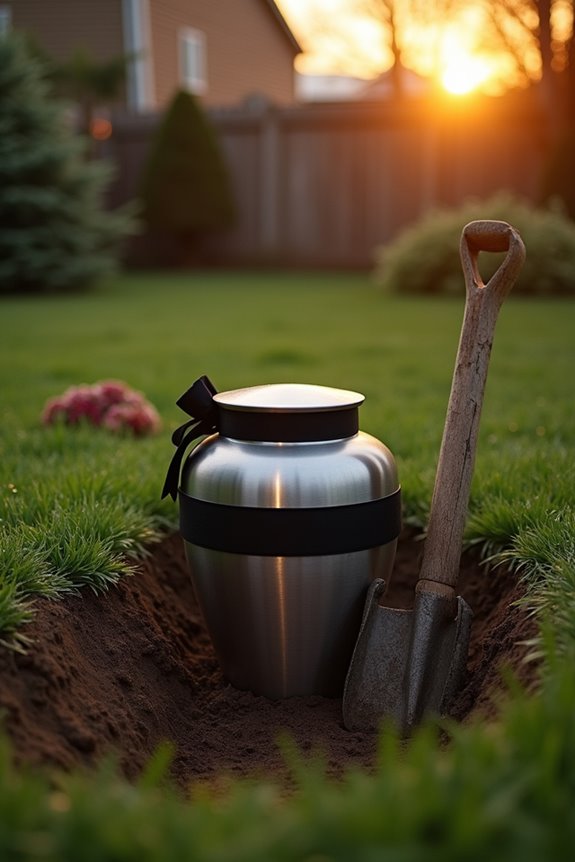
Though you might handle a backyard burial yourself, certain situations demand professional help. You’ll want expert guidance when dealing with specific circumstances that complicate DIY burial plans.
Consider reaching out to a pet burial service when you encounter these situations:
- Your dog died from a contagious disease requiring safe cremation instead of burial
- Local ordinances in your area prohibit backyard burial or impose strict legal regulations
- Your property lacks adequate space for proper backyard burial depth of 3 to 4 feet
- You’re uncertain about local laws and need professional guidance to ensure compliance
These professionals understand municipal requirements and handle everything correctly. They’ll navigate legal regulations, recommend appropriate biodegradable containers, and complete burial within the necessary 24 to 48-hour window. Calling a pet burial service takes stress off your shoulders during a difficult time.