Standard bathroom counters sit at 32 inches, but comfort height ranges from 34 to 36 inches—a small difference that drastically reduces back strain and improves posture. Your ideal height should land roughly 3 to 4 inches below your elbow. Remember that flooring adds about 1 inch and countertop thickness adds 1.5 inches to your final height. ADA guidelines cap counters at 34 inches for accessibility. The right measurements now prevent years of discomfort and keep your bathroom functional as your needs evolve.
Why Bathroom Vanity Height Matters
Have you ever noticed how some bathroom sinks feel awkward to use while others feel just right? That’s because countertop height directly affects your daily comfort and functionality. The right vanity height prevents you from hunching over or reaching too high, reducing strain on your back and shoulders during morning routines.
Standard countertops sit at 32 inches, but comfort height options reach 34 to 36 inches for better ergonomics. ADA guidelines cap countertop height at 34 inches, ensuring accessibility for everyone. You’ll discover that proper height should align roughly 3 to 4 inches below your elbow when standing naturally.
Getting this right matters because you use your bathroom sink multiple times daily. The correct countertop height transforms your space from frustrating to functional, accommodating your body’s needs while supporting long-term wellness.
What’s the Difference Between Standard and Comfort Height?
You’ll find that standard bathroom counters sit at 30 to 32 inches, while comfort height options reach 34 to 36 inches—a difference that might seem small but makes a real impact on your daily routine. The extra inches align comfort height with your kitchen counters, so you’ll bend less when washing your hands, brushing your teeth, or applying makeup. This modern shift toward taller counters reflects what many homeowners now expect: bathroom spaces that feel as functional and ergonomic as the rest of their homes.
Traditional vs. Modern Standards
When bathroom vanities first became standard fixtures in homes, designers settled on heights around 30 to 32 inches—roughly the same level as old pedestal sinks. You’d find this standard height in most bathrooms for decades.
Today, you’re seeing a shift toward comfort height vanities, which measure 34 to 36 inches. This modern approach reduces bending and back strain for average-height adults. You’ll notice many new installations now match kitchen counter heights.
However, you should know that ADA compliance creates an interesting tension. ADA guidelines cap countertop height at 34 inches maximum, which influences some design choices. So when you’re planning your bathroom, you’ll need to balance comfort height preferences against accessibility requirements and your specific needs.
Ergonomic Impact and Comfort
Why does a mere 2 to 4 inches make such a difference in how your back feels after brushing your teeth? That small elevation shift transforms your daily routine significantly.
Consider these key comfort differences:
- Reduced bending strain – Comfort height (34–36 inches) minimizes forward spine flexion during morning routines
- Better posture alignment – Your shoulders stay relaxed instead of hunching toward a standard 32-inch counter
- Decreased lower back tension – Less compensatory muscle engagement over time
- Improved accessibility – Taller users reach sinks naturally without awkward stretching
Standard counters force you to bend excessively. Comfort height aligns with ergonomic impact research showing reduced musculoskeletal stress. While ADA guidelines cap accessible heights at 34 inches, comfort height approaches this limit thoughtfully. You’ll notice the difference immediately, especially during repeated daily tasks requiring sustained posture.
What Hidden Factors Influence Your Vanity Height?
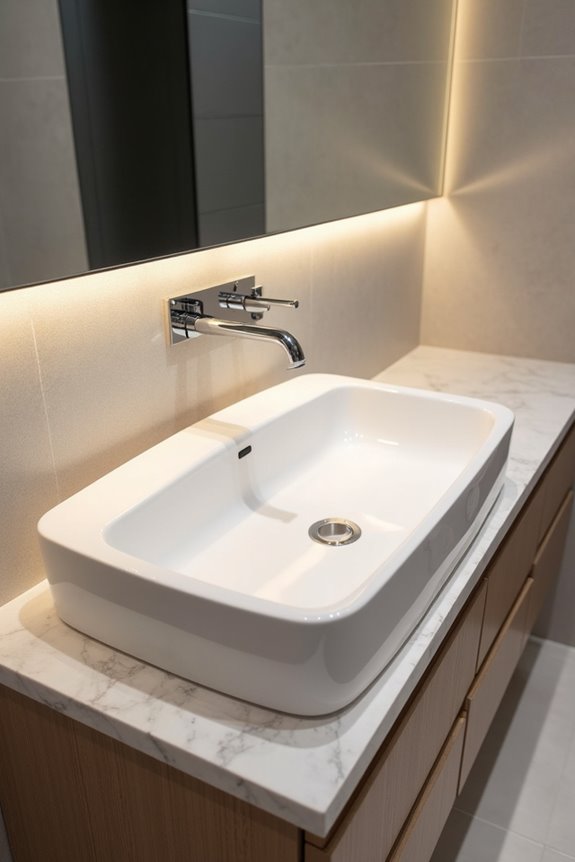
Several invisible forces shape your bathroom vanity’s final height, and they’re easy to overlook. Your flooring thickness matters more than you’d think. Tile, engineered wood, or floating floors each add roughly one inch to your overall measurement. That’s before your countertop height even enters the equation.
Your flooring thickness—whether tile, engineered wood, or floating—adds roughly one inch to your vanity’s final height measurement.
Speaking of countertops, they typically contribute 1.5 inches to your final vanity height. When you’re comparing cabinets, you’re really comparing finished heights—cabinet plus countertop combined.
The ADA Clearance Factor
Don’t forget ADA clearance requirements. You need adequate knee space underneath for accessibility. Your plumbing stub-outs and toilet alignment also shift how everything sits relative to walls. Measure across multiple floor and wall points. Floor leveling accuracy determines whether your vanity looks intentional or slightly off. Site assessment isn’t optional—it’s essential.
How Do You Measure for Your Ideal Height?
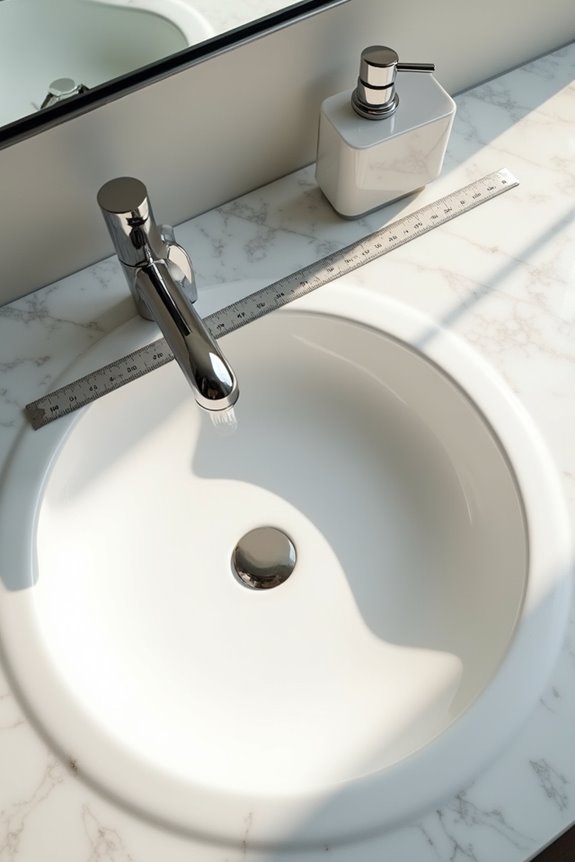
The best vanity height starts with your body, not a rulebook. You’ll want to take measurements that reflect your actual needs and daily comfort. Here’s your action plan:
- Stand relaxed with arms at your sides
- Bend your elbow to a 90-degree angle
- Note where your elbow naturally sits
- Position your vanity 3 to 4 inches below that point
This elbow height measurement beats guessing every time. Remember, countertop thickness matters—it adds 1 to 1.5 inches to your cabinet’s actual height. Most households land around 34 to 36 inches for comfort height. If you’re sharing your bathroom with someone significantly taller or shorter, consider two vanities. Your measurements ensure you’re not bending unnecessarily or reaching awkwardly daily.
What Are Your ADA and Accessibility Options?
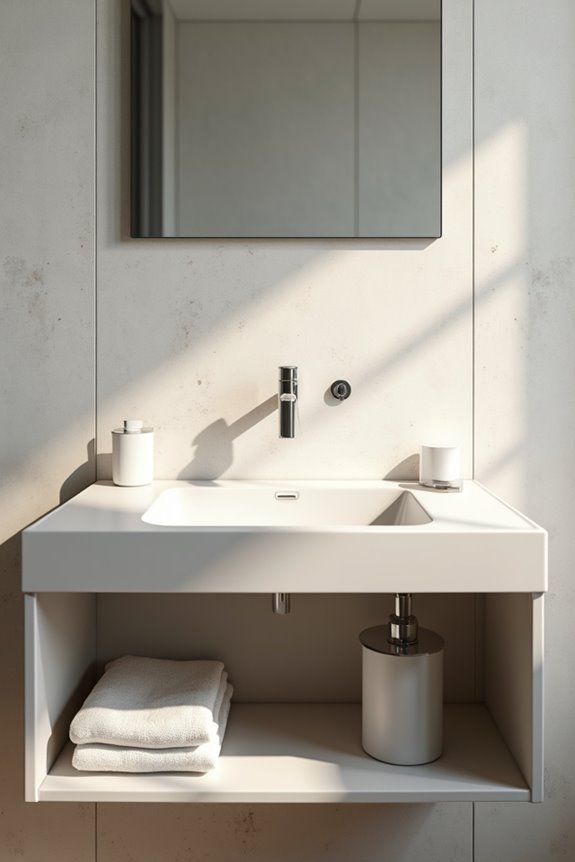
How’s your bathroom working for everyone who uses it? You’ll want to consider ADA standards, which set countertop height at 34 inches maximum. This measurement includes your countertop thickness, so factor that in when planning your cabinet base.
| Feature | Measurement | Why It Matters |
|---|---|---|
| Counter Height | 34 inches max | Wheelchair reach |
| Knee Clearance | 27 inches high | Safe seating access |
| Sink Width | 30 inches minimum | Comfortable maneuvering |
| Plumbing Depth | 19 inches minimum | Unobstructed legroom |
You’ll also want open space beneath your vanity. This creates room for wheelchairs and walkers. Insulate exposed pipes to prevent burns. These accessibility options ensure your bathroom welcomes everyone, regardless of mobility needs or abilities.
How Do Flooring and Plumbing Affect Installation?
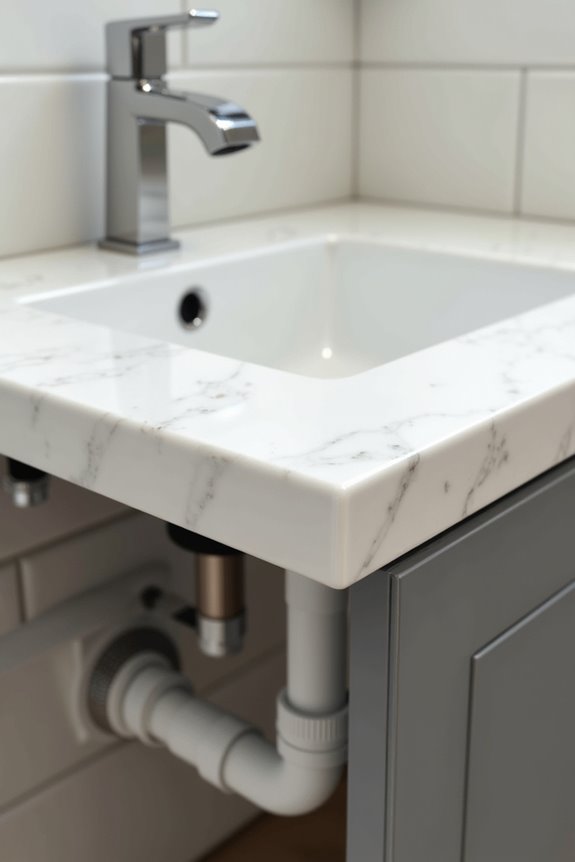
Once you’ve settled on your ideal counter height for accessibility, flooring and plumbing become your next big considerations. These two elements directly impact your final height measurement and installation success.
Your flooring choice matters more than you’d think. Here’s why:
- Finished flooring adds roughly 1 inch to vanity height, so measure from the top of your completed floor, not the subfloor
- Tile and floating floors can shift alignment with walls and drains, requiring adjustments for level mounting
- A level floor prevents slopes that compromise vanity stability and drain function
- Plumbing stub-outs may need repositioning to match your countertop height and ensure leak-free connections
Always compare finished vanity heights during replacement. Use laser leveling tools across multiple points. Check that plumbing routes align properly before finalizing your installation.
How Do You Plan for Long-Term Comfort and Mobility?
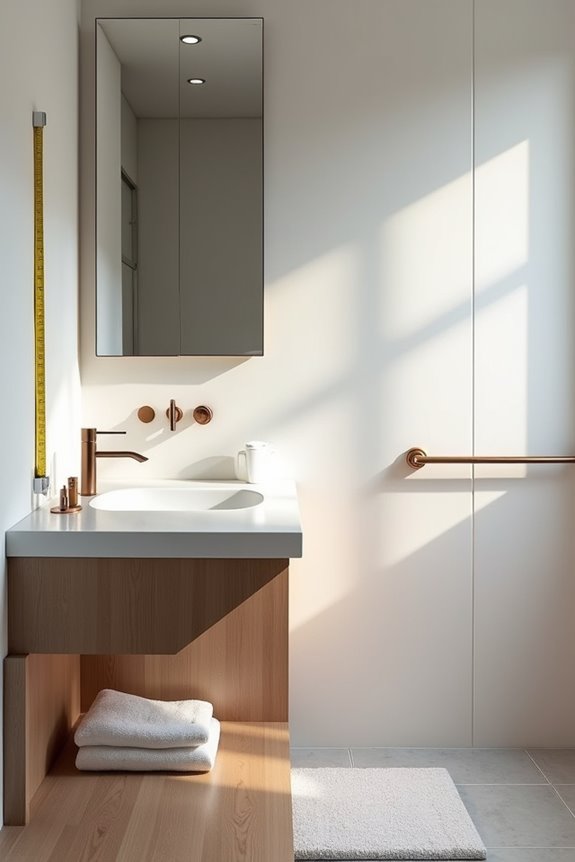
Why should you think about your bathroom needs five, ten, or twenty years from now? Your body changes. What feels perfect today might not work tomorrow.
Your body changes. What feels perfect today might not work tomorrow. Plan your bathroom for the next twenty years.
Choose a comfort height vanity between 34–36 inches. This range supports you as you age, reducing strain on your back and knees. You’re already thinking ahead by considering this standard.
Follow ADA guidelines early. Aim for a maximum countertop height of 34 inches with at least 27 inches of knee clearance underneath. These measurements create genuine accessibility for everyone.
Consider floating vanities or adjustable-height designs. They adapt as your needs shift. Add a stool or chair at standard-height vanities too.
Work with a designer. They’ll help you balance your current comfort with future accessibility, ensuring your bathroom supports you for decades.