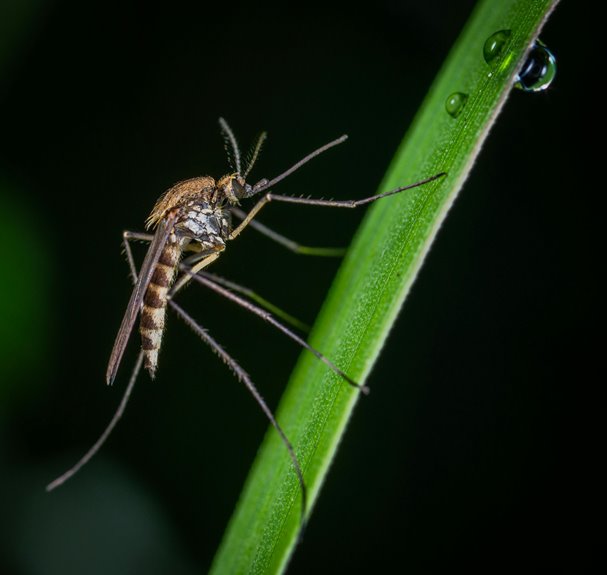
You’ve got this. Start by eliminating standing water—even a bottle-capful breeds hundreds of larvae. Empty bird baths weekly, clear gutters, and drain kiddie pools after use. Next, thin vegetation to remove daytime hiding spots and keep grass under two inches. For permanent water features, apply EPA-registered larvicide dunks. Install door and window screens, use fans to disrupt their flight, and wear light-colored clothing with DEET repellent. If neighboring mosquitoes keep returning, professional inspections reveal hidden breeding spots you’re missing.
Why Mosquitoes Infest Your Backyard

Your yard likely appeals to mosquitoes more than your neighbor’s because your surroundings probably provide exactly what they’re after: breeding grounds and shelter.
Standing water draws mosquitoes like a magnet. Even a bottle-capful of water in bird baths or plant saucers becomes a nursery for hundreds of larvae. Neglected gutters and water-holding containers multiply these breeding sites across your property.
Even a bottle-capful of water becomes a nursery for hundreds of mosquito larvae—standing water is their breeding ground.
Beyond water, you’re offering prime resting spots. Tall grass, dense vegetation, and cluttered, shaded areas create the cool, dark havens mosquitoes crave during daylight hours. Debris piles and overgrown shrubs provide perfect daytime hideouts.
Your yard’s conditions—warm, humid, and potentially rainy—fuel mosquito populations. When you combine these factors, you’ve essentially built a mosquito resort. The good news? Understanding these attractions puts you in control of eliminating them.
Stop Mosquitoes: Eliminate Standing Water First

You’ve got to identify and eliminate standing water, because mosquitoes breed in even tiny amounts—think bottle caps, plant saucers, and birdbath water. Your weekly inspection routine should target obvious culprits like buckets, tires, kiddie pools, and toys, draining or covering each one to disrupt breeding cycles. For features you can’t empty, such as decorative fountains or landscape ponds, EPA-approved larvicide dunks offer an effective control option that stops larvae before they mature.
Common Breeding Ground Sources
Where do mosquitoes lay their eggs? You’d be surprised—they’re probably already in your yard. Mosquitoes don’t need much. A bottle cap of water creates the perfect breeding ground for larvae. You’re essentially giving them a five-star nursery if you’re not careful.
| Container Type | Risk Level | Action Required |
|---|---|---|
| Bird baths | High | Empty and scrub weekly |
| Gutters | High | Clear debris regularly |
| Plant saucers | High | Dump water immediately |
| Tires | Critical | Store indoors or cover |
| Kiddie pools | Critical | Empty after each use |
Check your gutters. Look for low spots where water collects after rain. These puddles? They’re breeding grounds lasting more than three days. Don’t ignore toys, buckets, or plant pots either. Screen rain barrels tightly. Cover water storage containers completely. You’re eliminating mosquito nurseries by doing this preventative work now.
Weekly Water Inspection Routine
Now that you know where mosquitoes breed, it’s time to act. You’ll need to establish a consistent inspection schedule to stay ahead of these pests. Every week, walk your yard and check all standing water sources. Look inside bird baths, plant saucers, gutters, and tire swings. Empty or scrub each water feature thoroughly. Don’t forget containers like buckets, toys, and pool covers that trap rainwater. For water features you can’t eliminate, such as ponds or large containers, stock them with larvicides labeled for outdoor use. This prevents mosquito larvae from developing. Cover rain barrels and cisterns with mesh screening that has holes smaller than an adult mosquito. Drain kiddie pools completely. Fill tree holes and low spots where water pools for over three days. Consistency matters most here.
Larval Control Product Options
What if your birdbath or rain barrel just won’t stay empty? You’ve got options. Larvicides target mosquito babies before they become adults, giving you real control when you can’t eliminate standing water entirely.
| Product | Best For | Duration |
|---|---|---|
| Bti donuts/granules | Small containers, bird baths | 7-30 days |
| Methoprene | Rain barrels, artificial ponds | 30-60 days |
| Combination approach | Large water features | Extended coverage |
You’ll want to choose based on your specific water sources. Bti works fast and safely around pets. Methoprene lasts longer in covered areas. Always read labels carefully—timing and dosage matter.
Here’s the thing: larvicides work best alongside habitat reduction. Remove clutter, drain unnecessary water, then treat what remains. This one-two punch stops mosquitoes at their source, keeping your backyard enjoyable.
Treat Standing Water With Larvicides
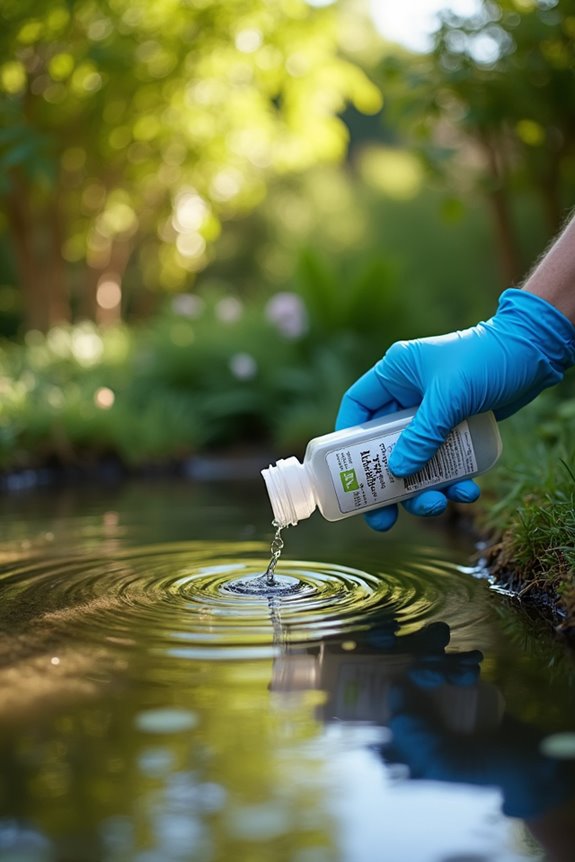
Larvicides offer a practical solution when you can’t eliminate standing water from your yard. These products target mosquito larvae before they become biting adults, giving you control where prevention falls short.
Look for Bti formulations—available as donuts or granules—that work specifically on mosquito larvae while leaving other backyard creatures alone. They’re safe for families and pets when you follow label directions carefully.
Consider methoprene for longer-lasting protection in artificial ponds and uncovered rain barrels. This growth regulator disrupts larval development over extended periods, reducing your treatment frequency.
Inspect water features like bird baths and landscape ponds regularly. Any standing water lasting more than a few days needs attention. Apply larvicides to kiddie pools, tires, and plant saucers that collect moisture. Consistent treatment breaks the mosquito lifecycle in your space.
Cut Mosquitoes Down: Trim Vegetation and Clutter

While treating standing water handles the mosquito problem at its source, you’ll also need to target where adult mosquitoes hide during the day.
Trim Back Your Vegetation
Overgrown grass and dense shrubs create perfect shady spots for mosquitoes to rest. Keep your grass and vegetation under 2 inches tall. This simple vegetation management step improves airflow and dries out moisture that attracts them. Thin out areca palms and other plants that collect water in their fronds—these become mosquito nurseries fast.
Remove Clutter and Debris
Clear away yard waste, wood piles, and containers from your space. These items provide cool, dark hiding spots where mosquitoes shelter during daylight hours. Regular pruning lowers humidity near your seating areas, making your yard genuinely less inviting. Smart mosquito control means eliminating their daytime hideouts completely.
Install Screens and Fans to Block Mosquitoes
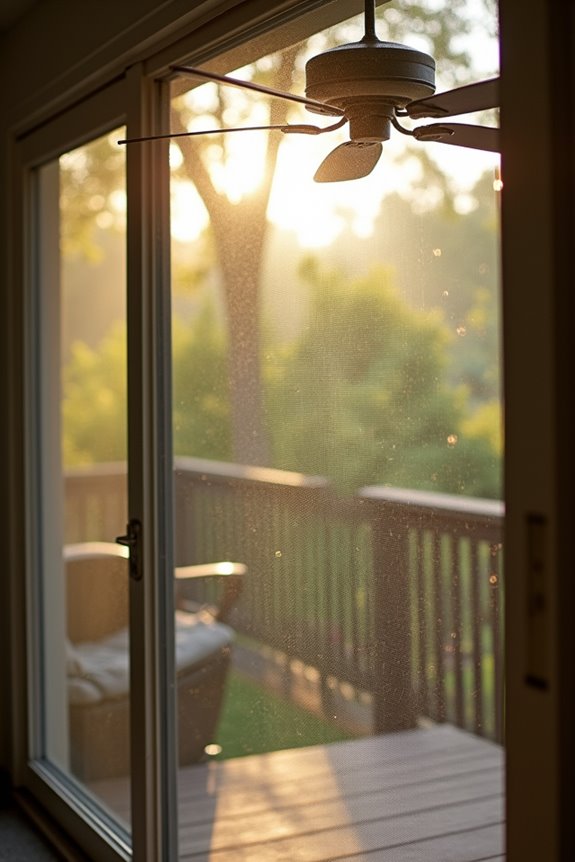
Physical barriers like screens and fans are your next line of defense against mosquitoes that’ve survived your yard cleanup. Install screens on doors and windows, creating a solid wall between you and these pests. Check your screens regularly for holes and repair any gaps immediately—even small tears let mosquitoes slip through.
Fans are your alternative weapon. Place them strategically in seating areas where you spend time. Moving air disrupts mosquito flight patterns, making it nearly impossible for them to land on you. Position fans near under-bench areas, patios, and shaded spots where mosquitoes love to rest. Target those humid, dark havens where they congregate.
Combine screening with fans and your recent yard maintenance. Together, these strategies eliminate the stagnant zones mosquitoes need to thrive.
Spray for Adult Mosquitoes at Peak Times
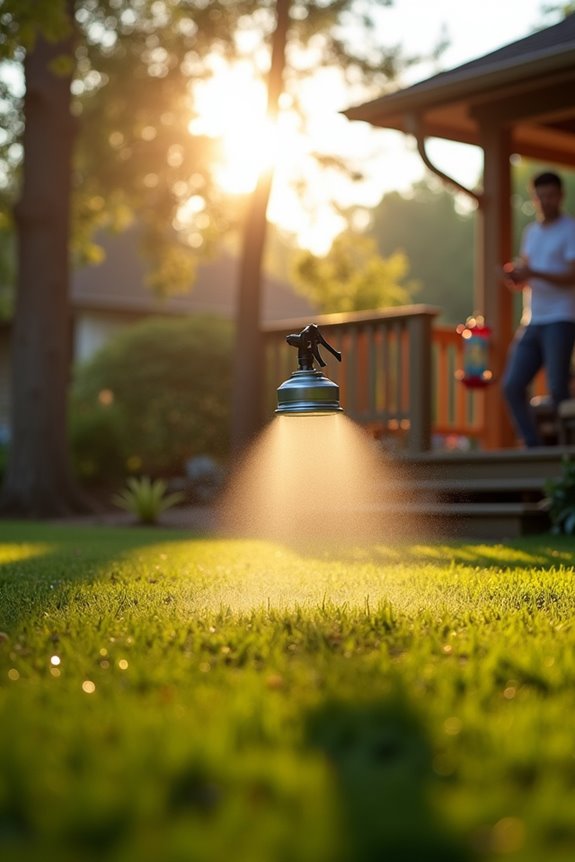
When you’ve eliminated standing water and secured your screens, it’s time to target the mosquitoes already thriving in your yard. Evening spraying is your best approach for effective mosquito control. Apply EPA-registered adulticides at dusk when mosquitoes are most active, using either a backpack sprayer or handheld equipment. Focus on shaded resting spots: under patio furniture, carports, and dense vegetation where adults hide during the day.
Follow label instructions carefully for proper concentration and droplet size. Avoid flowering plants to protect pollinators doing their important work. If spraying feels overwhelming, hire a licensed professional who knows safety guidelines inside and out. They’ll handle application efficiently while you relax knowing your yard’s protected.
Use Mosquito Repellent and Protective Clothing
After you’ve sprayed your yard to eliminate adult mosquitoes, you’re not done protecting yourself—you’ve got to armor up your own body. EPA-registered mosquito repellent containing DEET (up to 30%), picaridin, or oil of lemon eucalyptus gives you solid defense. Apply repellent to exposed skin and clothing after sunscreen, then reapply following label directions.
Your clothing matters too. Wear long, loose, light-colored garments that cover your skin. Dark colors and strong scents attract mosquitoes, so skip both. Pre-treat shoes, socks, and pants with permethrin to reduce mosquito attachment near your ankles. Treat outdoor gear the same way.
This two-part approach—repellent plus protective clothing—creates a shield around you, letting you reclaim your backyard without constant buzzing threats.
Know When Habitat Control Isn’t Enough
Why does removing standing water sometimes fail to solve your mosquito problem? Adult mosquitoes travel miles searching for food, so your yard’s cleanup won’t stop neighboring populations from invading. You’re fighting a bigger battle than local habitat reduction alone can win.
Even with diligent water removal, mosquitoes survive in hidden spots. Dense vegetation, shaded areas, and tree holes harbor adults you’ll never spot. They’re simply waiting for dusk.
This is where you’ll need backup. Combining habitat reduction with larvicides, adult control treatments, and protective measures creates real suppression. Professional pest services identify breeding grounds your DIY efforts miss, using EPA-registered products targeting high-risk areas. You’re most successful when you layer your mosquito control strategies together.
Compare DIY vs. Professional Mosquito Control

How much control do you actually have over mosquitoes with store-bought products versus calling in the experts? You can tackle small yards yourself using EPA-registered dunks in standing water and residual sprays, but you’ll shoulder the responsibility for safety and effectiveness. DIY approaches work best when you’re removing breeding sites consistently.
Professionals bring specialized inspections, broader product access, and guarantees on full-plan purchases. They locate hidden breeding habitats you’d likely miss and deliver longer-lasting results across larger properties. You’re essentially trading your time and effort for their expertise and accountability.
The real difference? Professionals handle extensive or hard-to-reach areas comprehensively. DIY works if your mosquito problem stays manageable and your yard remains accessible.
Why Choose TruGreen’s Mosquito Defense Plan

You’ll get a professional inspection that identifies exactly where mosquitoes breed and hide in your yard. TruGreen uses EPA-registered products proven safe for your family, pets, and beneficial insects while targeting those problem areas. You’ll also receive customized prevention guidance, so you’re not just treating mosquitoes today—you’re stopping them from coming back tomorrow.
Expert Inspection and Targeting
What’s really lurking in your backyard? TruGreen’s specialists dig deep to find exactly where mosquitoes breed and thrive. You get a thorough inspection identifying high-risk areas specific to your property.
This detective work matters. Mosquitoes need standing water—even tiny puddles in flower pots or clogged gutters become breeding grounds. Our experts spot these overlooked spots you’d miss alone.
Once we’ve mapped your backyard’s trouble zones, we target treatments precisely where they’re needed most. This focused approach means better environmental protection. We’re not spraying everywhere indiscriminately.
You’re not just getting pest control. You’re getting a customized strategy built for your exact situation, your exact space, your exact mosquito problem.
EPA-Registered Treatment Solutions
Why settle for untested sprays when you can trust products that meet strict government safety standards? TruGreen’s Mosquito Defense Plan uses only EPA-registered treatments designed specifically for your backyard. These aren’t random off-the-shelf solutions—they’re scientifically formulated and rigorously tested by federal regulators.
Your family joins thousands of homeowners who’ve reclaimed their outdoor spaces with proven products. EPA-registered treatments eliminate guesswork. You know exactly what’s being applied to your yard and why it works effectively against mosquitoes.
The plan targets breeding grounds with precision. Specialists identify standing water and problem areas, then apply treatments strategically. This focused approach means better results and fewer chemicals overall.
You’re investing in peace of mind alongside pest control—knowing your treatments meet the highest safety standards available.
Customized Prevention Guidance
Every backyard’s mosquito problem tells a different story. Your space isn’t like your neighbor’s, so your mosquito control solution shouldn’t be either.
TruGreen’s experts examine your specific yard conditions. They identify what’s attracting mosquitoes to *your* outdoor area. Standing water in planters? Overgrown shrubs creating shade? Dense vegetation near your patio? These specialists spot the problem sources you might miss.
You’ll receive tailored recommendations designed for your situation. This customized prevention guidance goes beyond generic advice. You’re getting expert insight matched to your backyard’s unique layout and landscaping.
The result? You’re not just treating mosquitoes; you’re addressing *why* they’re thriving in your space. This personalized approach means you’ll actually reclaim your outdoor living areas, not just temporarily manage the problem.
Start Your Mosquito Control Plan Today
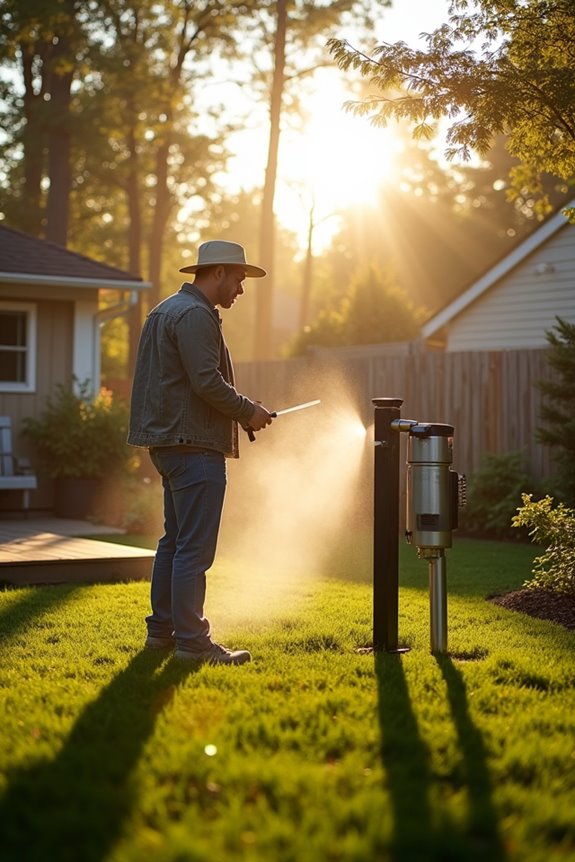
Ready to reclaim your backyard? You’ve got this. Taking action now prevents infestations that’ll plague you all season.
Your mosquito control strategy starts immediately:
- Eliminate standing water – Remove bird baths, gutters, plant saucers, tires, buckets, and tarps where mosquitoes breed within days.
- Thin vegetation – Prune overgrown shrubs and dense plants to remove daytime hiding spots for adult mosquitoes.
- Apply treatments – Use EPA-registered larvicides in permanent water features and residual sprays on resting vegetation according to label instructions.
You’re joining countless homeowners reclaiming outdoor spaces. Don’t tackle this alone if you’re overwhelmed. Professional services target high-risk breeding grounds with approved products and provide ongoing guidance tailored to your property’s specific needs.