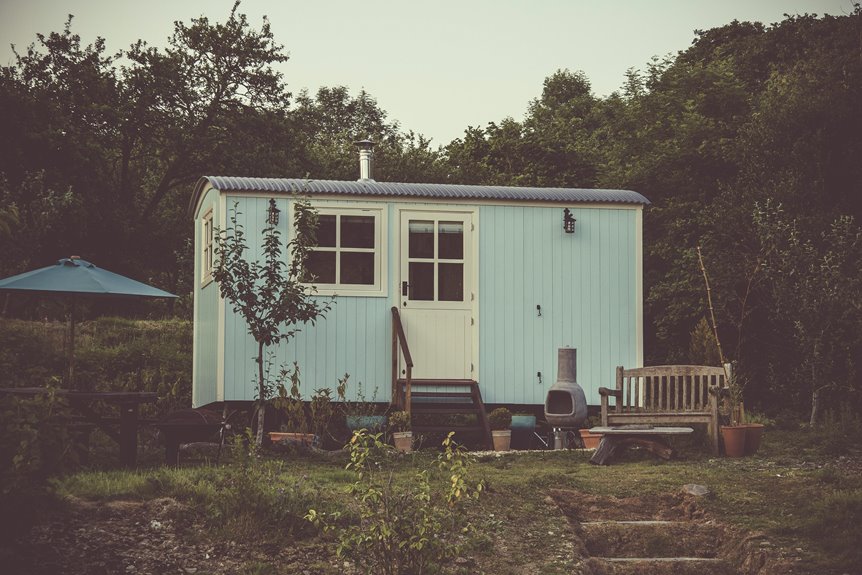
You’ll start by checking your local zoning laws and HOA restrictions—some areas ban backyard structures entirely. Next, evaluate your land’s drainage and utility access. Decide whether you want a permanent foundation (following Florida Building Code Appendix Q for homes ≤400 sq ft) or a tiny home on wheels, which requires DMV registration. Then coordinate with your planning department about permits, building codes, and inspections. Getting these details right upfront prevents costly delays and fines. There’s more specific guidance ahead for each step.
Check Local Zoning Laws and HOA Restrictions First
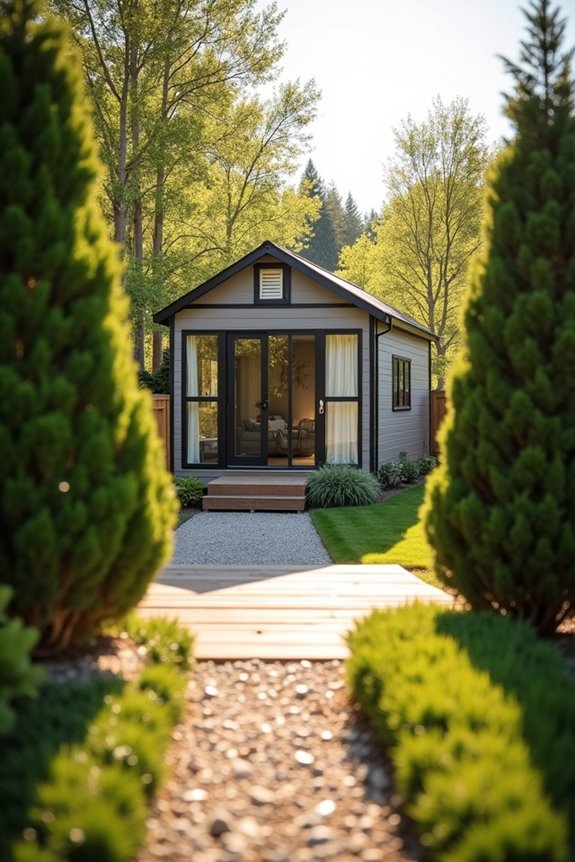
Before you break ground on that tiny home, have you checked what your local government actually allows? Your local zoning code holds the answer. You’ll need to verify whether your specific zoning district permits backyard ADUs and what restrictions apply. Pay attention to minimum lot size requirements, setbacks from property lines, height limits, and lot coverage percentages. These details matter.
Don’t overlook HOA restrictions either. Your neighborhood association might ban auxiliary structures entirely, even when local zoning permits them. Review your covenants carefully.
Next, contact your city or county planning department. Ask about building permits, occupancy permits, and utility hookups you’ll need. Determine whether permanent foundations or THOW (tiny house on wheels) structures are allowed in your area. Getting these answers upfront saves costly mistakes later.
Evaluate Your Land for Drainage, Access, and Utilities
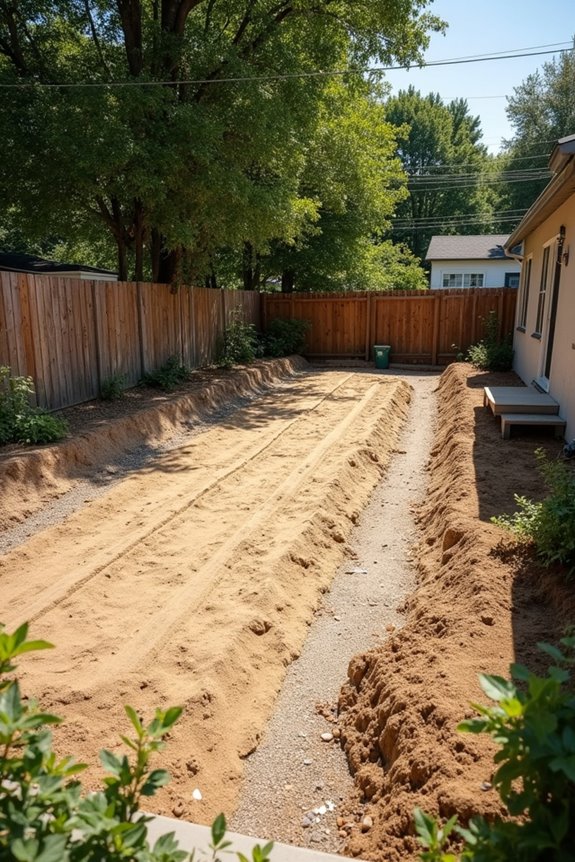
You’ve checked the zoning laws, but now comes the practical work: evaluating whether your land can actually support a tiny home. Start by examining drainage and soil type to prevent runoff pooling near your foundation. Poor stormwater management creates costly problems, so plan accordingly per local code requirements.
Next, confirm you’ve got clear access for delivery trucks and construction equipment. You’ll need driveway or curb cut permits if your city or HOA requires them.
Finally, verify utilities early. Check water, sewer compatibility, and electricity service voltage. Confirm setbacks and lot coverage limits won’t restrict your footprint. Investigate whether off-grid options like solar panels or composting toilets are permitted in your zoning code. Permits protect your investment.
Decide Between a Foundation and a Wheeled Tiny Home
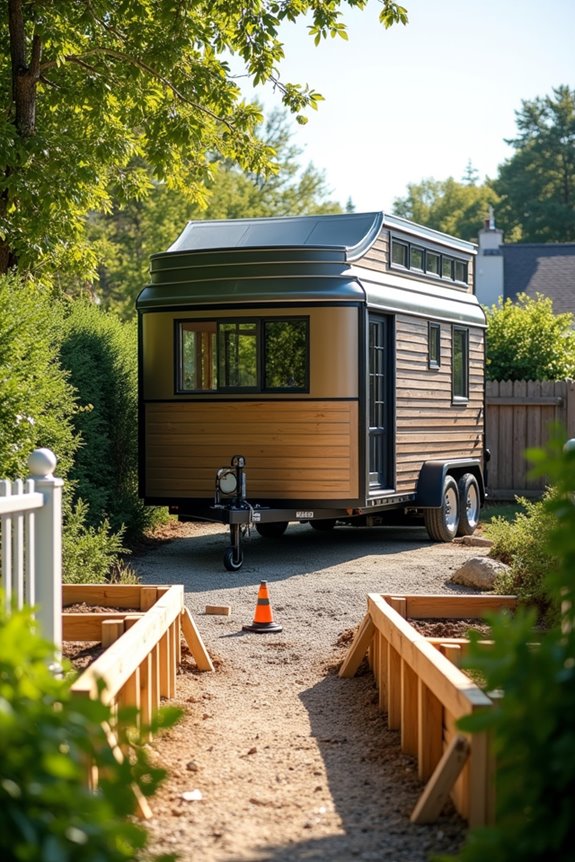
You’ve got two main paths forward: a permanent foundation or wheels. Your choice determines which building codes you’ll follow, what permits you’ll need, and how local zoning treats your tiny home. Let’s break down what each option actually means for your backyard project.
Permanent Foundation Requirements
Why does choosing between a permanent foundation and wheels matter so much? Your decision shapes everything about permits, inspections, and legal compliance.
A tiny house on a foundation must meet Florida Building Code standards, specifically Appendix Q for homes 400 square feet or less. You’ll need building permits, hurricane code compliance reviews, and approval from your local planning department. The foundation approach requires zoning compliance checks, setback measurements from property lines, and lot coverage calculations.
Your utility connections—water, sewer, electric—tie directly to permanent foundation classification. Unlike wheeled tiny homes treated as RVs, foundation structures demand full structural inspections and permanent zoning reviews.
Before breaking ground, contact your local building department early. They’ll clarify specific requirements for your property and jurisdiction, ensuring your backyard tiny home project stays legally sound from start to finish.
Tiny House On Wheels
If mobility matters to you, a tiny house on wheels (THOWs) offers flexibility that permanent foundations can’t match. However, Florida treats these homes like RVs for regulatory purposes, requiring DMV registration and RV safety compliance.
Your backyard setup depends on local zoning rules. You’ll navigate setbacks, lot size restrictions, parking requirements, and utility connections specific to your county or city. These aren’t universal—what works in one jurisdiction might not in another.
THOWs must meet hurricane code standards and Florida Building Code requirements. Unlike foundation-based homes, they avoid full building permits but demand early coordination with your planning and building departments.
Contact your local officials now. They’ll clarify whether your THOW gets classified as an RV, park trailer, or foundation-based residence. This conversation determines your permits, registration needs, and zoning compliance path forward.
Permit And Code Differences
The choice between a permanent foundation and wheels determines which rulebook you’ll follow—and that choice dramatically shapes your permitting journey. Your decision unlocks different inspection paths, zoning allowances, and compliance requirements that’ll define your tiny home’s legal status in Florida.
| Aspect | Permanent Foundation | Wheeled THOW |
|---|---|---|
| Building Code | Florida Building Code + Appendix Q | ANSI RV safety standards |
| Permits Required | Full building permits + hurricane code | RV registration possible |
| Zoning as ADU | Typically allowed | Local jurisdiction decides |
| Local Planning | Early coordination essential | Confirm RV or park trailer status |
Foundation units require full building permits and hurricane code compliance through your local planning department. Wheeled THOWs often qualify as RVs, potentially simplifying inspections but requiring DMV registration. Neither path guarantees approval—your jurisdiction makes the final call on zoning regulations and accessory dwelling unit allowances.
Plan for Water, Sewage, and Electricity: Or Go Off-Grid
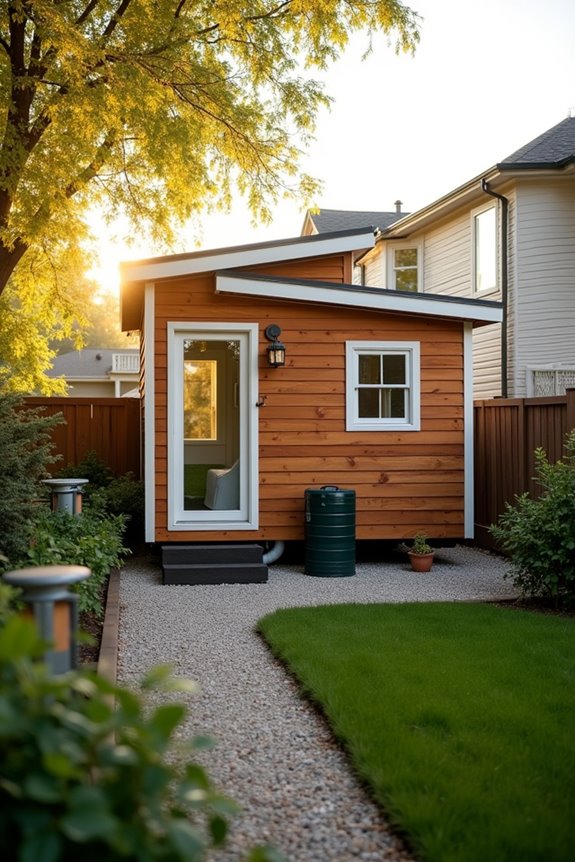
Once you’ve secured the right zoning approval for your backyard tiny home, you’ll need to tackle one of the most important decisions: how you’ll handle water, sewage, and electricity.
Standard Utility Connections
Most Florida municipalities require traditional connections. You’ll tie into municipal water, sewer, and electricity lines—the safest, most reliable option for permanent foundations and THOWs alike. Your local building department confirms specific requirements based on your zoning district and accessory dwelling unit designation.
Most Florida municipalities require traditional utility connections—the safest, most reliable option for tiny homes.
Off-Grid Options
Going off-grid is possible but restricted. Wells and septic systems require explicit local approval under the Florida Building Code and Appendix Q standards. You’ll face stricter regulations, additional inspections, and higher upfront costs.
Next Steps
Contact your planning department early. They’ll clarify what your property allows, whether you’re installing a foundation-based tiny home or a THOW. Getting ahead saves money and prevents enforcement headaches later.
Work With a Professional to Secure Your Permits
Why navigate Florida’s permit maze alone when professionals know the shortcuts?
You’ll want to partner with a design-build team or land-use attorney who recognizes your county’s specific requirements. These experts handle the heavy lifting so you can focus on your vision.
Here’s what your professional consultant manages:
- Land-use permits and local zoning compliance – They’ll verify setbacks, lot size restrictions, and permitted uses for your property before you invest money.
- Foundation and structural standards – Whether you’re building on Appendix Q foundations or using RV/ANSI standards for a THOW, they ensure code compliance and hurricane resistance.
- Utility connections and occupancy permits – They coordinate water, sewer, and electricity hookups while securing final approvals for legal occupancy.
Your team anticipates inspections, preventing costly delays and noncompliance issues down the road.
Verify Your Tiny Home Meets Local Building Codes
Your professional team handles permits, but you’ll also need to understand the building codes your tiny home must actually follow. Florida’s requirements depend on your structure type and size.
| Structure Type | Key Standard | Main Focus |
|---|---|---|
| Permanent Foundation | Florida Building Code Appendix Q | Structures 400 sq ft or smaller |
| Wheels (THOWs) | ANSI RV Safety Standards | Plumbing, heating, electrical, fire safety |
| Local Requirements | Zoning Code + Planning Department | Setbacks, allowed uses, development standards |
Your local planning department reviews setbacks, lot coverage, and whether backyard dwellings are permitted in your zone. Inspections verify compliance before occupancy. Skipping these steps invites fines and code enforcement headaches. Understanding these codes upfront protects your investment and ensures your tiny home project moves forward smoothly without costly surprises later.
Pass Final Inspections and Complete Documentation
How close are you to moving into your tiny home? You’re almost there—now comes the final stretch: securing occupancy permits and passing inspections.
Your local planning department will schedule final inspections to verify building code compliance and utility connections. Here’s what you’ll need:
Final inspections verify building code compliance and utility connections—your local planning department will schedule them.
- Occupancy permits from your jurisdiction after all inspections pass
- Final inspection documentation confirming code compliance, including Florida Building Code Appendix Q (if ≤400 sq ft) and hurricane code compliance requirements
- Zoning permits and utility sign-offs proving everything’s properly connected and safe
If you’ve chosen a THOW, you’ll also need THOW compliance verification and Florida DMV registration. Don’t skip this step—occupancy permits prove your tiny home’s legal and safe for living. Contact your local planning department today to confirm exact requirements for your property.