Start by breaking your yard into simple shapes—rectangles, triangles, or combinations. Sketch your space and mark each section. Next, pick your method: use Google Maps, a measuring app, or a tape measure to record length and width for each shape, rounding to the nearest foot. Finally, multiply length by width for each section, add them together, and subtract non-lawn areas like patios. Cross-check with a second tool to verify accuracy. Stick with these steps, and you’ll nail your square footage.
Divide Your Backyard Into Simple Shapes
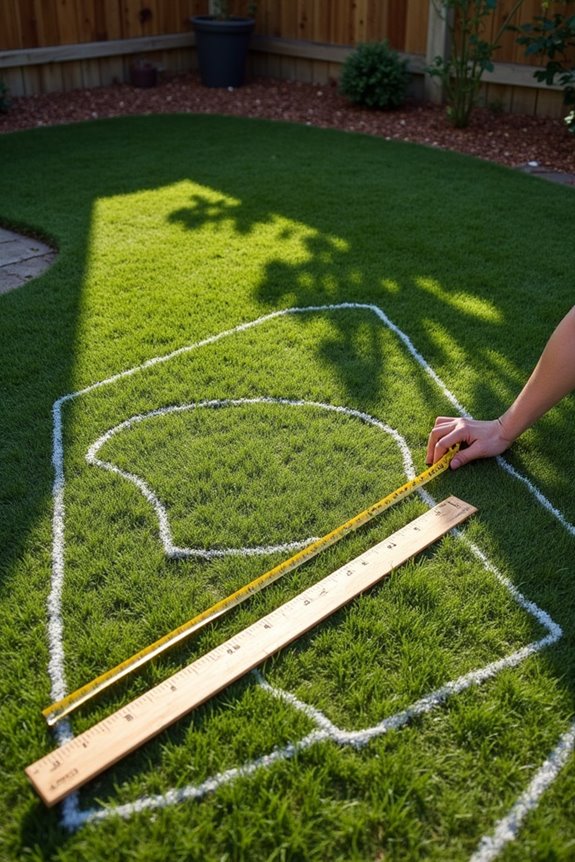
The easiest way to measure your backyard’s size is to break it down into basic shapes you already know. Most yards contain rectangular shapes, triangles, or combinations of both. Start by creating a map or sketch of your lawn measurement zones.
Next, identify each distinct section. That curved garden bed? Decomposing shapes makes calculations manageable. Your rectangular patio is straightforward. Any odd corners become triangles.
Measure length and width for each shape carefully. Round measurements to the nearest foot—this ensures accuracy without excessive precision. Record rounded measurements directly on your sketch.
This approach transforms area calculation from overwhelming to simple. You’ll add each shape’s area together for your total yard size. Breaking down complexity into manageable pieces makes the entire process feel achievable and organized.
Pick Your Measurement Method: Then Measure
How’re you going to actually measure? You’ve got solid options here. Google Maps’ satellite view lets you drop pins around your yard’s perimeter, instantly calculating square footage. Apps like Measure My Lawn and Planimeter work similarly—pin-based tools that reveal your lawn size without leaving home.
Google Maps’ satellite view and apps like Measure My Lawn let you calculate square footage instantly without leaving home.
Prefer hands-on measuring? Grab a tape measure and walk your yard’s length and width, recording dimensions in feet. Multiply those numbers together for your total square footage.
For irregular yards, this approach works perfectly with your divided shapes. Measure each section separately, then add them together.
Here’s the pro move: verify your results. Measure twice using different methods or apps. Cross-referencing ensures accuracy and builds confidence in your final square footage calculation.
Do the Math and Double-Check Your Numbers
Now that you’ve got your measurements, it’s time to crunch the numbers and verify you’ve got the right square footage.
Start by multiplying your length and width together for the total area. Got an irregular shapes backyard? Divide it into rectangles and triangles, calculate each section separately, then add them up.
Here’s the crucial part: subtract non-lawn areas like driveways, patios, and decks from your total area. This gives you your actual lawn square footage.
Don’t stop there. Double-check measurements using a second tool—try Google Maps satellite imagery or a smartphone measurement app. Seeing consistent numbers across different methods means you’re confident in your results. Small discrepancies are normal, but major differences signal you need to remeasure your yard.