You probably can’t legally shoot in your California backyard, even on your own land. Most cities ban firearm discharge entirely within city limits. State law requires a 150-yard safety zone around occupied homes—roughly 450 feet or 1.5 football fields. Private property rights don’t override local ordinances, which vary dramatically by location. Violations bring misdemeanor or felony charges, hefty fines, and jail time. Your best bet? Check your municipal code first, then explore licensed shooting ranges instead. Understanding your specific location’s rules matters far more than you’d think.
Most California Backyards Prohibit Shooting: Here’s Why
Although you own your property, you likely can’t shoot firearms or BB guns in your California backyard. Local ordinances in most cities and counties simply ban backyard shooting within city limits entirely.
Why? Fire safety tops the list. California’s wildfire risk means authorities strictly regulate anything that could spark a blaze. Your discharge could ignite dry brush or nearby structures. Plus, statewide rules prohibit shooting near occupied dwellings and school zones, creating serious liability.
Local ordinances also protect neighbors. A stray bullet doesn’t respect property lines. Even on private property, you’re responsible for every round downrange.
Before you assume your backyard’s off-limits, check your municipal codes and county ordinances. Regulations vary dramatically by location. What’s legal in one neighborhood might be prohibited just miles away. Your research determines your options.
What “Backyard” Means Legally in California
Your backyard isn’t just the grass behind your house—it’s a legally defined space with specific limits and responsibilities. In California, your private property doesn’t automatically grant you shooting rights. Local ordinances often restrict or prohibit firearm discharge, even on your own land. You’re responsible for knowing what’s actually legal in your area.
| Your Backyard Component | Legal Reality |
|---|---|
| Property lines | Don’t determine shooting legality |
| City/county rules | Override private property rights |
| Safety zones | Often require 150-yard clearances |
| Discharge restrictions | Frequently unlawful in residential areas |
Your backyard’s legal status depends entirely on local laws. Some California cities ban all firearm discharge within city limits. Others allow it under strict conditions. You’ll need to contact your city or county code enforcement. They’ll clarify whether shooting’s permitted on your property. Understanding this distinction keeps you compliant and safe.
Local City Ordinances That Ban Discharge
Many California cities have enacted strict ordinances that prohibit firearm discharge entirely—even on your own property. You’ll find that local ordinances vary dramatically between neighborhoods, making it essential to check your municipal code before pulling the trigger.
Here’s what you’re up against:
- Complete discharge bans within city limits, regardless of property size or distance from neighbors
- Residential zone restrictions prohibiting shooting within 300-500 feet of occupied structures
- Misdemeanor or felony charges for violations, depending on circumstances and local severity
- Hefty fines reaching thousands of dollars plus potential jail time for repeat offenses
Your backyard shooting dreams might clash with your city’s rules. That discharge ban could mean hefty penalties, criminal records, or worse. Always verify your municipal code first—what’s legal in one city becomes illegal blocks away.
The 150-Yard Safety Zone Around Occupied Homes
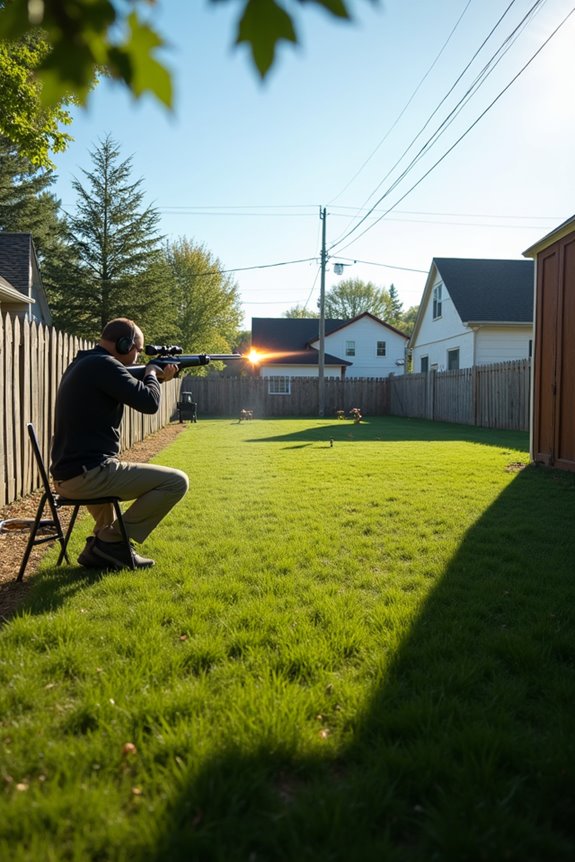
Beyond local ordinances, California state law adds another layer of restrictions that’ll affect your backyard shooting plans. You must maintain a 150-yard safety zone around occupied dwellings and related structures. California Fish and Game Code 3004 establishes this requirement to protect your neighbors from injury and property damage.
Before you set up for backyards target practice, measure the distance to any occupied homes nearby. That’s roughly 450 feet—almost 1.5 football fields. If your property doesn’t meet this distance requirement, lawful firearm use simply isn’t possible there. Violating the 150-yard safety zone brings criminal penalties and potential liability. Wildlife officers and local authorities actively enforce this rule during investigations. You’ll want to verify distances beforehand, ensuring your shooting location complies with state safety standards.
BB Guns vs. Firearms: California’s Legal Distinction
What’s the difference between a BB gun and a real firearm under California law? It’s significant. California classifies BB guns as imitation firearms under Penal Code 16700, which creates distinct legal pathways for responsible owners like you.
Here’s what separates them:
- Adults can own BB guns without permits, but real firearms require extensive licensing and background checks that take weeks
- Public display is completely banned for BB guns, protecting your community from dangerous misunderstandings
- Transportation rules differ dramatically—keep your BB gun unloaded and hidden in locked trunks, while firearms demand secure storage facilities
- Orange tips and fluorescent markings distinguish imitation firearms, preventing law enforcement confusion during emergencies
Understanding these distinctions helps you enjoy backyard shooting responsibly while respecting California’s safety standards that protect everyone in your neighborhood.
Do You Need a Permit to Own a Gun in California?
If you’re thinking about owning a firearm in California, here’s the straightforward answer: yes, you’ll need permits and licenses before you can legally purchase one.
California enforces strict state preemption rules that set ownership requirements across the state. You’ll obtain a California Firearm Safety Certificate, pass a background check, and wait ten days minimum. Different firearm types require specific documentation.
| Requirement | Details |
|---|---|
| Firearm License | Required for purchase |
| Background Check | Mandatory through dealer |
| Safety Certificate | Must obtain before buying |
| Waiting Period | Minimum 10 days |
These rules protect your community while ensuring responsible ownership. You’re joining countless Californians who’ve navigated this straightforward process successfully.
Where You Can Legally Target Shoot Instead
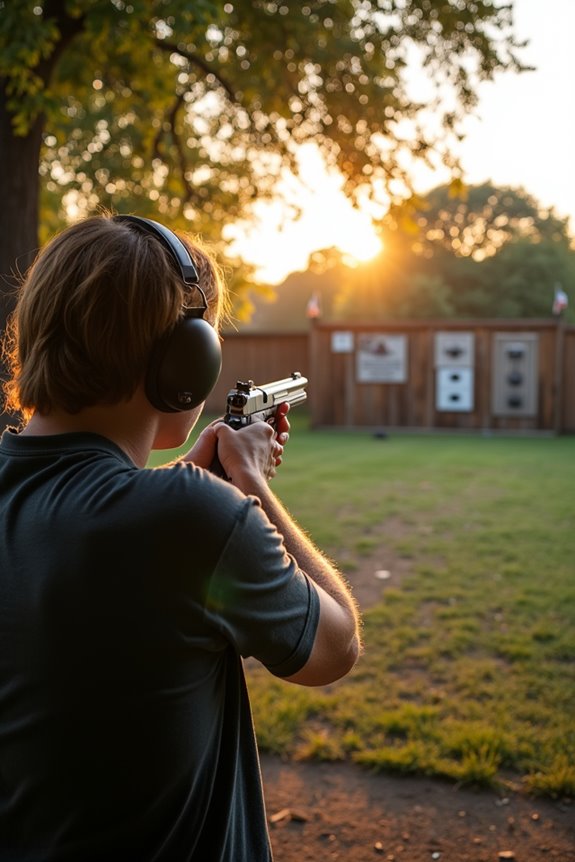
Since backyard shooting isn’t an option in most California communities, you’ll want to explore legal alternatives that welcome target shooters. Public lands managed by the Bureau of Land Management (BLM) often permit shooting in designated areas, while established shooting ranges—both public and private—provide safe, regulated environments with proper backstops and safety monitors. Your best move is to call your county’s BLM office or search for certified ranges nearby, since they handle all the legal requirements you’d otherwise navigate yourself.
Public Lands and BLM
Where can you actually shoot in California when your backyard won’t work? You’ve got options on BLM public lands—that’s Bureau of Land Management territory. Here’s what you need to know:
- Undeveloped BLM lands allow target shooting unless local closures prohibit it
- You’ll avoid developed recreation sites where shooting’s strictly off-limits
- Hot bullet fragments and exploding targets can spark wildfires—fire management matters
- State regulations and safety rules apply everywhere you shoot
You’ll need to check with your local BLM field office for approved zones since California has no designated statewide target-shooting sites. Grab maps, confirm current restrictions, and plan ahead. Follow state law, manage fire risk carefully, and protect resources. Access requires using public roads. You’re part of a community that shoots responsibly.
Local Shooting Ranges
Public lands give you plenty of room to shoot, but they’ve got limitations—weather closures, fire restrictions, and the need to scout locations beforehand. Local ranges offer you a straightforward alternative that sidesteps these hassles.
Why Choose a Range?
You’ll find shooting ranges throughout California that eliminate backyard shooting restrictions entirely. These facilities provide safety protocols, trained range officers, and organized spaces designed specifically for target practice. Indoor ranges near urban areas offer controlled environments with hour limits and caliber restrictions, while outdoor ranges give you unlimited time and full rifle or handgun access.
What You Get
Range supervision keeps everyone safe. You’re part of a community that takes shooting seriously. Staff guidance helps you improve your skills while following California gun laws properly. This membership approach means you belong somewhere legitimate and responsible.
How to Transport Firearms Safely in Your Vehicle
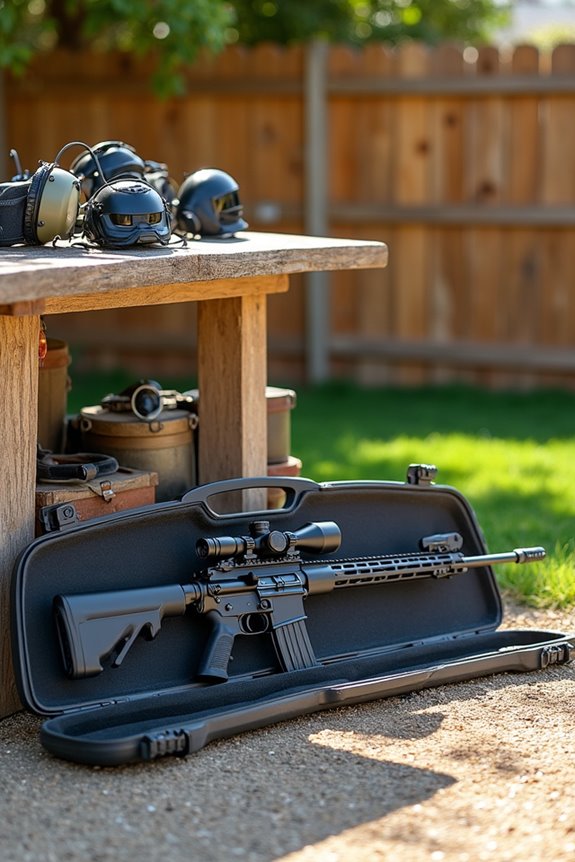
Most California gun owners don’t realize that simply placing a firearm in their car—even unloaded—can lead to serious legal trouble if it’s not properly secured.
Many California gun owners are unaware that improperly securing firearms in vehicles can result in serious legal consequences.
California Penal Code requires strict transportation rules. You must:
- Keep firearms completely unloaded during motor vehicle transport
- Store handguns in locked cases separate from ammunition
- Place rifles in the trunk or fully enclosed locked containers
- Never leave weapons accessible in passenger compartments
Keep your firearm in the trunk whenever possible. If that’s unavailable, use a sturdy locked container. Detached magazines with ammunition still create legal problems, so store them separately and securely.
Following these guidelines protects you legally and demonstrates responsible ownership. Your careful adherence to California’s transportation standards keeps you—and your community—safer while maintaining your shooting privileges.
Secure Storage Requirements for Firearms at Home
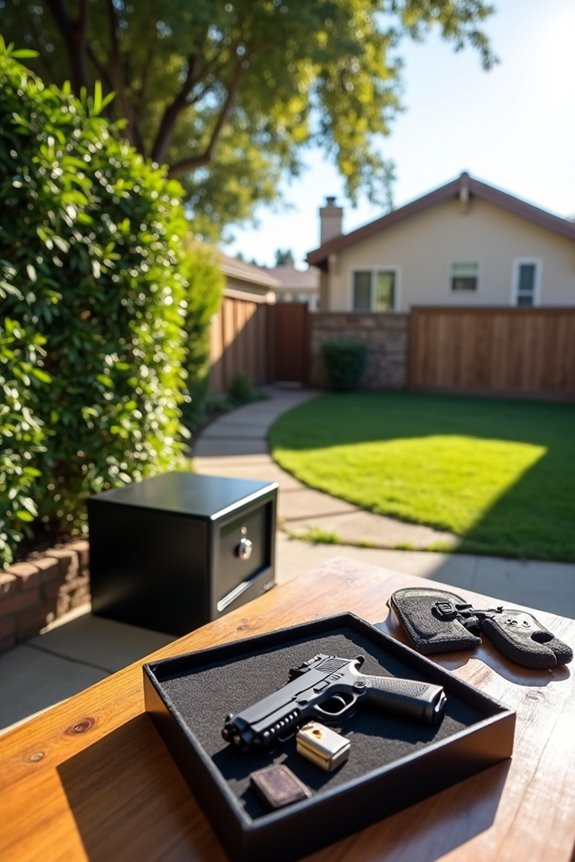
How do you keep your firearms safe while protecting everyone in your household? California law requires you to store firearms securely, preventing juvenile access through locked containers or locked rooms. You’re responsible for keeping loaded firearms out of reach.
Your storage options include gun safes, lockboxes, or dedicated locked rooms with concealed placement. These methods protect your family while maintaining your rights as a responsible gun owner.
California doesn’t allow loaded firearms in accessible locations where juveniles might find them. Exceptions exist only for immediate self-defense situations or law enforcement duties. Violating storage requirements can result in criminal charges and liability.
Before storing firearms at home, check local ordinances. Some municipalities impose stricter standards than state law requires. You’ll find peace of mind knowing your household follows proper safety protocols.
Five Legal Traps That Lead to Criminal Charges
Even with a backyard and good intentions, you can inadvertently cross legal lines that transform lawful firearm ownership into serious criminal charges. Here’s what’ll trip you up:
- Ignoring local ordinances — Your city may ban backyard shooting entirely, making unlawful discharge a misdemeanor regardless of your property rights.
- Skipping firearm registration — Unregistered weapons violate California law, converting innocent shooting into felony possession charges under Penal Code violations.
- Shooting near occupied dwellings — Even on your private property, firing near homes triggers reckless endangerment liability and prosecution.
- Threatening discharge — Pointing or firing toward others transforms recreation into assault charges under Penal Code 245(a)(1).
Check your local ordinances first. Registration matters. Distance counts. Intent defines everything.
Misdemeanor and Felony Penalties for Illegal Discharge
Crossing those legal lines we covered doesn’t just earn you a warning—it lands you in the criminal justice system with real consequences. You’re looking at misdemeanor charges for battery or assault when you intentionally shoot someone with a BB gun or firearm. Illegal discharge on private property escalates matters quickly, especially under Penal Code 246.3.
Fire near schools or prohibited zones? That’s felony territory. You’ll face potential imprisonment and substantial fines. Assault with a deadly weapon charges carry even steeper penalties when great bodily harm occurs.
Local city ordinances compound these troubles. Most municipalities treat unlawful discharge as misdemeanors at minimum. Violate them, and you’re paying fines while facing possible jail time.
The stakes aren’t theoretical—they’re real criminal convictions affecting your future employment and housing opportunities.
What to Do if You’ve Already Violated Local Laws
If you’ve already fired a gun in your California backyard, you’ll need to take immediate action to protect yourself legally. Your first step is stopping all shooting activity right now, then consulting a qualified criminal defense attorney who understands California firearms laws and your specific city’s ordinances. Once you’ve got legal guidance, you may need to contact local authorities to report the violation yourself, which can sometimes reduce penalties and show you’re taking responsibility for your actions.
Legal Remediation Options
You’ve crossed a line by shooting in your backyard, and now you’re facing the real consequences of violating California’s firearms laws.
Taking Action Now
Don’t panic. You can still fix this. Here’s what responsible gun owners do:
- Stop backyard shooting immediately—continuing risks misdemeanor or felony charges under Penal Code 246.3
- Secure all firearms in locked containers and remove ammunition from accessible areas
- Post no-shoot compliance signs visible from property boundaries
- Consult a firearms attorney before law enforcement contacts you
Next Steps
Review your local ordinances carefully. Many California cities strictly prohibit residential shooting. Contact your city attorney’s office to discuss potential penalties and remediation requirements.
Document your compliance measures thoroughly. Evidence of secured weapons, locked storage, and posted warnings influences charging decisions positively.
Moving Forward
Verify HOA rules preventing future violations. Only shoot at approved ranges. This approach demonstrates genuine commitment to gun safety and community responsibility.
Consulting Local Authorities
So what’s your next move when you’ve already broken the rules? Contact your city or county sheriff’s department immediately. They’ll explain exactly which local ordinances you’ve violated and outline compliance steps required. Request written details about penalties, potential fines, and corrective actions like cease-fire orders or firearm removal.
Ask about designated safe areas nearby. Your property might qualify under noise-abatement or safe distance provisions you didn’t know existed. Understanding these regulations helps you obtain proper permits and avoid future violations.
| Action | Purpose | Timeline |
|---|---|---|
| Contact sheriff | Learn violations | Immediately |
| Request written explanation | Understand penalties | Within 48 hours |
| Ask about safe areas | Find legal alternatives | During initial call |
Consider hiring legal assistance to review local ordinances thoroughly. They’ll map out your compliance plan, covering storage, transport, and permitted uses aligned with your jurisdiction’s requirements.