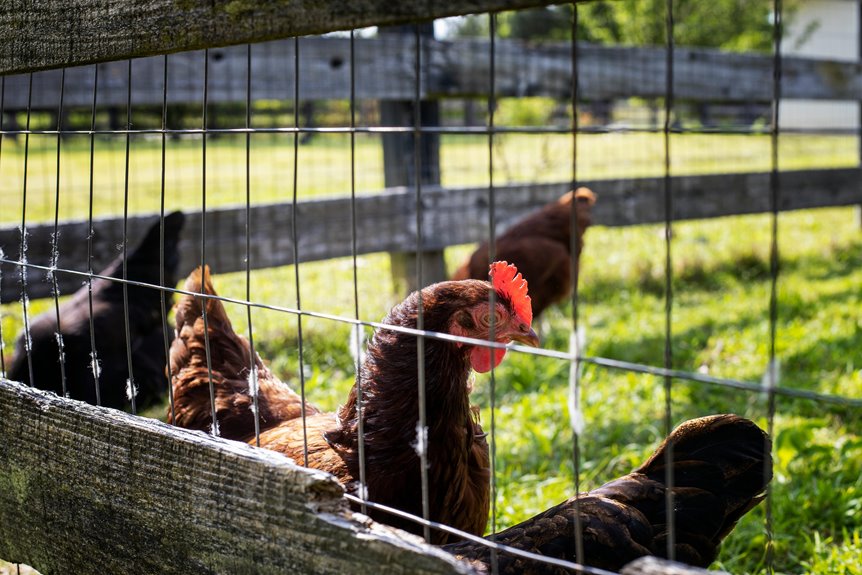
You can likely keep backyard chickens, but your local zoning laws—not your dreams of fresh eggs—determine what’s allowed. Start by contacting your city or county planning office for specific regulations, including flock size limits (typically 3–12 hens), setback distances from property lines (often 10–25 feet), and permit requirements. Check your HOA restrictions separately, as they may impose stricter rules. Most areas ban roosters due to noise concerns and favor coop-only setups over free-range. Understanding these requirements upfront prevents costly mistakes and neighborhood conflicts.
Check Your Local Zoning Laws First
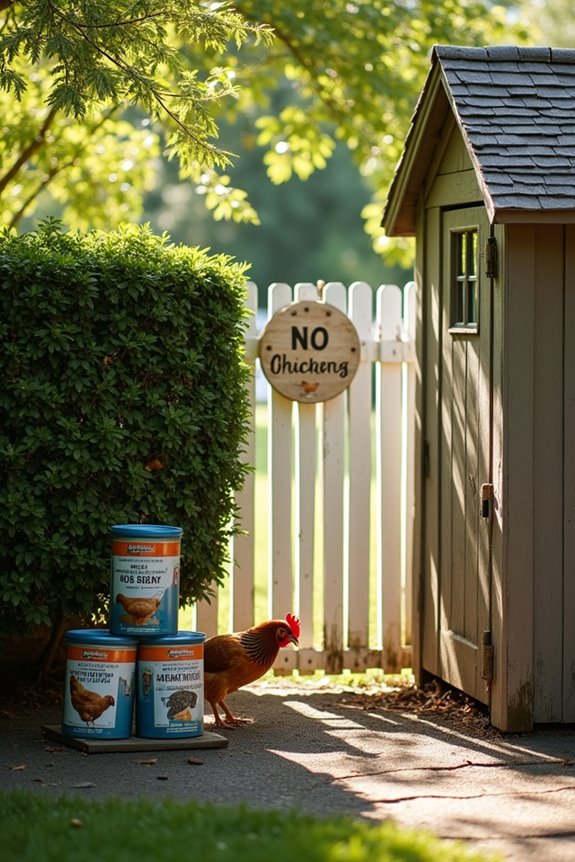
Before you order your chicks or build that coop, here’s the reality: where you live determines whether backyard chickens are even allowed. Your city or county sets specific zoning laws that govern backyard flocks, and these rules vary dramatically by location.
You’ll need to investigate several key requirements. Check if your area requires permits before you build anything. Research setbacks, which specify how far your coop must sit from property lines—often 10 to 25 feet. Determine your allowed flock size; some neighborhoods permit three hens while others allow a dozen.
Don’t assume your neighbor’s setup applies to you. Even adjacent cities enforce completely different chicken ordinances. Contact your local planning office directly. They’ll provide exact regulations and any recent amendments affecting your specific address.
Do You Need State Registration and Permits?
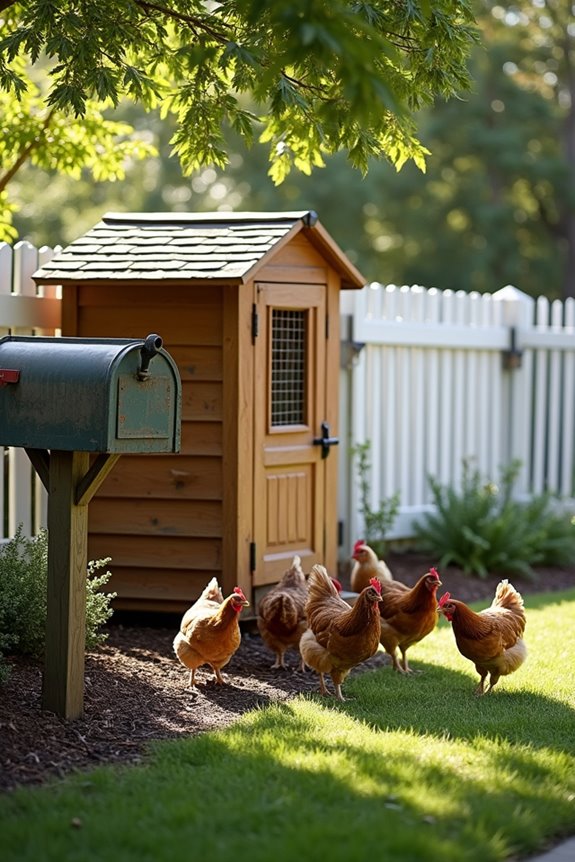
Once you’ve confirmed your local zoning allows backyard chickens, there’s another layer to contemplate: your state might require registration. Maryland takes poultry seriously, requiring you to register chickens and other listed birds with the Maryland Department of Agriculture. This isn’t just bureaucracy—it protects your neighbors and the broader farming community.
Maryland requires backyard chicken registration to protect neighbors and the broader farming community from disease spread.
What You Need to Know:
- Maryland registration applies to chickens, ducks, geese, turkeys, pigeons, and doves under Md. Code Ann., Agriculture, § 3-804
- Poultry registration helps prevent disease spread across the state’s domestic flocks
- You’ll find the registration form on the Maryland Department of Agriculture website
Checking these state-level permits before building your coop saves headaches later. You’re joining a community that values responsible ownership and biosecurity practices.
How Many Chickens Can You Keep?
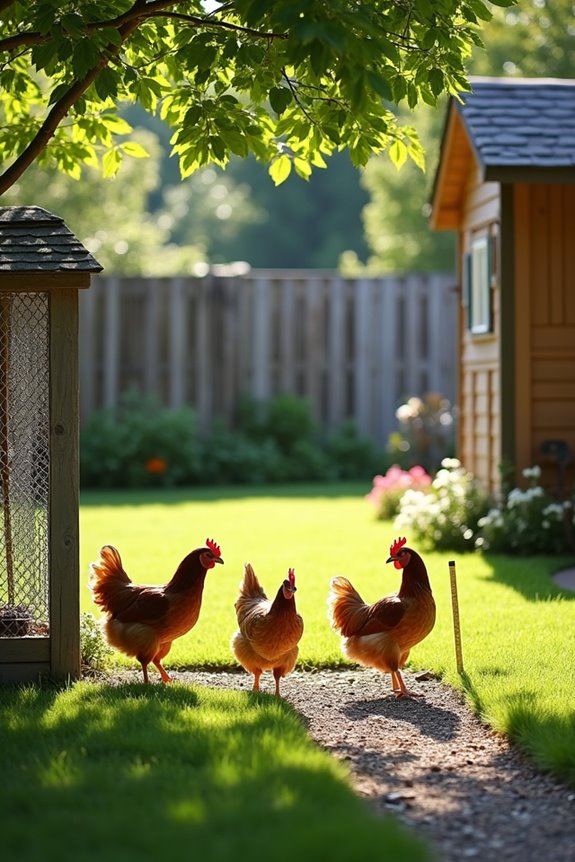
The number of chickens you’re allowed to keep depends entirely on your local jurisdiction—not state law—so your city or county ordinance sets the actual limit. You’ll likely find that smaller residential lots permit 4–6 chickens, though roosters are often banned outright, while larger properties or agricultural zones might allow bigger flocks. Your specific maximum depends on lot size, setback distances, housing requirements, and local nuisance rules, so you’ll need to check your exact zoning guidelines before building that coop.
Local Jurisdiction Limits
How many chickens you’re actually allowed to keep depends entirely on where you live. Your city, county, or zoning district sets the rules, not your state. This means your neighbor across town might have different limits than you do.
Here’s what you’ll find in Maryland:
- Annapolis: Up to 5 chickens, no roosters allowed
- Baltimore City: 4 chickens on smaller lots, more on larger properties
- Howard County: Up to 8 chickens for homes with 10,000+ sq ft yards
Beyond chicken numbers, you’ll face setback requirements too. Coops must stay 15–50 feet from neighboring houses, depending on your area. Always check your specific local ordinances before building. Zoning limits vary wildly, so what works for one neighborhood won’t work for yours.
Property Size Requirements
Your lot size doesn’t automatically determine your chicken limit—your local zoning rules do. A half-acre property in one municipality might allow six chickens, while the same size lot elsewhere permits only four. Zoning ordinances often tie flock numbers directly to property dimensions, not just acreage alone.
Many jurisdictions use specific formulas. Baltimore, for example, caps small lots at four chickens but permits more on larger properties. Oklahoma cities frequently allow 4–6 hens per lot, varying by zone classification. Pennsylvania leaves decisions entirely to individual counties and municipalities.
Your best move? Review your exact zoning code and setback requirements from your local planning office. These documents reveal how your lot size translates into chicken-keeping allowances, ensuring you stay compliant while joining your backyard farming community.
Rooster And Housing Restrictions
While your lot size determines how many chickens you can keep, housing rules and rooster bans often prove just as restrictive. You’ll find that most jurisdictions prohibit roosters entirely or severely limit them, prioritizing neighborhood peace over breeding capabilities.
Your coop itself must meet specific housing restrictions:
- Predator-proof construction with secure locks and wire mesh to protect your flock
- Strategic coop setbacks ranging from 5 to 15 feet from property lines, depending on your location
- Distance requirements sometimes extending 50 feet from neighbors’ homes in stricter areas
Baltimore allows up to 4 chickens on smaller lots, while Howard County permits 8 on single-family homes. Both require coops positioned in rear yards with substantial setbacks. Check your local ordinances carefully—housing restrictions often determine what’s actually possible on your property.
Coop Setup and Distance Requirements
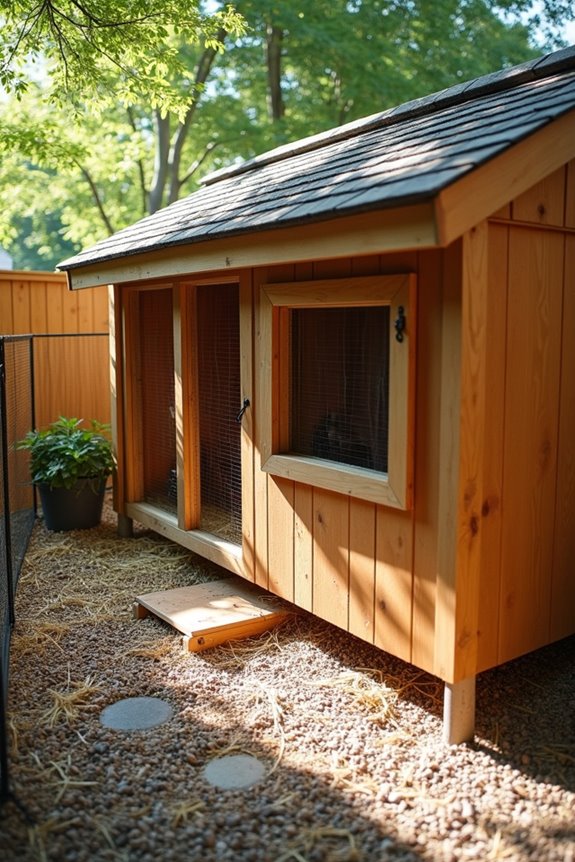
Once you’ve determined how many chickens you can keep, you’ll need to focus on where and how you build your coop. Your local codes likely specify setback distances—typically 5 to 15 feet from property lines or 15 to 50 feet from neighbors’ homes—that you can’t ignore. Beyond distance rules, your coop itself must meet design standards like predator-proof construction, secure runs, and sometimes sight-blocking fencing to keep noise and visibility concerns at bay.
Setback And Distance Standards
Where should you actually put that chicken coop in your yard? Your coop placement depends entirely on local setback distances—the required space between your structure and property lines. Most jurisdictions demand 5 to 50 feet from boundaries, though many enforce stricter rules near neighbors’ homes.
You’ll typically need to locate your coop in the rear yard. Consider these placement essentials:
- Distance from property lines: Check your local code for exact setback requirements
- Neighbor proximity: Greater distances protect against noise complaints and nuisance claims
- Sight lines: Some areas require fencing to obscure the coop from neighbors’ views
Before you build, verify your zone’s specific setback distances and dwelling restrictions. These standards exist to maintain neighborhood harmony while letting you raise backyard chickens responsibly.
Coop Size And Design Requirements
How big does your chicken coop actually need to be? Most jurisdictions require a minimum of 3–4 square feet inside the coop per bird and 8–10 square feet of outdoor space per bird. Your enclosure requirements should include secure roosting perches, nest boxes, and proper ventilation to prevent waste buildup.
You’ll want to design your coop with these standards in mind. Proper airflow reduces ammonia and moisture, keeping your flock healthy. Install nest boxes for laying and perches for roosting at appropriate heights.
Check your local codes for specific space per bird requirements, as they vary markedly. Some areas demand larger outdoor runs than others. Meeting these design standards ensures your coops function effectively while maintaining compliance with neighborhood regulations.
Rooster Restrictions and Noise Rules
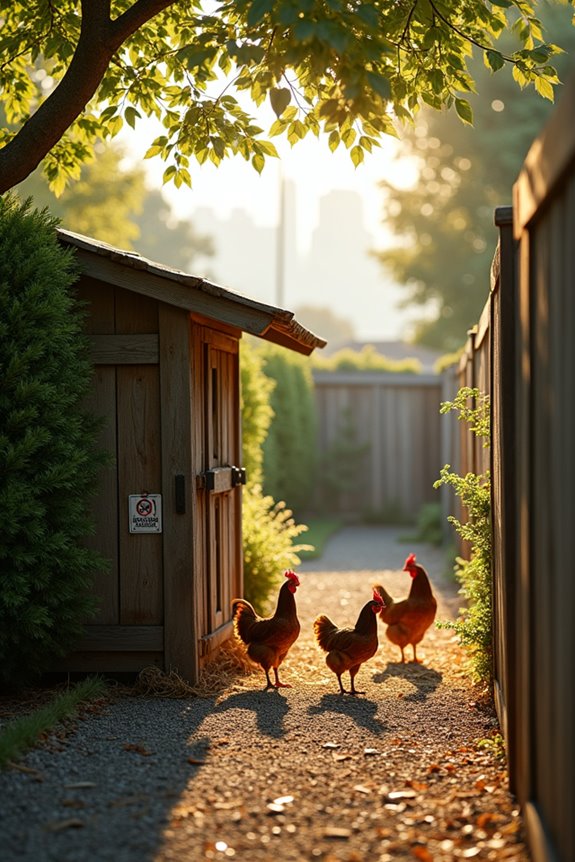
Why do so many neighborhoods ban roosters while allowing hens? The answer is simple: noise. Roosters crow loudly and frequently, disturbing neighbors early morning and throughout the day. Most PA localities restrict or prohibit roosters entirely.
Roosters crow loudly and frequently, disturbing neighbors early morning and throughout the day. Most PA localities restrict or prohibit roosters entirely.
Your local ordinances shape what you can keep:
- Baltimore City permits up to 4 hens only; roosters aren’t allowed on any lot size
- Howard County allows 8 chickens for detached homes, but roosters are prohibited
- Annapolis bans roosters completely and requires minimum coop setbacks from property lines
Before you bring home birds, check your specific city or county ordinance. Rooster allowances vary dramatically by locality. Some areas define nuisances strictly; others don’t. Required setbacks differ too. You’ll want these details confirmed before building your coop.
Getting Neighbor Approval and HOA Clearance
Before you build that coop, you’ll need clearance from two key sources: your local government and anyone else who has a say in what happens on your property.
Your HOA clearance matters tremendously. Review your governing documents carefully—many subdivisions prohibit backyard poultry entirely or impose stricter rules than city ordinances allow. Don’t skip this step.
Neighbor approval often determines whether you’ll succeed. Some jurisdictions legally require written consent from adjacent property owners before you get permits and setbacks approved. Even when not mandatory, talking to neighbors builds community support.
Come prepared. Share specifics: flock size, coop location, noise considerations, and nuisance mitigation plans. Position yourself as a responsible keeper, not just someone wanting chickens. This approach transforms potential opposition into neighborhood allies who feel included in your decision.
Keeping Chickens Contained: Free-Range vs. Coop-Only
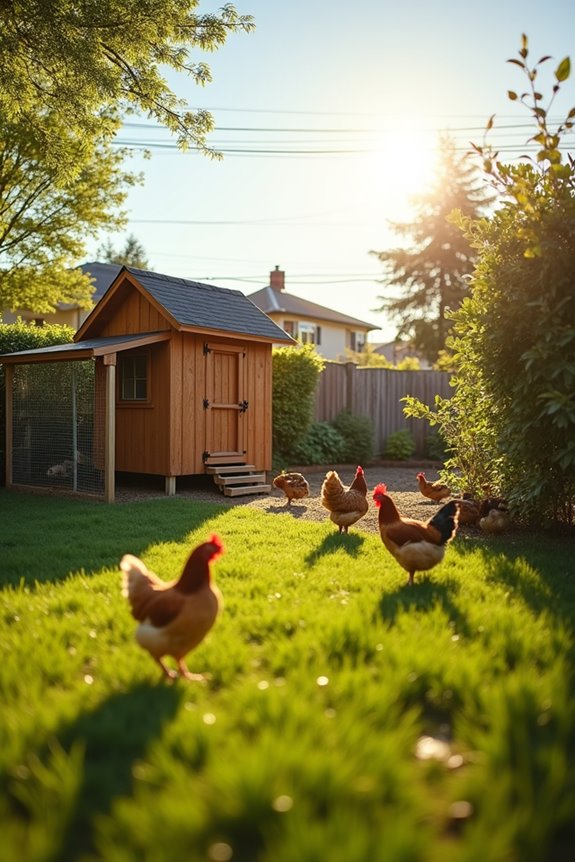
Once you’ve cleared the regulatory hurdles, you’ll face another critical decision: whether your chickens stay confined to a coop or roam freely across your yard.
Most areas favor coop-only setups. Here’s why they work:
- Reduced conflicts. Contained birds won’t wander onto neighboring properties, eliminating common complaints
- Built-in compliance. Your backyard coop meets setback requirements—typically 10-25 feet from lot lines
- Peace of mind. Predator-proofing standards protect your flock while preventing nuisance enforcement issues
Free-range chickens sound appealing, but many municipalities prohibit them entirely or restrict them heavily in urban zones. Even where allowed, enforcement kicks in fast when neighbors complain.
A secure backyard coop gives you the best of both worlds: happy, healthy birds and harmonious community relationships. You’ll sidestep fines and confinement orders while keeping your feathered friends safe.
City-by-City Chicken Regulations
How do you know if your city actually allows backyard chickens? You’ll need to check your local city ordinances, which vary dramatically depending on where you live. Some municipalities embrace backyard chickens enthusiastically, while others prohibit them entirely.
Local city ordinances vary dramatically on backyard chickens—some municipalities embrace them enthusiastically while others prohibit them entirely.
Your first step: contact your city or county planning department. They’ll tell you whether permits are required and what restrictions apply. Many cities allow hens only, banning roosters due to noise concerns. Others cap chickens at three or four birds per lot.
Specific requirements differ widely. Baltimore permits backyard chickens with permits, while some Pennsylvania counties prohibit them altogether. Setback requirements—typically 5 to 15 feet from property lines—protect neighbors. Coop placement, usually in rear yards, matters too.
Don’t assume your neighbor’s setup is legal in your zone. Check your exact ordinance before investing in housing and birds.
What to Do If Chickens Aren’t Allowed in Your Area

So your city says no chickens—does that really mean the door’s closed? Not necessarily. You’ve got options worth exploring before giving up on your backyard flock dreams.
Start by taking these steps:
- Contact your planning office directly. Ask about the exact local ordinances, permits, and any recent amendments that might help your case.
- Review setback requirements. Understand distance rules from property lines and neighbor homes, plus coop enclosure standards you’d need to meet.
- Check HOA restrictions separately. Subdivision rules sometimes override city allowances, so verify both layers apply to you.
If regulations are tight but not absolute, consider presenting local authorities with a detailed plan. Show them your coop design, noise controls, and waste management. Sometimes communities reconsider when neighbors see a thoughtful approach.