Backyard is one word—always. Major dictionaries like Merriam-Webster and Oxford confirm it. You’ll use it as a noun (“Your backyard covers 500 square feet”) or an adjective (“backyard pool,” “backyard games”). The two-word form “back yard” and hyphenated “back-yard” are outdated. English compounds evolve through frequent use; “backyard” fused into one word because people say it constantly. Stick with one word for professional, readable writing. Want to know why “front yard” stays two words?
Backyard Is One Word: Period
When you’re writing about that grassy area behind your house, here’s what you need to know: “backyard” is one word, no spaces, no hyphens.
Modern English has settled this question decisively. You’ll find “backyard” in every major dictionary as the standard spelling for both nouns and adjectives. Whether you’re describing a 2,000-square-foot backyard or planning backyard barbecues, the single-word form is what professionals use.
Style guides across the board—from AP to Chicago—endorse this closed compound. You’re joining the writing community when you choose “backyard” over alternatives. The two-word and hyphenated versions? They’re outdated remnants that’ll make your writing feel less polished.
This isn’t arbitrary convention. Closed compounds improve readability and flow naturally in sentences. When readers encounter “backyard,” recognition is instantaneous. No mental pause. No confusion.
Stick with one word. You’ve got this.
Why Front Yard and Backyard Aren’t the Same
Why does “backyard” get the one-word treatment while “front yard” stays two words? The answer lies in how English evolves with frequency and usage patterns.
You’ll notice “backyard” has solidified into one word because it’s used constantly in everyday speech. People talk about backyard barbecues, backyard pools, and backyard games so often that the compound naturally fused together. Front yard, however, never achieved that same level of linguistic integration.
This distinction matters when you’re writing. “Backyard” appears in dictionaries as the standard form for both noun and adjective uses. Front yard remains stubbornly two words because it simply hasn’t developed the same frequency or familiarity.
Understanding this difference helps you write with confidence and align with what readers expect to see on the page.
The Real Rule: Nouns vs. Adjectives
The real reason “backyard” gets written one way comes down to what job it’s doing in your sentence. You’re working with two distinct functions here. When you use backyard as a noun—describing the actual space behind your house—you’ll write it as one word: backyard. That’s the standard form you’ll find in most modern dictionaries and style guides.
However, when backyard becomes an adjective describing something else, the rules shift slightly. You’re still using one word in most cases, but some style guides permit variations.
| Usage Type | Form | Example | Style Guide | Frequency |
|---|---|---|---|---|
| Noun (the space) | backyard | “I played in the backyard” | All modern guides | Universal |
| Adjective before noun | backyard | “backyard pool” | Most current guides | Very common |
| Possessive noun | backyard’s | “backyard’s fence” | Standard | Common |
| Prepositional phrase | backyard | “behind the backyard” | All guides | Standard |
| Hyphenated alternative | back-yard | Rare usage | Older guides | Uncommon |
Most editors agree: stick with the closed one-word form. You’ll be correct consistently.
Backyard as a Noun (The Standard Use)
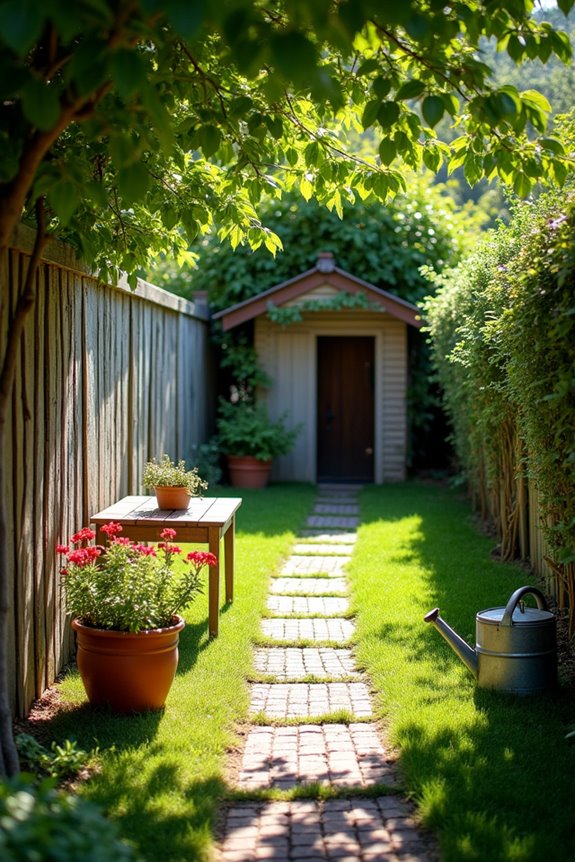
When you use “backyard” as a noun, you’re describing the actual physical space behind your house—that rear area of your property where you spend time outdoors. You’ll find this space typically features practical elements like gardens, sheds, grills, pools, or trampolines, each serving a specific purpose in your outdoor living area. As a single word, “backyard” works best because it’s more reader-friendly, clearer, and far more common in everyday writing than its hyphenated or two-word alternatives.
The Physical Space Definition
How’d you describe the outdoor space behind your house? That’s your backyard—the rear portion of your property extending from the back of your home to your property line. You’re looking at a defined area that belongs entirely to you, separate from your front yard and side yards.
| Feature | Purpose |
|---|---|
| Garden beds | Growing vegetables and flowers |
| Shed | Storage for tools and equipment |
| Patio area | Entertaining and relaxation |
| Grill station | Outdoor cooking space |
| Seating zone | Gathering with family |
Your backyard represents the whole rear space, not just specific elements within it. Whether you’ve got 500 square feet or 5,000, that entire outdoor zone is your backyard. The single word captures the complete concept—your private outdoor sanctuary where you control the layout, design, and activities.
Common Backyard Features
Now that you understand what a backyard actually is—that whole rear space behind your house—let’s look at what typically fills it.
When you’re designing your outdoor area, you’ll find certain backyard features appear again and again. Most yards include a garden where you grow vegetables or flowers. You might add a shed for storing tools and equipment. Many families install a grill for cooking outdoors. Some properties feature pools for swimming and cooling off. Trampolines provide entertainment for kids during warm months.
These backyard features transform your rear space into a functional, enjoyable area. You’re not just looking at empty grass anymore. Instead, you’ve created zones for relaxation, recreation, and maintenance. Each feature serves a purpose while contributing to your property’s overall appeal and usability.
Backyard as an Adjective (When to Use It)
Picture a summer afternoon: kids running around, the smell of grilled burgers in the air, laughter echoing across the yard. You’re planning a backyard barbecue, and you want to write about it correctly.
When you use backyard as an adjective, you’re describing something that happens in or belongs to that rear space. Think: backyard pool party, backyard games, or backyard entertainment setup. You’ll always write it as one closed word—never two words or hyphenated.
Why? Adjective forms of backyard have settled into standard single-word usage. Modern style guides consistently recommend this approach. Your readers expect consistency and clarity, which one-word backyard delivers.
What About ‘Back Yard’? (Two-Word Form)
You’ll find “back yard” as a legitimate two-word alternative, though it shows up far less often than the single-word “backyard” in modern writing. When you do encounter it, you’re looking at a valid form that many dictionaries recognize, yet style guides progressively favor the one-word version for consistency and clarity. The reality is straightforward: while “back yard” remains acceptable in certain contexts, “backyard” has become the standard choice for most writers and publications today.
Validity And Modern Usage
So what’s the deal with writing “back yard” as two separate words? You can absolutely use it, and you’ll find it in legitimate writing. Here’s what you need to know:
- Both forms are grammatically correct and widely recognized
- “Back yard” appears occasionally in style-guide-driven publications and formal contexts
- Modern writing strongly favors the one-word “backyard” in everyday use
- The two-word form works fine for the noun, though it’s less common
- As an adjective describing activities, “backyard” dominates overwhelmingly
The reality? You’re not wrong choosing “back yard.” It’s valid. However, if you want to match contemporary standards and sound current, “backyard” is your go-to choice. Most professional publications, websites, and modern dictionaries default to the closed form. You’ll fit right in using “backyard” as your standard.
Frequency Compared To Backyard
While “backyard” dominates modern writing, the two-word “back yard” still appears—just far less often. You’ll notice “backyard” as a noun shows up significantly more in contemporary texts, newspapers, and online content. The closed-compound form has become the standard choice, especially in American English.
When you’re writing descriptively—say, describing a “backyard barbecue” or “backyard fence”—you’re using the preferred single-word version. The two-word form rarely appears in these contexts anymore. Long-term usage trends clearly show “backyard” winning out over time, establishing itself as the dominant form.
British English occasionally preserves “back yard” more readily, maintaining the open compound. However, even there, the closed form gains ground steadily. Both versions technically work, but if you want to match contemporary usage patterns, “backyard” is your reliable choice for both nouns and adjectives.
British English Uses Back Yard and Back Garden
How do the British actually describe their outdoor spaces? You’ll notice they’ve got their own way of talking about these areas, and it’s quite different from American English. Here’s what you should know:
- “Back garden” is the preferred British term for residential outdoor spaces
- “Back yard” appears in British English but less frequently than back garden
- The two-word format aligns with British writing conventions and style preferences
- “Yard” gets used when describing paved or hardscaped areas specifically
- Modern British writing shows both terms, though back garden dominates
When you’re reading British publications or speaking with Brits, expect “back garden” most often. They reserve “backyard” (one word) for American contexts. You’re joining a linguistic tradition that values specificity and regional distinction in everyday language choices.
Why Compound Words Shift Over Time
Language never stands still—compound words are constantly evolving, moving from loose, separate words into tightly bound single terms. You’ve probably noticed this yourself. Words like “back yard” gradually became “backyard” through repeated use and familiarity.
Here’s what drives this change: frequency matters tremendously. When you use compound words constantly, they naturally compress. High-frequency terms shift faster toward closed forms than rarely used pairs do. Think about how “online” transformed from a two-word phrase into one solid word within just decades.
Usage context shapes this evolution too. You’ll write “backyard pool” as one word when describing something, yet say “the back yard” separately when referring to a space. This grammatical distinction influences how language settles into its final form.
The Three Spelling Mistakes That Matter
You’re most likely to trip up on three specific spelling choices: writing “back yard” as two words when modern dictionaries favor “backyard,” hyphenating it as “back-yard” when that form’s basically obsolete, or mixing formats inconsistently throughout your writing. Each mistake signals a gap between what you’ve written and what style guides, dictionaries, and contemporary writing standards actually prefer. The good news is that once you recognize these three pitfalls, you’ll know exactly which closed form to use in nearly every situation.
Common Misspellings To Avoid
When you’re writing about that outdoor space behind your house, do you know which spelling actually matters most? You’ll want to dodge these frequent mistakes:
- “Back yard” (two words) – This older form still appears, but it’s fading fast in modern writing
- “Back-yard” (hyphenated) – Rarely correct; save this for vintage documents only
- “Backyard” (one word) – This is your go-to choice for nearly every situation today
- Mixing forms inconsistently – Pick one style and stick with it throughout your writing
- Ignoring your style guide – Different publications have different preferences, so always check first
The closed compound “backyard” dominates contemporary usage. Whether you’re describing a barbecue or a garden project, this single-word form keeps you aligned with current standards. Skip the confusion and embrace this straightforward spelling choice.
Closed Versus Open Forms
How’d the word “backyard” actually become one word instead of two? Language evolves. Compounds that start as two separate words gradually merge into single units as people use them more frequently together.
You’ll encounter three main forms: closed (backyard), open (back yard), and hyphenated (back-yard). Today, closed compounds dominate modern writing. Style guides like Chicago Manual strongly favor this single-word approach for established terms like backyard.
Open forms still exist, but they’re increasingly rare. You might spot them in older texts or specialized writing, yet most contemporary writers avoid them. Hyphenated versions? They’re nearly extinct, appearing only occasionally in vintage publications.
Your best move: use backyard as one word consistently. It’s correct, current, and widely recognized across all contexts.
Dictionary Standard Preferences
Major dictionaries have settled the backyard question decisively: one word wins. When you’re writing, you’re actually following what Merriam-Webster, Oxford, and Cambridge all agree on. These authoritative sources don’t leave you guessing.
Here’s what you’ll find when you check:
- Merriam-Webster lists “backyard” as the standard single-word entry
- Oxford Dictionary confirms one word for both noun and adjective uses
- Cambridge prioritizes “backyard” in modern English contexts
- Style guides uniformly recommend the closed compound form
- Dictionary entries show “back yard” only as outdated alternatives
You’re making the right choice using “backyard” as one word. Modern dictionaries reflect how people actually write today. That single-word spelling represents current English standards, not yesterday’s conventions. When you follow these preferences, you’re aligning with what readers expect and what editors accept.
When Dictionary Entries Disagree on “Backyard”
Inconsistency plagues the word “backyard”—open your favorite dictionary and you’ll likely find it listed as one closed word, but flip to another and you might see “back yard” as two separate words instead. You’re not imagining things. Different dictionaries genuinely disagree on this compound.
| Dictionary Type | Backyard | Back Yard |
|---|---|---|
| Modern American | ✓ Preferred | Alternative |
| British References | Rare | ✓ More common |
| Older Editions | Less frequent | ✓ Standard |
This disagreement reflects how English compounds evolve. Your Merriam-Webster might show one form while Oxford favors another. The distinction between backyard vs yard matters too—one’s your entire rear outdoor space, the other’s just grass. Most contemporary sources now embrace “backyard” as the single, unified standard.
Pick One Form and Stick With It
Now that you’ve seen how dictionaries clash over “backyard,” here’s the practical truth: you don’t need to match every reference book.
Pick the form that works best for your writing and commit to it. You’ll build consistency and credibility with your readers. Here’s what matters most:
- Choose “backyard” as your default—it’s the modern standard across major style guides
- Use it consistently throughout your entire piece or document without switching forms
- Match your audience’s expectations—professional writing typically favors the single-word version
- Reserve alternatives only when necessary—”back yard” works fine in rare, specific contexts
- Trust your choice—your readers won’t notice minor variations if you stay mostly consistent
Your credibility comes from confident, deliberate decisions. Stop second-guessing yourself.
The Simplest Rule: One Word, Every Time
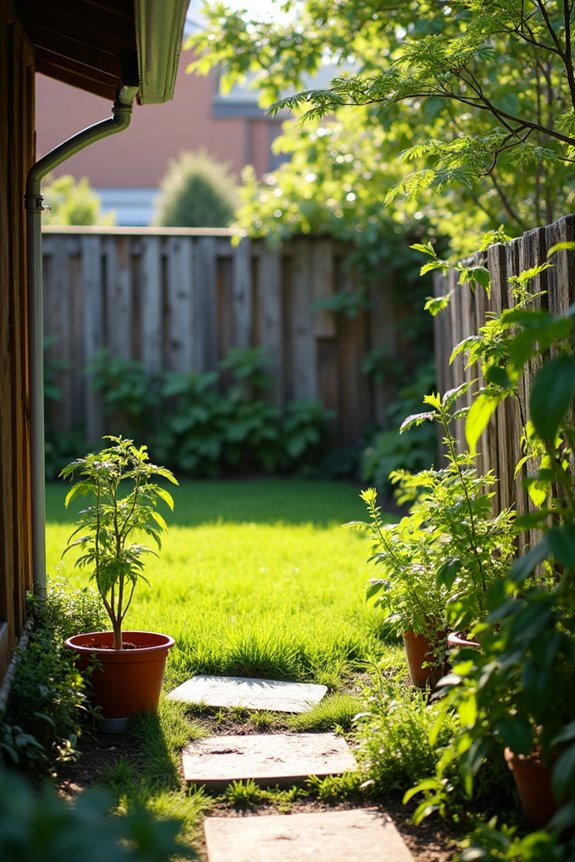
Simplicity wins—and “backyard” is your answer. You’ll want to write it as one closed word every single time. Whether you’re describing your backyard pool party or mentioning backyard gardening, stick with one word consistently. This approach keeps your writing clean and matches modern usage standards that most readers expect today.
You’ll find that major style guides and dictionaries overwhelmingly favor the single-word form. Historical trends show a clear shift toward closed compounds for familiar terms like backyard. When you’re unsure about spelling choices, choosing one word eliminates confusion entirely. Your writing becomes more professional and easier to read when you maintain consistency throughout.
Pick “backyard”—one word, every time. You’ll write with confidence knowing you’ve chosen the preferred standard.