Space your recessed lights about 6 feet apart across the ceiling, keeping them 12–18 inches from walls for balanced brightness. Position fixtures at roughly 30 degrees toward walls to create that gallery-style glow. You’ll want 6–12 lights total, depending on your room size. Install dimmable 2700K LEDs with diffuse trims to minimize glare. Create separate zones with different switches for entry, seating, and reading areas. Angle lights away from your TV and fireplace to reduce screen wash. The specifics of placement strategy differ based on furniture layout and your lighting goals.
Start With the Grid: 6-Foot Spacing and Wall Distance
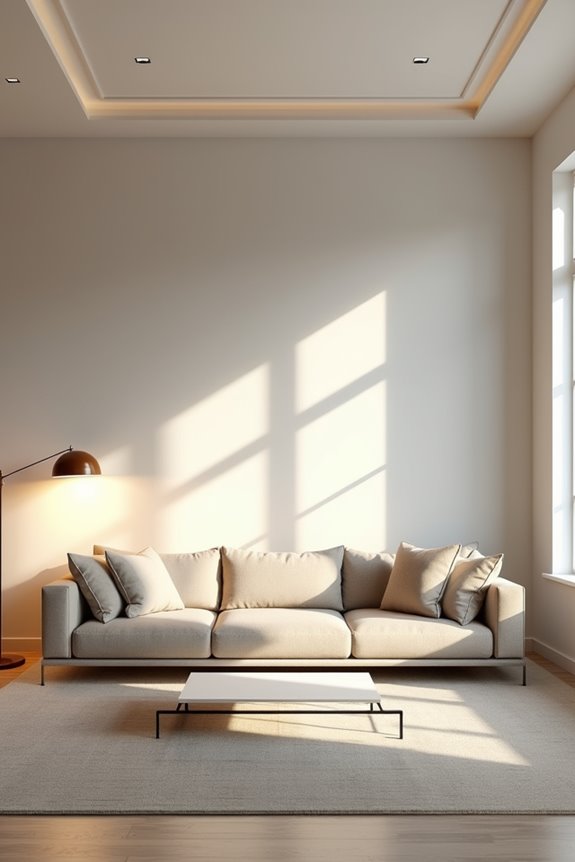
When you’re planning where to put recessed lights in your living room, starting with a simple grid system takes the guesswork out of placement. You’ll want to space your recessed lights about 6 feet on-center across the ceiling. This spacing ensures even, balanced light coverage without dark spots.
Keep your fixtures at least 3 feet away from walls. This distance prevents harsh shadows and those annoying bright spots that make walls look uneven. For wall washing effects, you can position lights closer to walls while maintaining that 6-foot spacing pattern elsewhere. Using half your ceiling height as a spacing reference helps achieve professional results. This grid approach lets you adjust brightness with dimmers, creating zones that feel intentional and polished.
Wall-Wash Your Room for Even Ambient Light
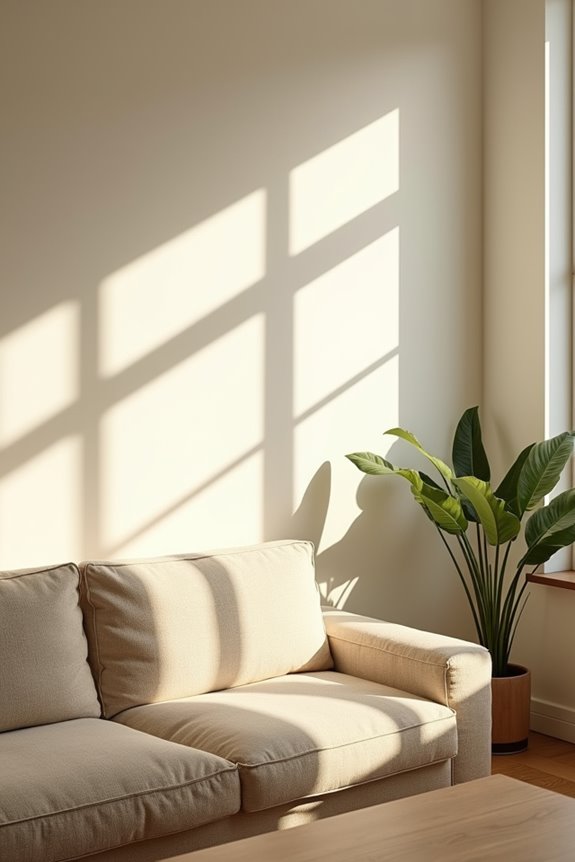
Wall-wash lighting creates uniform brightness across your walls by spacing fixtures about 6 feet apart and positioning them 12–18 inches away from the wall surface. This strategic placement eliminates harsh shadows and dark spots, giving your living room a balanced, cohesive glow that makes the space feel larger and more inviting. You’ll achieve the best results by choosing 6-inch recessed fixtures with diffuse trims and pairing them with dimmable LEDs in warm 2700K–3000K tones.
Even Light Distribution Strategy
How do you eliminate dark corners and create uninterrupted brightness throughout your living room?
Strategic Spacing Matters
Space your recessed lights roughly half your ceiling height apart. For an 8-foot ceiling, that’s about 4 feet between fixtures. This spacing prevents patchy shadows and ensures consistent illumination from entry to far wall.
Positioning for Success
Position wall-wash fixtures 12–18 inches from the wall, angling them 30 degrees toward the surface. This technique creates uniform brightness along your walls. Use 6-inch LED fixtures with baffle trims to reduce glare, especially on lighter walls that reflect more light.
Smart Choices
Install dimmable LED lights to maintain consistent wall brightness and adjust ambient levels without shifting color temperature across surfaces. Avoid clustering lights directly over seating areas. Spread fixtures across your room instead, creating balanced, inviting spaces where everyone feels comfortable.
Optimal Spacing From Walls
Once you’ve spread your lights across the ceiling to eliminate dark corners, the next step is positioning them strategically along your walls. Your recessed lighting works best when you follow these spacing guidelines:
- Place lights 12–18 inches from walls for even wall-wash effects
- Maintain 2–3 feet distance from corners to prevent harsh shadows
- Angle fixtures toward walls at roughly 30 degrees for uniform coverage
- Use 6-foot on-center spacing for 8-foot ceilings to avoid center clusters
This thoughtful placement creates the warm, inviting ambiance you’re looking for. You’ll notice how consistent spacing eliminates those frustrating bright spots and dark patches that make rooms feel disjointed. The result? A living room where everyone feels comfortable and connected.
Calculate How Many Lights You Actually Need
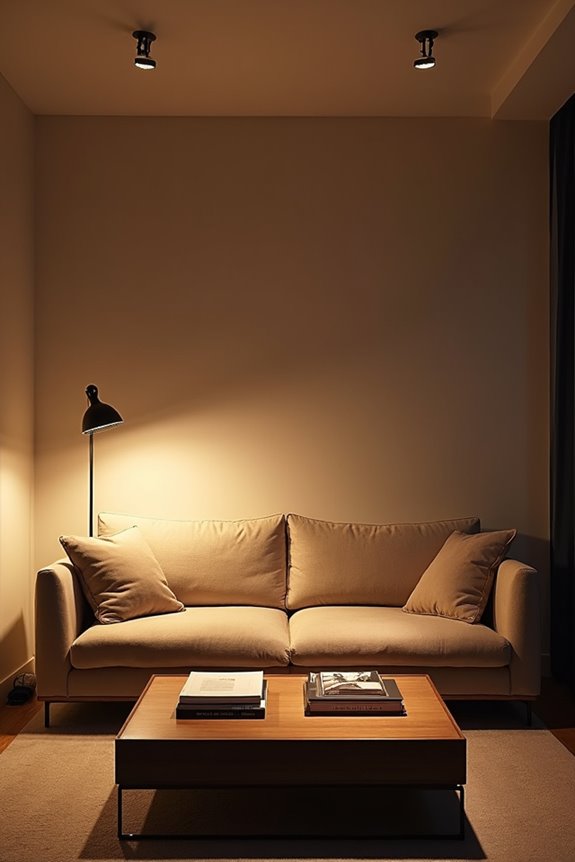
Your room’s size and layout determine your lighting foundation, so measure your space and note any architectural features that’ll affect placement. You’ll need to consider both your brightness preferences and the specific tasks you perform—reading, watching TV, or entertaining—since ambient light alone rarely cuts it. The good news: you can start with a calculator using your dimensions, then adjust by adding dimmable fixtures for task lighting in key zones rather than lighting your entire room uniformly.
Room Size and Layout
Determining the right number of can lights depends entirely on your room’s dimensions and how you plan to use the space. Your 21×11 living room needs thoughtful placement to avoid shadows and dark spots.
Consider these key factors when planning your recessed lights:
- Space fixtures 4–6 feet apart for smooth, even light coverage throughout
- Keep 3 feet clearance from walls to prevent harsh shadows and uneven brightness
- Plan 6–12 recessed lights total based on your desired brightness level
- Match spacing to half your room height (4 feet for 8-foot ceilings)
Your room’s layout shapes everything. If you’ve got a TV or fireplace, you’ll want to offset fixtures to dodge glare. Think about where you’ll sit, read, and entertain. That’s where your lights matter most.
Brightness Level Requirements
How bright should your living room actually be? You’ll want enough light for comfortable reading and conversation without creating harsh glare. Here’s the math: most living rooms need around 4,800 to 9,600 lumens total. That breaks down to roughly 800 lumens per light, so six fixtures give you moderate brightness while twelve deliver a brighter space.
Your room’s colors matter too. Light-colored walls and ceilings reflect more light, meaning you’ll need fewer fixtures to achieve the same glow. Darker surroundings require additional lights for equivalent brightness.
Don’t overlook dimmers. They’re game-changer s for flexibility. You’ll adjust brightness for movie nights, daytime relaxation, or entertaining guests without installing extra fixtures. This smart approach balances comfort with efficiency perfectly.
Task and Ambient Lighting
Now that you know your room’s brightness target, it’s time to split that light into two working categories: ambient lighting for overall coverage and task lighting for specific activities.
For your 21×11-foot living room, you’ll want about 6 recessed lights spaced roughly 4 to 4.5 feet apart to create even general brightness. Then add 1–2 dedicated task lighting fixtures near your reading nook or favorite seating spot.
Here’s why this two-layer approach works:
- Ambient recessed lights eliminate dark corners and create welcoming baseline brightness
- Task lighting lets you focus light exactly where you need it for activities
- Dimmable LED fixtures (2700K–3000K) let you adjust mood without overwhelming the space
- Adjustable 4-inch or 6-inch fixtures angled away from seating reduce glare effectively
This combo creates a space that genuinely works for both relaxation and productivity.
Light Your TV and Fireplace Without the Glare
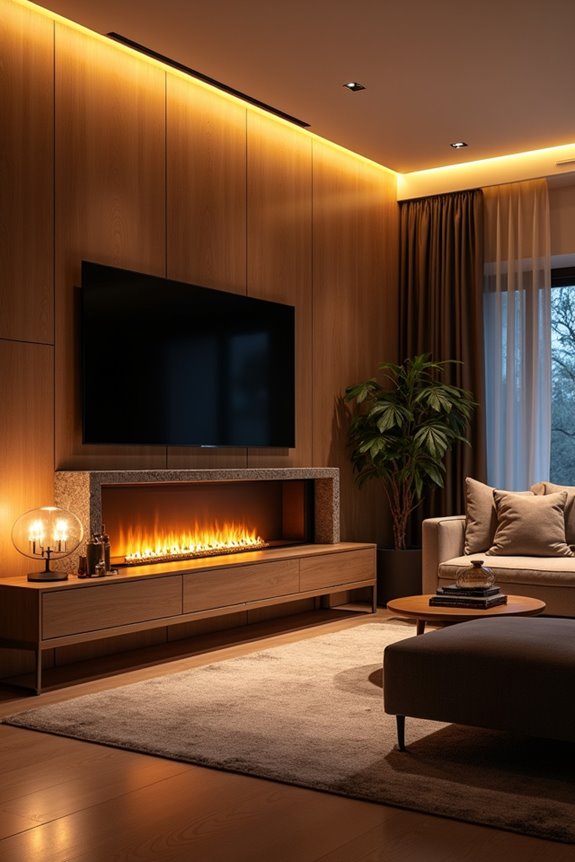
Because televisions and fireplaces create their own light, you’ll want to handle the surrounding illumination differently than you would for other rooms. Position adjustable recessed lighting 2–3 feet in front of or above your TV, angling fixtures downward at 30 degrees toward walls or artwork for effective glare reduction. Install dimmable LED cans nearby and keep brightness lower than your screen’s intensity to minimize eye strain.
Behind your TV, place wall-wash fixtures 12–18 inches from the wall. They’ll softly illuminate without shining directly on the screen. For fireplaces, position fixtures about 3–4 feet away, aiming 30 degrees toward the hearth for a warm glow. Skip ceiling lights directly overhead—they’ll wash out your viewing experience and create unwanted reflections that strain your eyes.
Add Accent Lights for Artwork and Features
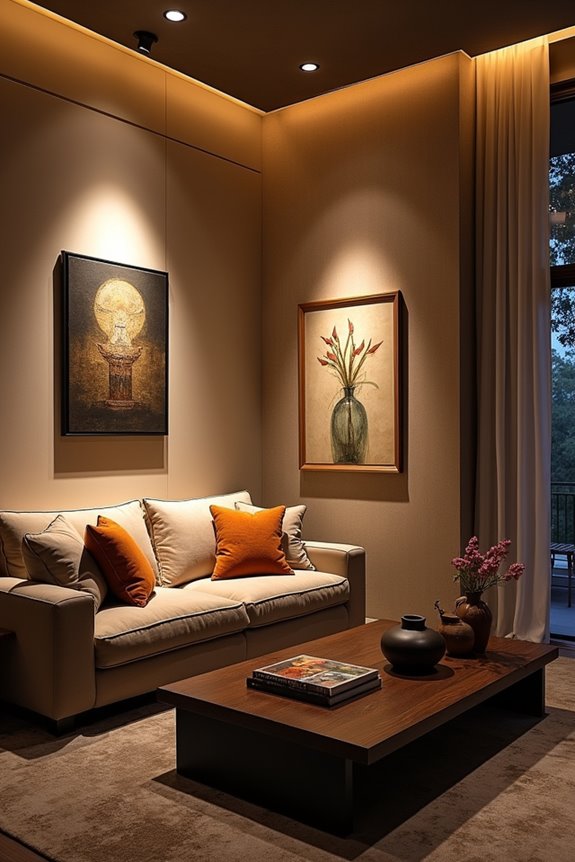
Once you’ve mastered the lighting around your TV and fireplace, it’s time to spotlight the other elements that make your living room uniquely yours.
Accent lighting transforms your favorite pieces into gallery-worthy displays. Position fixtures 12–18 inches from the wall, angling them about 30 degrees toward your artwork or feature. For adjustable fixtures illuminating artwork directly, place them roughly 30 inches away to avoid glare and ensure even coverage.
Here’s how to create the perfect ambiance:
- Select 4-inch fixtures for focused illumination on smaller features
- Choose 6-inch fixtures for broader wall-wash effects across larger pieces
- Install LED bulbs with 2700K–3000K color temperature for warm, inviting gallery lighting
- Use baffle trims on glossy surfaces to minimize glare completely
These strategic placements highlight what matters most to you.
Create Zones With Separate Switches
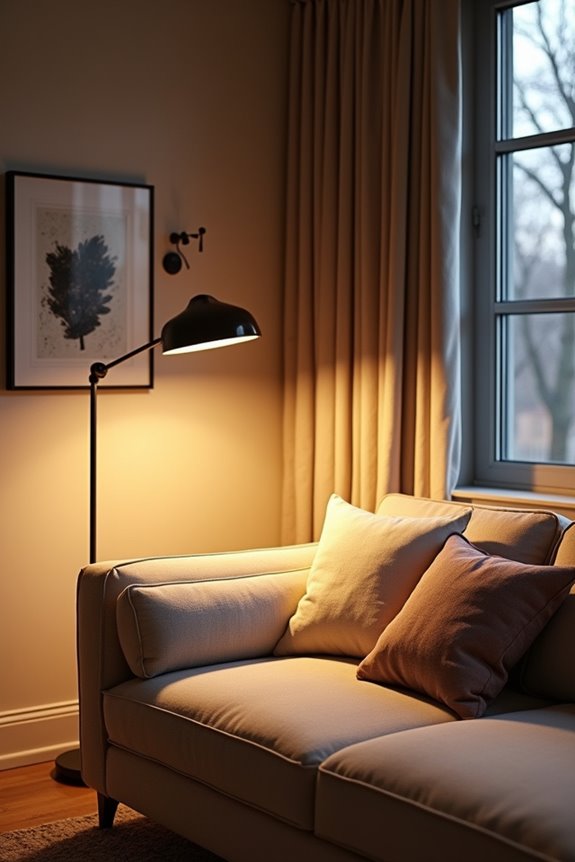
While a single switch might seem convenient, dividing your living room into independent lighting zones gives you real control over your space. You’ll want to assign distinct switches for your entry lights, far-end seating area, and couch region—three to four switches work well for a typical 21×11 ft. living room.
This approach lets you customize brightness for different activities. Dim the TV zone to reduce glare during movies. Keep your reading nook fully lit for comfort. Brighten the entry when guests arrive. You’re essentially creating distinct environments within one room.
Align zone boundaries with your furniture layout. Place switches along entry walls and behind seating areas. This strategic separation prevents overlighting the center while maintaining balanced brightness everywhere you spend time.
Avoid These Common Placement Mistakes
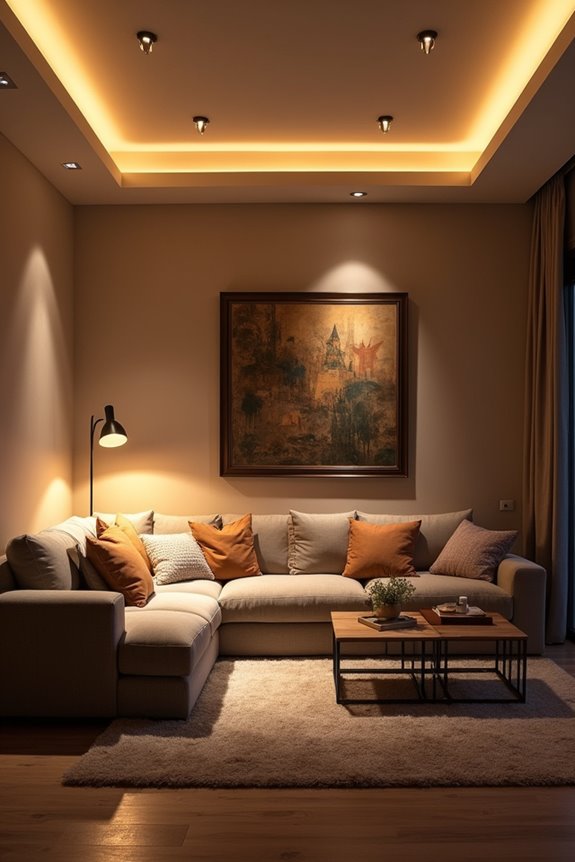
How many times have you sat under a recessed light and felt that uncomfortable glare? You’re not alone. Many homeowners make placement mistakes that undermine their living room’s comfort and appeal.
Here’s what to avoid:
- Positioning recessed lighting directly above seating areas, creating harsh hotspots and eye strain
- Centering all fixtures on your ceiling, which rarely delivers the balanced look you’re after
- Placing lights too close to walls—stay 2–3 feet away to prevent shadows
- Using uniform grids without variation, missing opportunities to highlight your TV or fireplace
Don’t rely on one layout approach. Spacing matters tremendously for even brightness. Avoid installing too many high-lumen fixtures without dimming capability, which leaves you stuck with an overly bright room. Strategic placement ensures your recessed lighting enhances comfort while highlighting what matters most.