Yes, you can paint bathroom floor tiles, but prep work determines everything. Clean thoroughly, sand the surface, and let it dry completely—grime blocks adhesion. Use epoxy paint with primer, base coat, and sealer; skip basic latex paint. This system resists moisture and staining when applied properly. Expect about one year of durability in low-traffic areas like powder rooms. Higher-wear zones near sinks fade faster. Get the specifics on timing, technique, and maintenance right, and you’ll transform your floors.
Preparation Beats Tile Quality
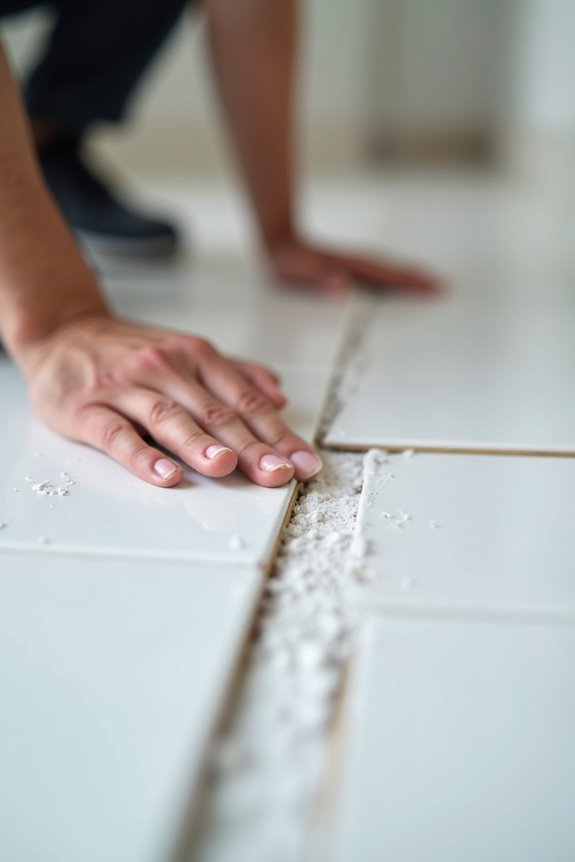
Here’s the truth: you can’t paint over dirty tiles and expect success. Your prep work determines whether paint sticks or peels. Start by thoroughly cleaning your floor, scrubbing grout lines with a brush to remove grime and soap buildup. Sand the tile surface to create texture, which helps adhesion significantly.
Next, rinse everything with warm water, removing all residue that could block primer bonding. This step matters more than you’d think. Allow complete drying—moisture ruins paint jobs faster than poor quality tiles ever could.
Don’t skip protecting your grout lines during painting. Cover them strategically to prevent paint penetration and maintain clean lines. Surface preparation takes time, but it’s your foundation for success. Quality tile means nothing without proper preparation behind it.
When Painting Tiles Makes Sense
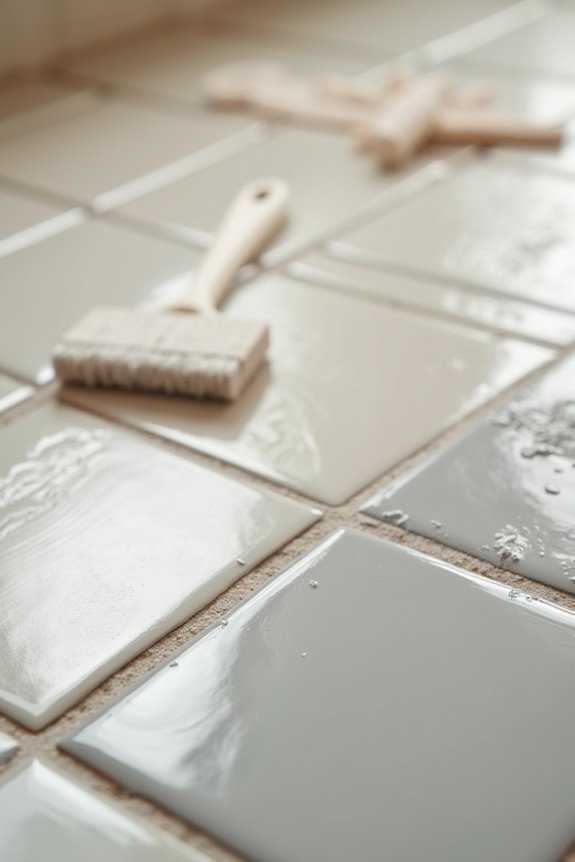
So when does painting bathroom floor tiles actually work? You’ll find success in lower-traffic bathrooms where foot traffic stays minimal. Guest bathrooms and powder rooms are ideal candidates. Solid, uncracked tiles without peeling finishes respond best to painting projects.
Painting bathroom floor tiles works best in low-traffic spaces like guest bathrooms and powder rooms with solid, uncracked tiles.
You’ll want to skip basic latex wall paint entirely. Instead, invest in dedicated epoxy paint or floor coating systems that include a base coat, color layer, and protective top coat. This three-step approach delivers real durability.
Your prep work determines everything. Thorough cleaning, degreasing, grout scrubbing, and proper priming create adhesion that lasts. Two color coats plus sealing give you easy-to-clean floors that resist moisture.
Skip high-traffic master bathrooms for now. These zones demand frequent touch-ups and resealing. Save painted tile floors for spaces where they’ll genuinely thrive.
Choose the Right Paint for Moisture
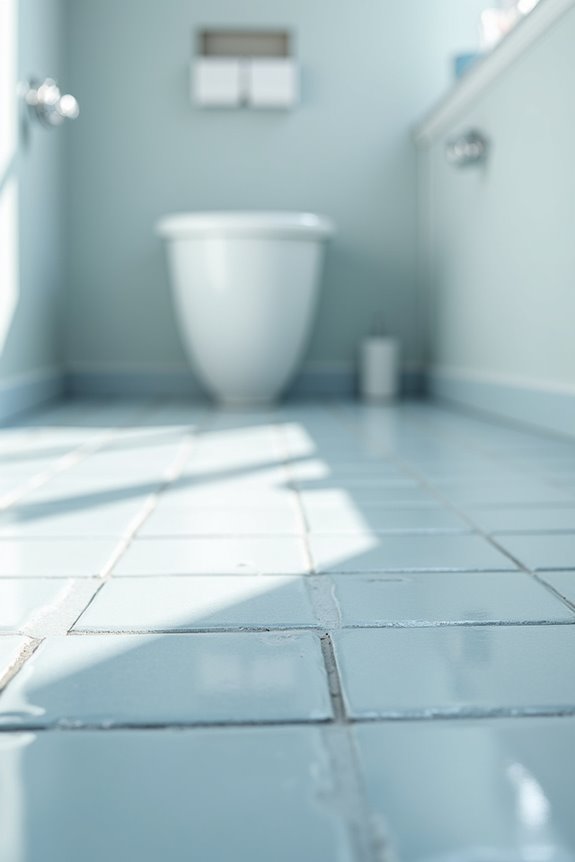
You’ll need to match your paint type to your bathroom’s moisture level—epoxy paint handles wet areas brilliantly, while latex paint works fine in drier bathrooms. Before you pick your paint, you’ve also got to select the right primer based on your specific tile type, whether that’s ceramic, porcelain, natural stone, or unglazed quarry tile. Getting both decisions right means your painted tiles will actually last instead of peeling and bubbling within a year.
Epoxy Paint For Moisture
When it comes to protecting bathroom tiles from water damage, epoxy paint stands apart as the heavyweight champion of moisture resistance. You’ll find that epoxy creates a hard, near-impervious film that shields your bathroom tiles from constant moisture exposure.
Here’s what makes epoxy paint your best choice for floor tile coating:
- Creates superior moisture barrier protection on ceramic and porcelain tiles
- Resists staining, mildew, and moisture penetration when properly applied
- Works exceptionally well on non-porous substrates
- Delivers outstanding durability compared to standard latex options
- Requires epoxy primer for maximum adhesion and longevity
The catch? Application demands precision. You’ll need a clean, grease-free surface, careful mixing ratios, and proper ventilation. The longer pot-life requires focus, but the resulting moisture resistance makes epoxy paint worth the extra effort for bathroom durability.
Latex Paint For Dry Areas
Why settle for expensive tile replacement when latex paint offers a smart, budget-friendly alternative for bathroom spaces that don’t get constantly wet?
You’ll find latex paint works wonderfully on ceramic, porcelain, or unglazed quarry tile in drier bathroom areas. It’s an affordable solution that transforms tired tiles without breaking your budget. Here’s what you need to know: primer is essential before applying latex paint. This crucial step improves adhesion and ensures your paint sticks properly to tile surfaces.
However, consider your bathroom’s moisture levels carefully. Latex paint performs best in areas with lower moisture exposure. If your bathroom gets regularly damp, epoxy paint provides superior moisture resistance. Think about your bathroom layout. Does water splash constantly on these tiles, or do they stay relatively dry? Choose accordingly—latex for dry areas, epoxy for wet zones.
Primer Selection By Tile Type
How’d you know which primer to grab at the store? Choosing the right primer matters more than you’d think for bathroom success.
Your tile type determines everything. Here’s what you need:
- Ceramic tiles: Use epoxy or urethane primers for superior adhesion
- Porcelain tiles: Epoxy primers work best on this dense, smooth surface
- Natural stone: Masonry primer protects porous materials effectively
- Unglazed quarry tile: Masonry primer prevents moisture penetration
- All bathroom tiles: Epoxy primers resist humidity best
These primers create a protective barrier on moisture-prone surfaces. They’ll stop peeling and blistering before they start. You’ll notice improved adhesion immediately.
Don’t skip the drying time—follow manufacturer instructions exactly. Most primers need several hours before you paint. This patience pays off with lasting results. Your bathroom floor deserves the right foundation.
The Four-Step Painting Process
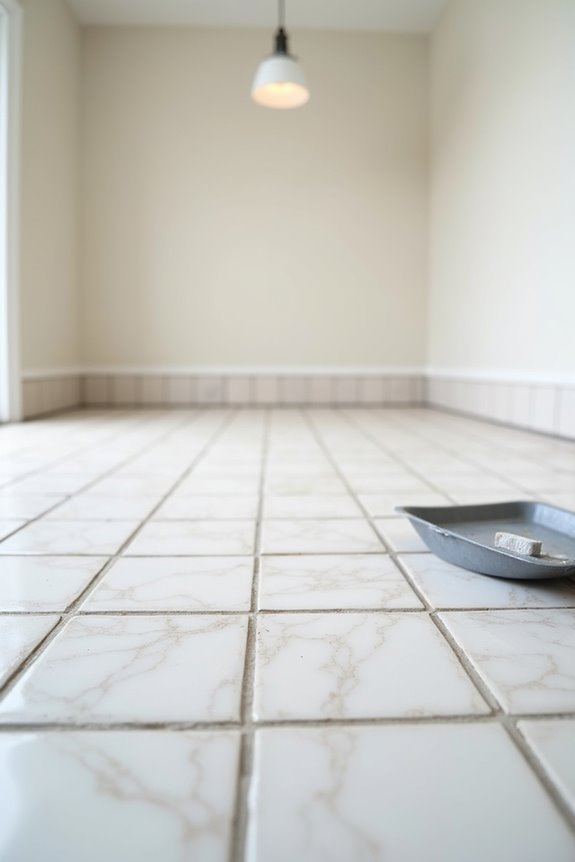
Once you’ve prepped your tiles, you’re ready for the real transformation—the painting process itself. You’ll follow a straightforward sequence that delivers professional results.
Step One: Prime Your Surface
Apply your epoxy primer with purpose. You’re creating a sticky foundation that helps paint adhere to ceramic, porcelain, or stone. Let it dry completely before moving forward.
Step Two: Apply Base Color
Use edge work with a handbrush along grout lines and corners. Then grab your roller for smooth, even coverage across the field tiles. You may need multiple coats—typically two or three—allowing drying time between each.
Step Three: Add Design Elements
Paint your base color first, then apply stencil or design color for visual interest.
Step Four: Seal and Protect
Top everything with a clear topcoat. This protective layer matters in moisture-heavy bathrooms, extending your tile’s painted lifespan significantly.
One-Year Durability Reality Check
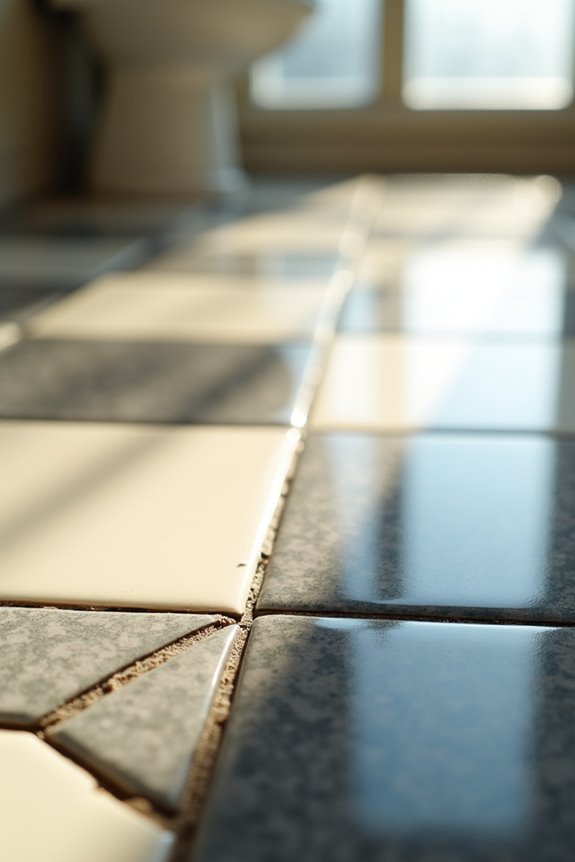
What does painted bathroom tile actually look like after twelve months of real use? You’ll find your bathroom floor tiles holding up better than you’d expect, assuming you followed proper prep, base coat, and top coat application with full curing time.
Painted bathroom tiles hold up better than expected with proper prep work, base coat application, and full curing time.
Here’s what aging wear typically reveals:
- High-traffic wear appears near doorways and sinks with visible chipping
- Lower-traffic areas maintain pristine condition remarkably well
- Small nicks and scratches develop from daily use and cleaning
- Darker discoloration marks uneven wear patterns in certain spots
- Overall durability remains positive with routine maintenance
Your painted tile floors demonstrate solid resilience when you’ve invested in correct installation techniques. While durability isn’t perfect, proper preparation and patience during curing create lasting results. Light sweeping and mild cleaning preserve your investment effectively throughout the year.
When Paint Fails: Touch-Ups and Fixes
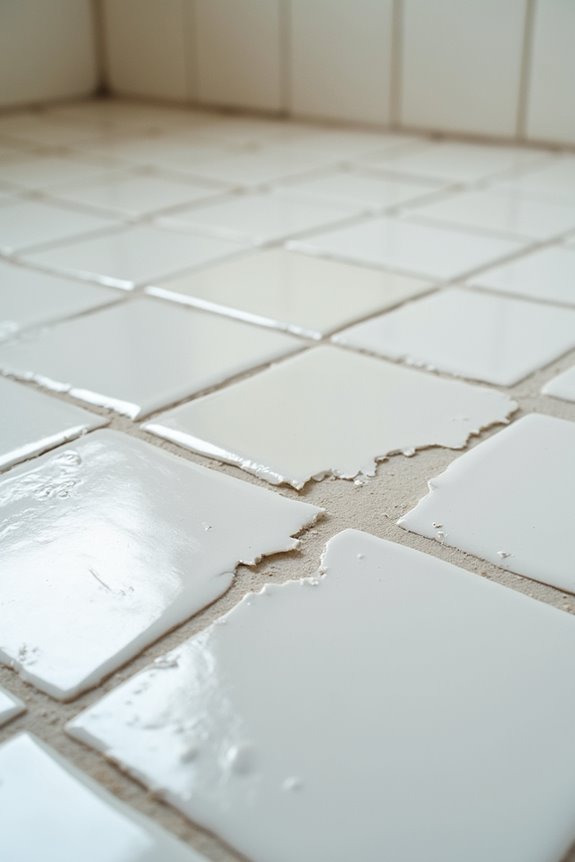
Even with excellent preparation and quality materials, your painted bathroom tiles will eventually show wear—and that’s completely normal. You’ll notice chips in high-traffic repair zones or scratches near the shower. Here’s the good news: touch-ups are straightforward.
Start by applying base color to damaged spots. Once dry, add your stencil color using a small brush for precision. Finish with a top coat to blend repairs smoothly. For edges and corners, swap your roller for a stencil brush—this prevents excess paint and keeps lines crisp.
If your touched-up section shows uneven sheen after the base color and stencil color dry completely, reapply the top coat. Fix issues immediately as you notice them. This prevents backtracking and maintains your painted tile floors’ cleaner final pattern.