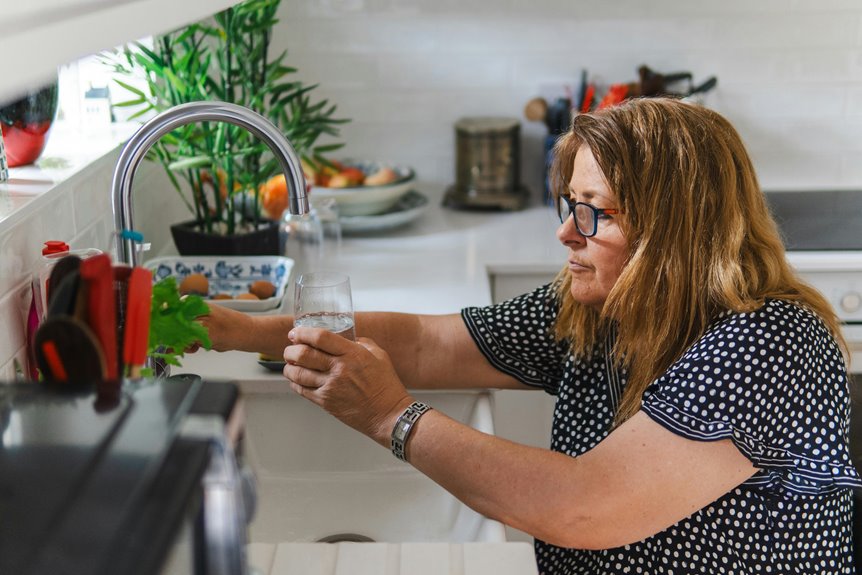
You can’t assume your bathroom tap water’s safe to drink without testing it first. Start by checking for visual signs—cloudiness, discoloration, or particles indicate problems. Smell the water; chlorine or metallic odors suggest contamination. Test for lead, metals, and chlorine using a quality water testing kit. Install a point-of-use filter under your sink to reduce contaminants. Replace filter cartridges monthly for best results. Run cold water for 30 seconds before drinking. If testing reveals unsafe levels, contact a licensed plumber immediately. Understanding what makes bathroom water risky helps you take the right protective steps.
Is Bathroom Tap Water Safe to Drink?
Why would you want to drink from your bathroom sink when your kitchen tap’s right there? Well, you might not have a choice sometimes. But here’s what you need to know: bathroom taps carry real risks that kitchen faucets don’t always face.
Your aging plumbing could be working against you. Corroded pipes leach lead, copper, and iron directly into your water. Bathroom fixtures sit dormant longer than kitchen ones, allowing stagnation to build up contaminants. Plus, bathroom environments expose water to more sources of potential pollution.
Even though your bathroom and kitchen often share the same water source, local conditions create different exposure risks. The takeaway? Don’t assume bathroom water is automatically safe. Test it first, or stick with your kitchen tap instead. Your health matters more than convenience.
Why Bathroom Water Differs From Kitchen Water
You might assume that water from your bathroom sink and kitchen tap are identical, but they’re often not. Your bathroom fixtures sit unused for hours or days, allowing metals like lead and bacteria to accumulate inside the pipes and aerators. Meanwhile, your kitchen tap gets regular use, which keeps water moving and prevents the buildup that makes bathroom water potentially less safe to drink.
Fixture Materials And Age
Have you ever noticed that your bathroom sink tastes different from your kitchen tap? Your bathroom fixtures likely use lower-grade alloys and materials than kitchen counterparts, which directly affects what you’re drinking.
Older bathroom plumbing often contains lead or outdated solder—components your kitchen probably replaced years ago. This plumbing age creates serious concerns. Corrosion builds up inside aging pipes and valves, releasing metals into your water supply. Meanwhile, scale accumulation alters both taste and contaminant levels.
Here’s the reality: bathroom taps rarely get upgraded like kitchen fixtures do. Your bathroom’s original components have been sitting there, slowly deteriorating. Supply lines and internal valves shape your water quality considerably. Understanding your fixture’s age and material composition helps you assess whether your bathroom water is genuinely safe to drink.
Water Stagnation And Usage
When’s the last time someone actually drank from your bathroom sink? That’s the real issue. Your bathroom taps sit unused far longer than kitchen faucets, allowing water to stagnate inside pipes and fixtures. When water doesn’t move, metals, bacteria, and mineral buildup accumulate more readily.
Rarely used bathroom sinks face particular risk. Stagnation creates the perfect environment for biofilm to develop, affecting both taste and quality. Older bathrooms compound this problem—lead pipes and degraded alloys leach contaminants into stagnant water faster than modern kitchen plumbing does.
Here’s your solution: run cold water for 30 seconds before drinking. This simple step flushes out stagnation and reduces initial contaminants at the tap. Longer waits help in older homes. Regular usage matters too—the more frequently you use bathroom taps, the less likely problems develop.
What Unsafe Bathroom Water Looks, Smells, and Tastes Like
Your bathroom water sends you clear warning signals through three main senses: what you see, smell, and taste. You might notice discoloration like brown or yellow tints, visible sediment, or cloudiness that signals rust and mineral buildup in old pipes. You could also detect unusual odors—metallic notes, rotten egg smells, or strong chlorine—alongside off-tastes that range from metallic to chemically harsh, all red flags that your water needs attention.
Discoloration and Visible Particles
Why does your bathroom sink water sometimes look cloudy, rusty, or downright murky? You’re witnessing telltale signs that warrant attention. Discoloration typically stems from rust, mineral deposits, or pipe corrosion—all red flags for potential safety concerns.
You’ll notice visible particles like sediment or a cloudy appearance from worn fixtures, aging plumbing, or contaminated supply lines. When you run the tap and debris or specks appear after several seconds, stagnation or compromised filtration is likely occurring.
Here’s what matters: don’t ignore these visual warning signs. They’re your water’s way of communicating trouble. You deserve confidence in what flows from your taps, which is why safety testing becomes essential whenever discoloration or particles appear consistently in your bathroom sink water.
Unusual Odors and Chemical Smells
How often do you actually smell your bathroom tap water before drinking it?
That chemical tang—chlorine, bleach, or solvent hints—signals disinfection byproducts or stubborn contaminants lurking in pipes and materials. You’re not imagining it.
A metallic or rotten egg odor? That’s corrosion, minerals, or bacterial activity in your plumbing or heater system talking. These smells indicate real water quality concerns worth investigating.
Sweet, musty, or fishy odors point to biofilm buildup, microbial contamination, or degraded rubber components in your fixtures. Your nose is doing its job—alerting you to problems.
When odors combine with discolored water, you’ve got a serious signal. That combination demands testing and potential pipe inspection. Don’t ignore what your senses tell you about your water’s safety and taste.
Off-Taste and Metallic Flavors
Ever notice a sharp, metallic twang when you sip from your bathroom tap? That’s your signal to pause and investigate. A metallic taste typically indicates metals like iron, manganese, or copper leaching from old pipes or fixtures into your water supply. These contaminants shouldn’t go ignored.
The culprit often traces back to aging plumbing materials corroding over time. When water sits stagnant in bathroom lines, it picks up unwanted flavors. You might also detect bitter or medicinal notes, which point to mineral imbalances or deteriorating fixtures.
Here’s a quick test: run cold water for thirty seconds. If the off-taste persists afterward, contaminants are present rather than temporary residue. Don’t dismiss this warning sign—it matters for your health and safety.
Lead Pipes and Old Plumbing: Why They Matter
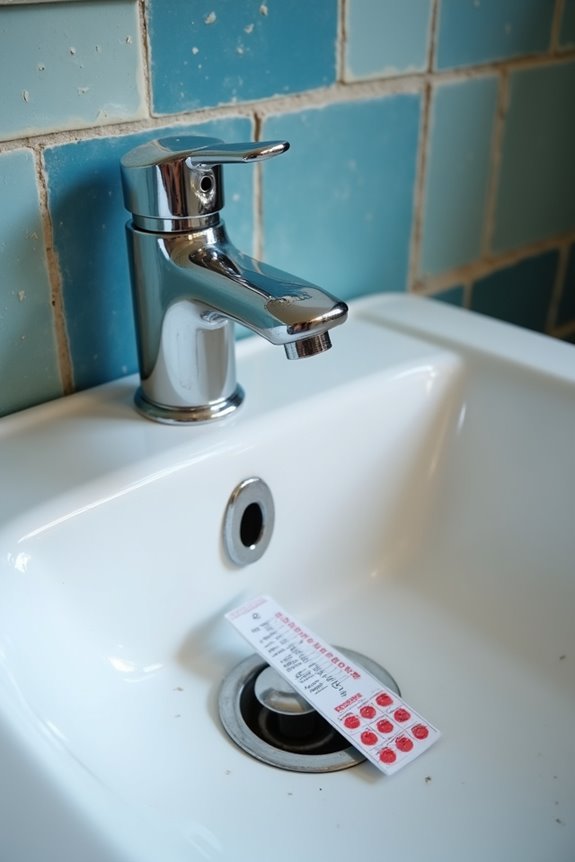
When did your home get its plumbing installed? If you’re living in an older house, your pipes might be silently contaminating your water. Lead pipes and outdated materials like lead solder and brass fittings can leach metals into your drinking water, especially when corrosion develops.
Here’s what makes this risky:
- Lead exposure harms children’s developing brains and nervous systems
- Pregnant individuals face increased health risks from contamination
- Stagnant water in rarely-used sinks concentrates lead levels
- Old plumbing materials corrode over time, releasing metals
You can’t see or taste lead alone. That’s why water testing matters—it’s your direct line to safety. Consider replacing old plumbing or installing certified filtration systems. Taking action now protects you and your family.
Why Hot Water in Bathroom Sinks Isn’t Safe
Your old pipes aren’t the only problem lurking in your plumbing system. The hot water flowing from your bathroom tap poses real safety risks you should know about.
Hot water sitting in your heater and pipes longer than cold water creates ideal conditions for problems. Bacteria can actually survive and grow in warm, stagnant lines—heating doesn’t reliably kill all pathogens. Meanwhile, hot water leaches minerals and metals from corroded pipes and heater interiors, increasing contaminant levels substantially.
Hot water sitting in pipes creates ideal conditions for bacterial growth and leaches minerals from corroded interiors.
Rust and sediment accumulate inside water heaters over time. When you run hot water, these particles get drawn directly into your sink.
The solution? Stick to cold bathroom water for drinking and brushing teeth. Reserve hot water for cleaning tasks only. This simple switch protects your health effectively.
How Bacteria and Mold Hide in Bathroom Pipes
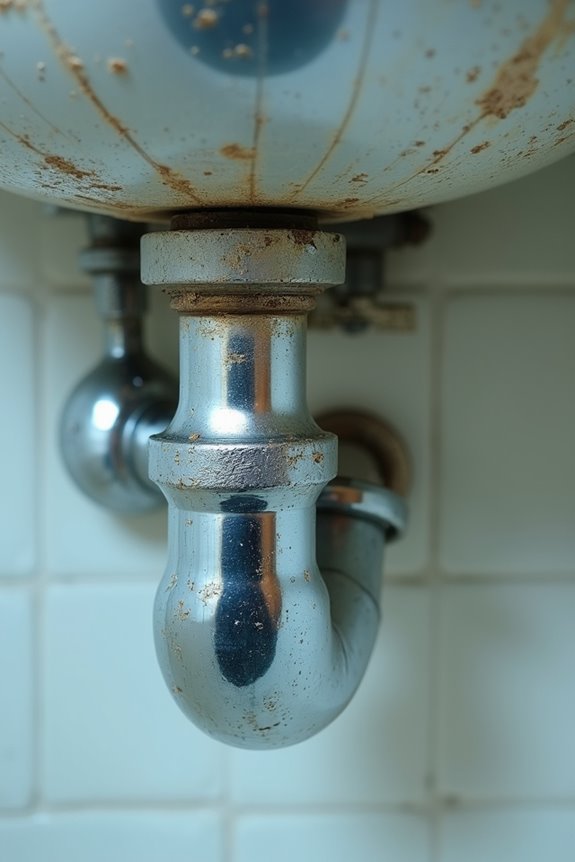
Beyond what you can see, bacteria and mold are thriving inside your bathroom pipes, clinging to interior surfaces like unwelcome squatters. You’re likely unaware they’re multiplying in the darkness.
Where They Hide
Biofilm forms on pipe walls, creating a slimy layer that traps bacteria and protects mold from cleaning efforts. This buildup worsens in humid bathrooms and older pipes with scale or corrosion.
Your pipes become breeding grounds when you:
- Leave water stagnant in rarely used fixtures
- Allow moisture to accumulate without ventilation
- Skip regular flushing of bathroom drains
- Ignore visible discoloration or buildup
Soap residues, shampoos, and cleaning agents feed these microbial communities, affecting water taste and odor. Mold can even release spores directly into your water supply. You’ll need professional assessment if your pipes are old or corroded.
From Water Plant to Bathroom Tap
Your bathroom tap water travels through multiple stages and locations before it reaches you, each one affecting what you actually drink. Municipal treatment plants use processes like chlorination and filtration to meet safety standards, but that’s just the beginning—your water then moves through distribution mains, service lines, and finally your home’s plumbing system, where corrosion in older copper or lead pipes can introduce contaminants that treatment alone can’t prevent.
Treatment Processes and Standards
Before water ever reaches your bathroom sink, it’s traveled through a rigorous treatment journey designed to make it safe for drinking. Your local water plant doesn’t just pump water straight to your home—it transforms it through multiple steps that meet strict EPA standards.
Municipal plants use four key processes:
- Coagulation removes particles and impurities
- Filtration catches remaining contaminants
- Chlorination or chloramination kills harmful bacteria
- Corrosion control prevents lead from pipes
These treatments eliminate dangerous microorganisms and reduce contaminants to safe levels. You’ll receive an annual Consumer Confidence Report detailing what was found and how your water plant handled it. However, your bathroom tap’s water quality depends on what happens after treatment—aging pipes and storage tanks can still affect what comes out.
Contamination Points Along Route
Where does your water pick up trouble after leaving the treatment plant? Your water travels through miles of municipal pipes before reaching your home. Old pipes and corrosion introduce contaminants you can’t see. Storage tanks, pumps, and valves add their own risks, especially in aging systems.
| Location | Common Contaminant |
|---|---|
| Municipal distribution pipes | Lead, rust, biofilm |
| Storage tanks | Sediment, bacteria |
| Household plumbing | Copper, lead from solder |
| Brass fixtures | Metal particles |
Inside your home, internal plumbing becomes another danger zone. Aged pipes with corroded solder joints release metals into your water. Stagnant water sitting in pipes allows bacteria to multiply and leach metals. Temperature fluctuations speed up corrosion. Your bathroom tap’s water quality depends on every link in this chain—from treatment plant directly to you.
How to Test Your Bathroom Water at Home
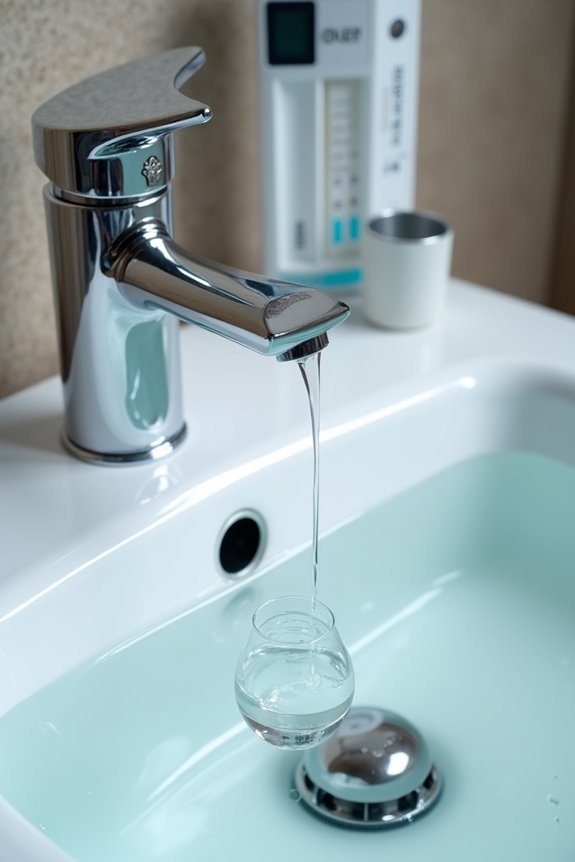
How confident are you that your bathroom sink water is actually safe to drink? You don’t have to wonder anymore. Home testing kits let you check for bacteria, lead, nitrate, and chlorine levels yourself.
Home testing kits empower you to verify your bathroom sink water safety by checking for bacteria, lead, nitrate, and chlorine levels.
Here’s what you’ll do:
- Run your cold water faucet for 30 seconds first
- Collect your sample in a clean, sterile container
- Follow your kit’s specific instructions for timing and storage
- Submit to a certified lab if you need detailed contaminant analysis
Compare your results against EPA drinking water standards. This tells you whether contaminants exceed safe levels. If you find elevated lead, bacteria, or heavy metals, consider installing point-of-use filtration. Then retest after installation to confirm improvement.
Best Filters for Bathroom Sinks and Showers
Once you’ve tested your water and found problems, it’s time to fix them. You’ve got solid options for bathroom drinking water filtration that actually work.
Under-sink carbon filters tackle chlorine, odors, and metals in six to twelve months. They’re affordable and straightforward to install. Shower filters with Vitamin C target chlorine and metals in your spray, though they won’t purify drinking water alone.
For serious contaminant removal, reverse osmosis systems installed beneath your sink provide comprehensive filtration, reducing dissolved minerals and chemicals. They’re thorough but pricier.
Whole-house systems treat water at the source, benefiting every tap. However, they’re overkill if you’re only concerned with bathroom drinking water.
Whatever you choose, replace filters regularly—manufacturer guidelines matter. Consistent maintenance keeps your filtration working effectively.
Run Cold Water 30 Seconds Before Use (and Why)
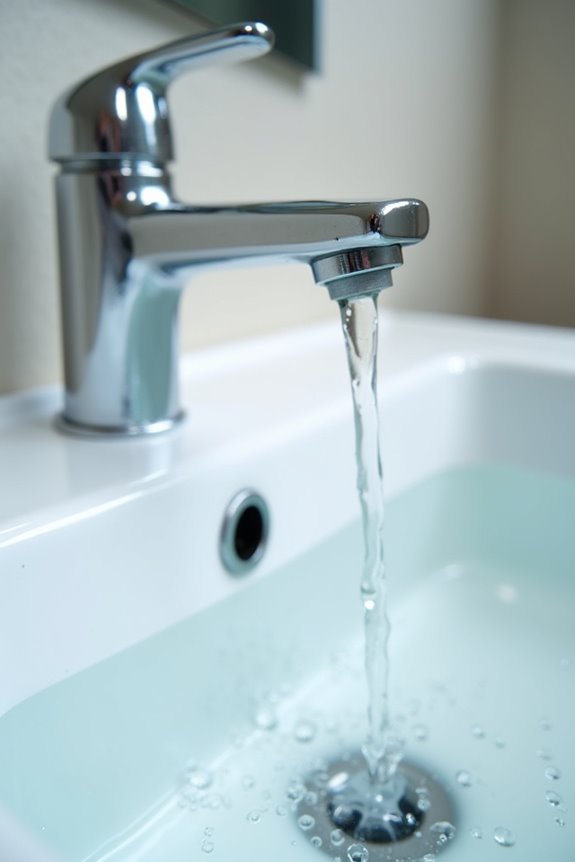
Why should you let that cold water run before taking a sip? That stagnant water sitting in your pipes overnight contains unwanted stuff. Here’s what flushing accomplishes for you:
- Removes trapped contaminants from idle supply lines
- Clears residual buildup from faucet aerators
- Reduces dissolved minerals from hot-water heaters
- Flushes out stale water that’s been sitting still
Running cold water for 30 seconds isn’t complicated, but it’s essentially effective. You’re naturally giving your pipes a quick rinse, pushing out anything that accumulated while nobody used them. This simple practice improves immediate water freshness, especially in older bathrooms or rarely used sinks. Cold water naturally contains fewer minerals, making it your safer choice before drinking.
When Should You Call a Plumber or Water Quality Professional?
Sometimes you can’t fix water quality issues yourself, and that’s when you need expert help. You should call a plumber if you notice sudden changes in taste, odor, or color in your bathroom sink water. These signs often indicate pipe corrosion, sediment buildup, or bacterial growth that requires professional attention.
Testing for Lead and Contaminants
If your home has old lead pipes or metal piping, seek professional testing. Vulnerable household members—pregnant women, children, and elderly relatives—deserve verification that your water’s safe. A licensed plumber or certified laboratory can run comprehensive testing for lead, copper, and bacteria, then interpret results against EPA standards.
Other Professional Situations
Request a backflow test if you suspect cross-contamination between fixtures. Contact a water quality expert when local utility reports show contaminants above safety thresholds or recommend testing due to infrastructure issues.
Your Bathroom Water Safety Checklist: Test, Filter, or Switch
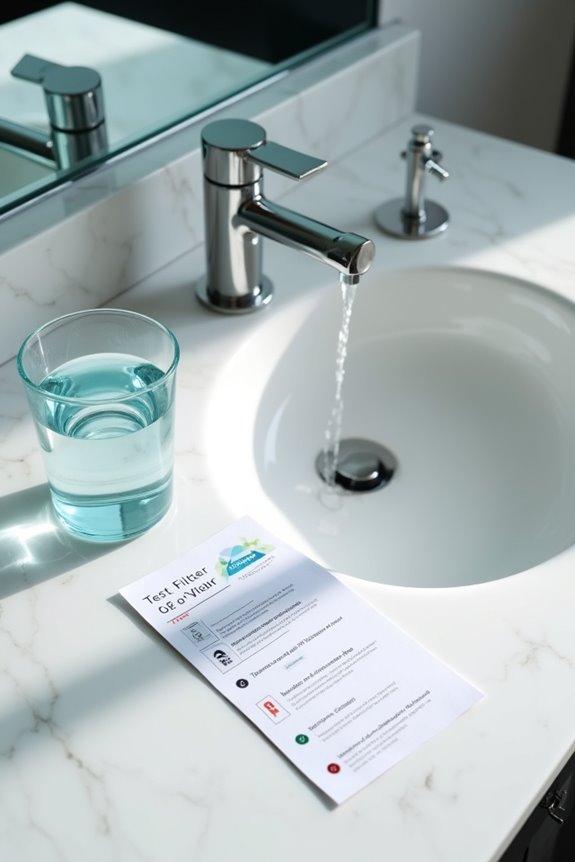
How confident are you that your bathroom sink water is actually safe? You deserve peace of mind about what flows from your tap.
How confident are you that your tap water is truly safe? You deserve peace of mind about what you’re drinking.
Start by taking these action steps:
- Test your water using a certified lab or home kit for lead, bacteria, nitrate, and dissolved solids
- Compare results against your local public water quality report to spot problem areas
- Install a point-of-use filter under your sink to reduce chlorine, metals, and odors
- Replace filter cartridges monthly and flush your filtration system regularly
If testing reveals lead above safe levels, contact a licensed plumber about pipe replacement or corrosion control. You’re protecting yourself and your household. Regular maintenance keeps your filtration working effectively, giving you confidence in every glass you drink.