
Yes, you can see through sheer curtains at night—and your interior lights are the problem. When you turn on lamps inside, they create a spotlight effect against the darkness outside, making silhouettes and objects distinctly visible from the street. Lightweight sheers with loose weaves offer almost no resistance to light penetration. Heavier fabrics with 8-12 denier density block considerably more light than thin 3-5 denier options. Layering sheers with blackout panels or heavier curtains dramatically improves nighttime privacy while maintaining daytime light diffusion.
Why Interior Lighting Exposes You Through Sheers at Night
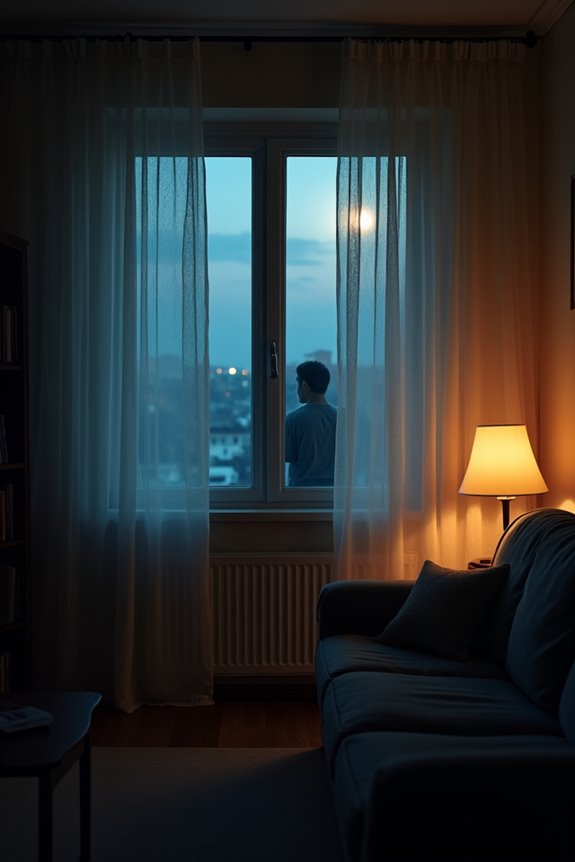
Ever wonder why you can suddenly see right through your sheer curtains once the sun goes down? Interior lighting creates a dramatic shift in visibility through sheers. When you turn on your lights at night, you’re essentially creating a spotlight effect. The brightness inside contrasts sharply with darkness outside, making silhouettes and objects inside appear crystal clear to anyone looking in.
The problem intensifies with unlined sheers. Their minimal backing or lining offers virtually no resistance to light penetration. Fabric weight and weave density matter too—lighter fabrics transmit more light. This is why layering with blackout curtains or a two-layer system works. Adding heavier drapes reduces outside view at night significantly. Simply dimming interior lighting or closing outer curtain layers improves night privacy substantially.
How Fabric Weight Changes What Neighbors See
The weight of your curtain fabric plays a bigger role in your night privacy than you might think. Heavier fabrics with higher denier ratings and tighter weave density block significantly more light transmission than lightweight alternatives. Your sheer curtains made from thin, loosely woven material? They’re practically transparent when interior lights shine through. Conversely, semi-sheer options with denser construction create real barriers against prying eyes. The difference is measurable: lightweight sheers (around 3-5 denier) expose silhouettes easily, while medium-weight versions (8-12 denier) obscure them considerably. You’ll notice that layered window treatments—combining sheers with heavier panels—give you maximum control. Your choice of fabric weight directly determines whether neighbors see clear shapes or just blurred shadows. Understanding denier matters when protecting your night privacy.
Which Sheer Fabrics Offer the Most Privacy
Your fabric choice determines whether you’re basically broadcasting your evening activities to the street or actually keeping your space private.
Tighter Weaves Win
Dense, tightly woven fabrics dramatically reduce night-time visibility compared to pure sheers. You’ll notice semi-sheer options provide genuinely better night-time privacy while still filtering daylight beautifully. Looser weaves? They’re practically transparent once interior lighting kicks in.
Smart Fabric Picking
Look for curtains with heavier fabric density—they minimize apparent see-through significantly. Semi-sheer materials strike an ideal balance: daylight filtering during daytime hours, reasonable privacy after dark.
Layering Matters Most
Here’s the truth: even quality sheer curtains benefit from layering. Combine your sheers with blackout liners, blinds, or heavier drapes behind them. This simple strategy transforms your night-time privacy entirely, protecting your space when it matters most.
Simple Tests to Check Your Sheer Curtains’ Visibility
How well can someone actually see into your space at night? You’ll discover the answer through straightforward privacy testing. Turn on your indoor lighting and step outside at eye level with your windows. Observe what’s visible from various distances—ten feet, twenty feet, farther back. This test from outside reveals your actual night visibility concerns.
Next, examine your sheer curtains’ fabric density and weave closely. Higher denier fabrics block more light than lower denier options. Run your hand across the material; tighter weaves provide better coverage.
Consider layered window treatments too. Adding blackout liners or heavier drapes dramatically reduces translucence. Your degree of translucence changes significantly when you combine sheers with additional layers, giving you genuine privacy control.
Layering Sheers With Heavier Curtains for Full Nighttime Privacy
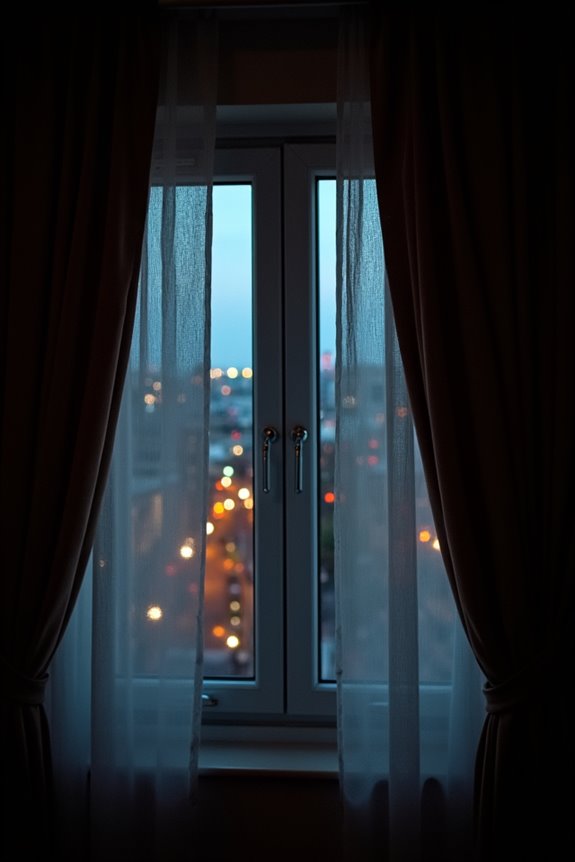
Want genuine nighttime privacy without sacrificing daytime light? Layering sheer curtains with heavier drapes creates the perfect balance you’re looking for. This two-layer approach works because you’re combining different fabrics strategically.
Here’s what makes this setup effective:
- Place linen cotton sheers closest to your window for daytime light diffusion
- Add blackout panels or heavier curtains on top for night privacy control
- Adjust layers quickly after dark based on your immediate needs
The magic happens when you understand weave density. Lined sheers offer more protection than unlined options, while heavier curtains block nearly all external visibility. Your window treatments become flexible, protecting your privacy when indoor lighting increases visibility at night. You’ll enjoy balanced control that adapts to your lifestyle.