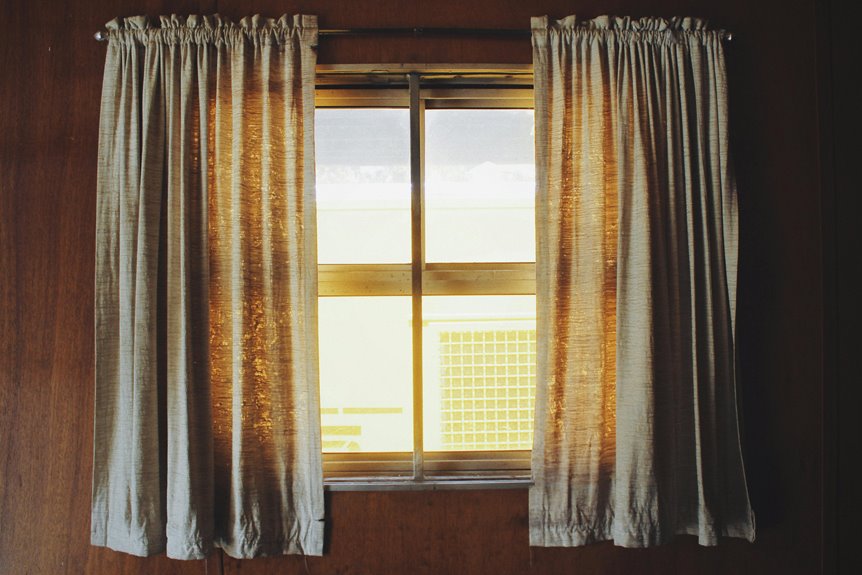
Hanging curtains right transforms your space. First, mount your rod high—halfway between the window top and ceiling—to make rooms feel taller. Extend it 10–15 centimeters beyond each side for a larger window appearance. Use fabric that’s 2 to 2.5 times your window width for proper fullness. Measure to the floor carefully, install level brackets into studs, and choose a rod sturdy enough for your fabric weight. Finally, hem the bottom for crisp, polished drapes. Each decision matters more than you’d think.
Hang Your Rod High to Elongate the Room
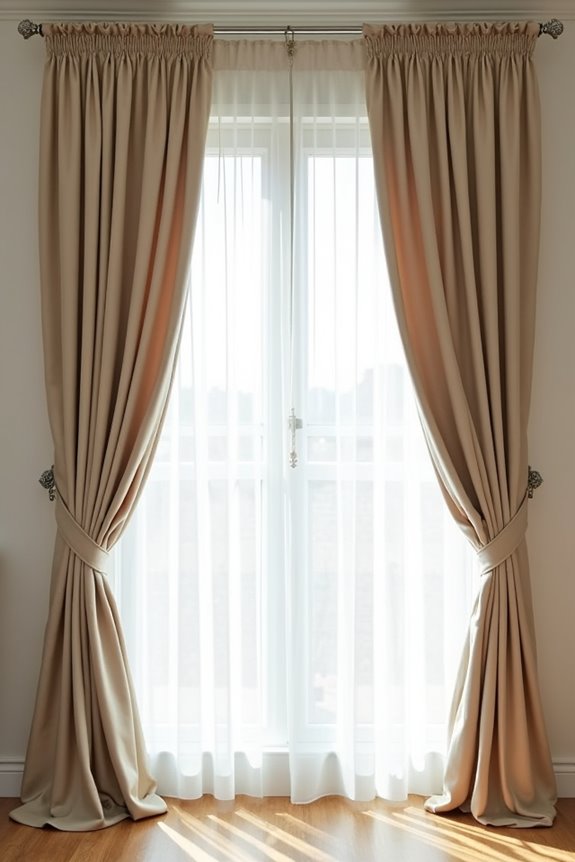
If you’ve ever noticed how a room feels smaller than it actually is, your curtain rod placement might be the culprit. Hanging your curtain rod high creates a ceiling height illusion that transforms your space instantly.
Position the rod halfway to two-thirds up from the window top to your ceiling. This strategic curtain rod height elongates the room visually and makes ceilings appear taller. Your window feels larger too.
Position your curtain rod halfway to two-thirds up from window top to ceiling for an instantly elongated, spacious room feel.
Keep the rod well above the window sill always. Extend it 6–10 inches beyond each side for window width extension and light optimization when curtains open.
For large windows, use double-wide panels on each side. Hang them high to maintain fullness and balance. You’ll create an expansive, cohesive look that transforms how your entire room feels.
Extend the Rod 10–15 Cm Beyond Each Side of the Window
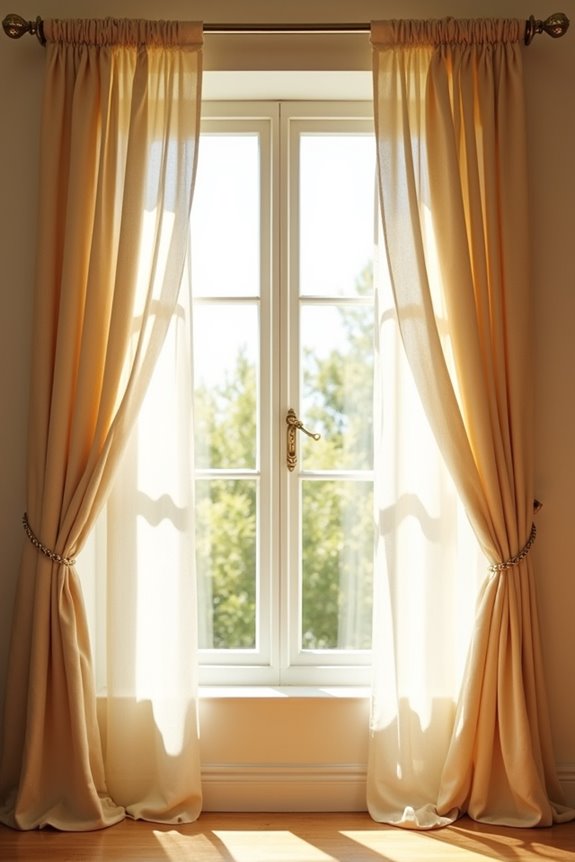
You’ll want to extend your curtain rod 10–15 centimeters (about 4–6 inches) beyond each window edge, and this simple step transforms how your space feels. When you position the rod wider than the window frame itself, you’re actually creating three benefits at once: your window looks noticeably larger, light floods in when curtains are open, and you prevent that cramped, awkward appearance that happens when panels crowd the sides. The wider placement also means your curtains won’t block precious sunlight or cast shadows across your window, giving you both practical brightness and a visually balanced room.
Creating Visual Window Expansion
Ever notice how some windows seem to command a room while others fade into the background? You can transform your windows with a simple curtain rod extension strategy.
Extending your curtain rod 10–15 cm beyond each side creates remarkable visual window expansion. This wider rod makes your window appear noticeably larger than it actually is. When you hang curtains this way, you’re not just adding fabric—you’re reshaping how your entire room feels.
The magic happens when light passage increases. Drawing your panels back reveals more of the wall, making windows feel expansive. A full curtain width of 2–2.5 times your window width maintains proper fullness while your rod extension ensures balanced proportions.
This technique works because your eyes follow the rod line, and you perceive a grander window. You’re effectively reframing your architectural features with intentional placement and proportion.
Maximizing Light and Brightness
How much natural light floods your room depends largely on one simple choice: where you mount your curtain rod. Extend your curtain rod 10–15 cm (about 4–6 inches) beyond each side of the window to truly maximize light. This curtain rod extension prevents fabric from blocking the edges where sunlight enters.
When you extend beyond your window, you create a light wash across your entire room. The strategy works especially well with double-wide panels, which distribute light evenly when opened. Your window width appears larger, and more brightness reaches the corners you need it most.
This smart curtain placement also creates an illusion of height by drawing eyes upward. You’re not just hanging fabric—you’re designing how light moves through your space.
Preventing Light Blockage When Open
When your curtains open, they shouldn’t steal the show—or the sunlight.
You’ll want to extend your curtain rod 10–15 cm (4–6 inches) beyond each side of the window. This simple adjustment transforms your entire window treatment.
Here’s what this strategy accomplishes:
- Prevents light gaps at the edges when curtains are drawn back
- Creates a larger visible window area for maximum brightness
- Keeps wider panels from blocking natural light during the day
- Allows curtains to clear the sill without interference
- Reduces shadows cast by the curtain stack when open
A wider rod paired with extended placement means your windows breathe freely. When you extend beyond the window frame, you’re ensuring sunlight floods your space unobstructed. This approach complements wider panels beautifully, letting you enjoy both privacy and natural brightness without compromise.
Choose the Right Curtain Width for Full, Even Gathering
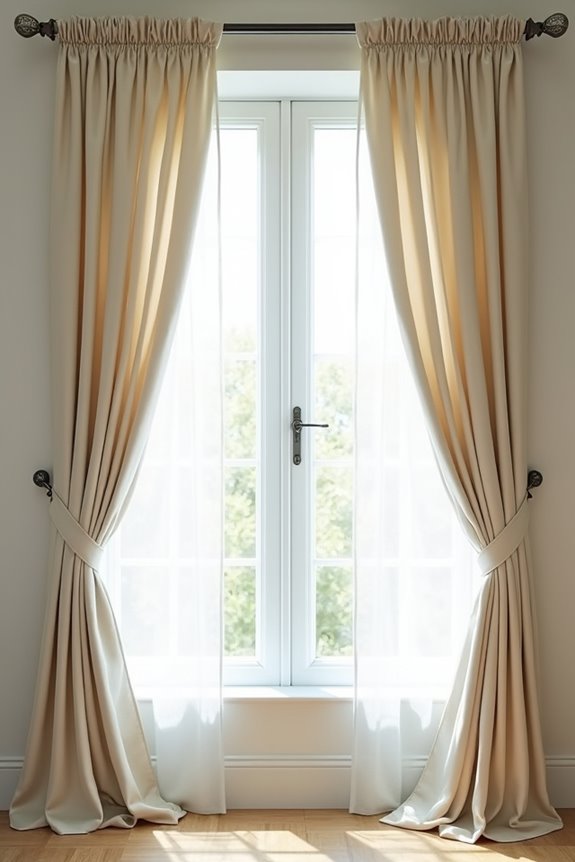
You’ll want your curtains to have enough fabric so they gather beautifully when closed without looking skimpy or thin. A fullness ratio of 2 to 2.5 times your window width works best—heavier drapes need about 2x, while sheer curtains benefit from that extra 2.5x for dramatic folds. This calculation prevents your panels from appearing crowded or sparse, giving you that polished, professional look you’re after.
Calculating Fullness Ratios
Ever wonder why some curtains look luxuriously full while others hang flat and thin? The secret lies in understanding fullness ratios. You’ll want your curtain width to measure 2 to 2.5 times your window width for that gathered look you’re after.
Here’s what affects your calculation:
- Sheer curtains need extra width to maintain fullness and flow
- Heavier drapes stay closer to the 2x width guideline without bunching
- Pair panels should each equal your window width when hung together
- Curtain length pairs with width for balanced proportions
- Center overlap ensures continuous draping between paired sections
This approach matters. When you use proper fullness ratios, your windows transform. Longer, wider panels visually enlarge your space while improving light control. You’re not just hanging fabric—you’re creating an intentional design statement that elevates your entire room.
Avoiding Crowded Panel Appearance
Why do some curtains look scrunched and cramped while others drape beautifully? The secret lies in choosing the right curtain width. You’ll want your total curtain width to measure 2 to 2.5 times the window width, creating proper fullness that prevents that cramped, bunched-up look.
Each individual panel should equal your window width. When paired together, they’ll total twice the window width for even gathering. Consider installing a wider-than-window pole—extend it 10–15 centimeters beyond each side. This simple step prevents light blockage and creates visual balance.
For larger windows, don’t hesitate to use multiple panels or double-wide panels on each side. This approach maintains fullness whether curtains are open or closed, ensuring panel overlap and proper coverage without crowding.
Measure to the Floor: Skim, Kiss, or Puddle
Deciding how your curtains should land at the floor is more important than it might seem—it changes everything from how polished your room looks to how practical your curtains actually are.
Curtain length matters more than you’d think—it affects both your room’s polish and your curtains’ practicality.
Your curtain length choice depends on your floor-to-rod height and desired aesthetic. You’ve got three main options:
- Slight Float: Hangs 0.5–1 inch above the floor for minimal cleaning needs
- Kiss the Floor: Hem just barely touches the floor for a finished, contemporary look
- Puddle Length: Drapes 2–4 inches onto the floor for dramatic, romantic effects
- Floor Clearance: Prevents tripping hazards and excessive wear on fabric edges
- Hem Positioning: Requires precise measurement to achieve your chosen window treatment style
Measure your floor-to-rod height accurately before ordering. Contemporary design favors slight float or kiss-the-floor options. Puddle lengths work beautifully in formal spaces but demand extra fabric and careful hemming to prevent dragging.
Install Your Rod Level and Secure to the Wall
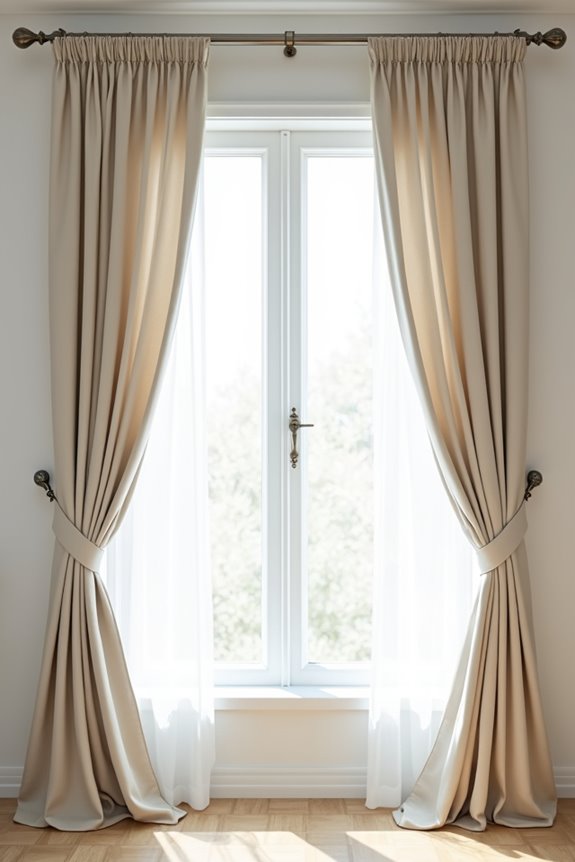
Getting your curtain rod perfectly level and securely mounted is the foundation of a polished window treatment—skip this step, and you’ll notice crooked curtains every single time you walk into the room.
| Task | Tool Needed | Distance from Window | Importance |
|---|---|---|---|
| Find studs | Stud finder | Check wall first | Stability |
| Position brackets | Level | 4–6 inches out | Alignment |
| Anchor hardware | Wall anchors or studs | Into solid support | Security |
| Tighten screws | Screwdriver | After threading curtains | Firmness |
You’ll want to use a level and stud-finder when mounting brackets. Position them 4–6 inches from the window edge for proper support. Anchor everything into studs or secure wall anchors—this keeps your curtain rod stable and prevents sagging. After threading your curtains onto the rod, reattach finials and tighten set screws. That final step? It’s what transforms your installation from wobbly to wonderfully professional.
Pick a Rod Strong Enough for Your Curtain Weight
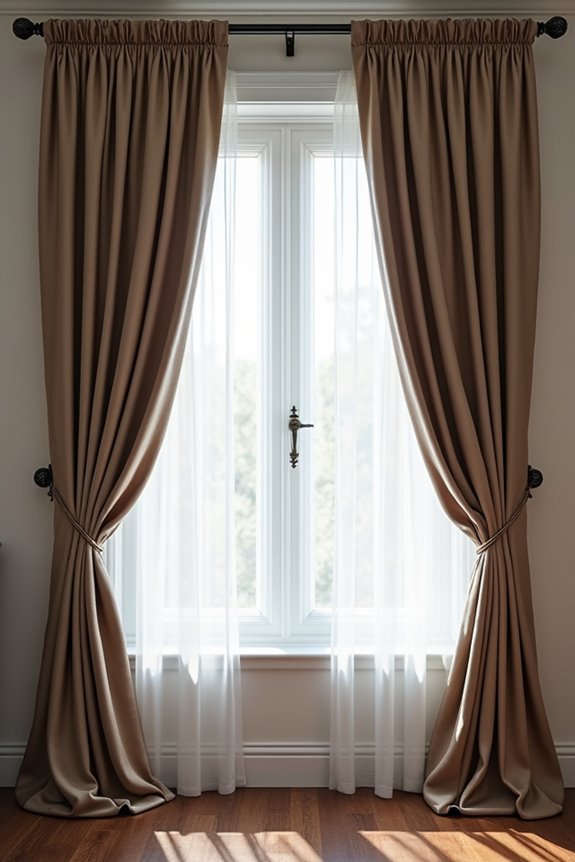
A flimsy rod will sag under heavy fabric—and that’s a problem you’ll regret the moment you close your curtains. Your rod must match your curtain weight for lasting results.
Consider these essentials for sturdy mounting:
- Rod diameter increases with fabric weight. Heavier drapes demand thicker rods for proper support
- Secure anchors prevent sagging over time. Drilling into studs ensures installation durability
- Hardware strength matters significantly. Quality brackets distribute curtain weight evenly across mounting points
- Test weight capacity before installing. Most rods display maximum load ratings clearly
- Heavier drapes require professional-grade materials. Standard hardware won’t cut it for substantial fabrics
Match your rod diameter to your curtain’s weight. Light sheers work fine with slim rods, but blackout drapes need substantial support. Don’t skimp on mounting hardware—it’s your foundation for success.
Hem Your Curtains for Proper Drape and Longevity
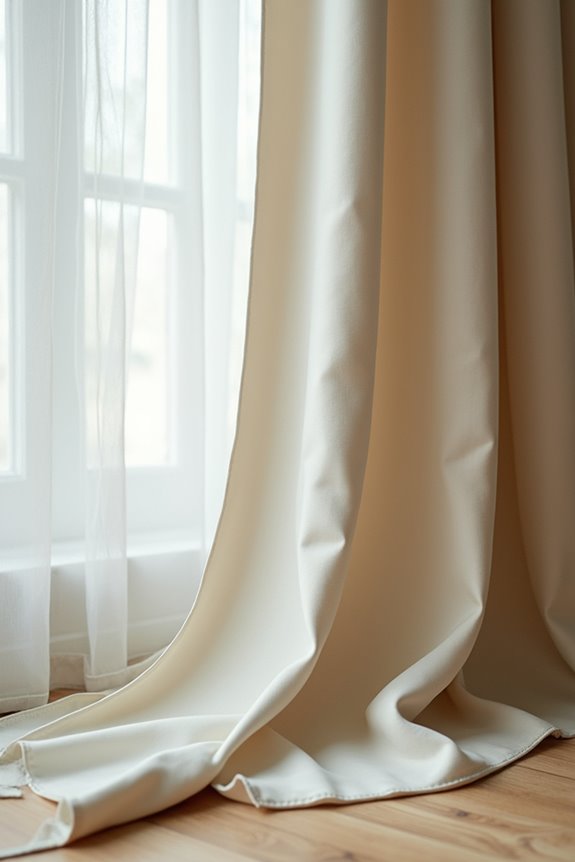
Once you’ve got your rod secured and mounted at the right height, the next step is getting your curtains to hang just right—and that’s where hemming comes in.
You don’t need sewing skills to achieve a polished look. Iron-on hemming tape like WonderWeb transforms non-sewers into curtain experts. Here’s the smart approach: hang your curtains first, then measure from the floor up to determine your ideal length.
For contemporary styling, curtains should just kiss the floor or puddle dramatically—your choice. Once you’ve marked your length, remove the curtains and apply the iron-on tape along the bottom edge. A hot iron seals everything permanently.
This technique ensures even, crisp drapes that enhance your windows while protecting fabric from fraying. Quality hemming extends your curtains’ longevity significantly.