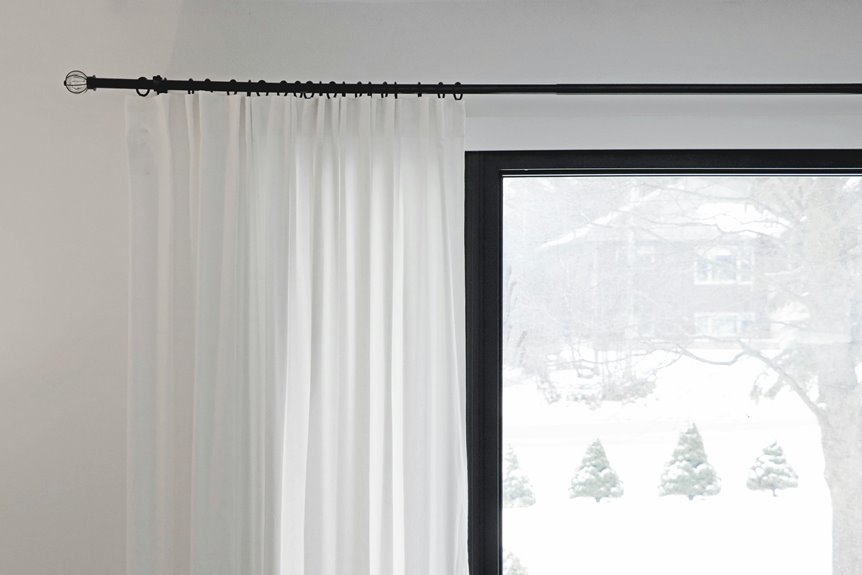
Floor-length curtains absolutely transform your space—they stretch rooms upward and create polish. You’ve got three solid options: float (½ inch above floor) for modern vibes, break (1–2 inches contact) for versatility, and puddle (3–6 inches pooling) for formal drama. Hang your rod 8–10 inches above the window frame and extend it 10–15 cm wider on each side for full coverage. Use two panels matching your window width for balanced fullness. Measure from rod to floor, then adjust based on your chosen length. Steam clean monthly to keep them pristine.
How Curtain Length and Height Affect Room Perception
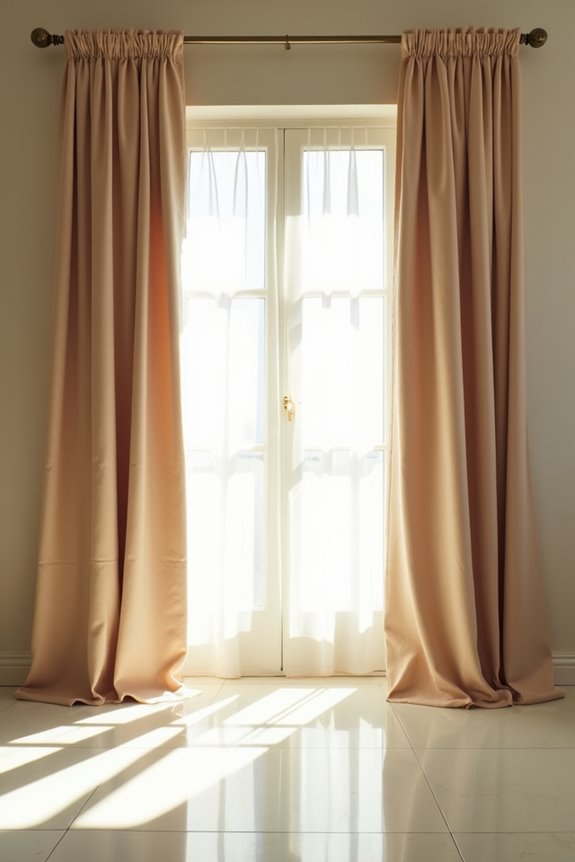
Ever notice how some rooms feel impossibly tall while others seem cramped? Your curtain choices directly shape that perception.
Floor-Length Magic
Floor-length and break-length curtains—kissing the floor with 1–2 inches extra—visually stretch your space upward. They create a polished, tailored foundation that makes ceilings appear higher and windows look proportionally larger.
Floor-length curtains visually stretch spaces upward, making ceilings appear higher and windows look proportionally larger.
Rod Height Matters
Position your rod 8–10 inches above the window frame. This seemingly small adjustment significantly enhances ceiling height and window presence. Your eyes naturally follow vertical lines upward, so higher rods train attention skyward.
Length Considerations
Puddle-length drapes spill luxuriously onto floors, offering formal elegance but demanding maintenance. Floating curtains hovering ½ inch above the floor deliver crisp, modern lines without the fuss. Both approaches work—choose what matches your lifestyle and aesthetic vision.
Floor-Contact Options: Float, Break, or Puddle
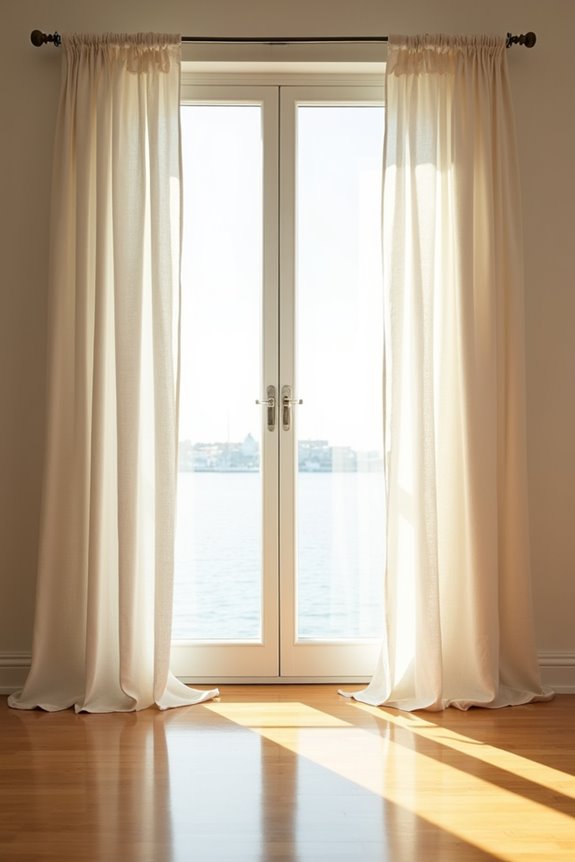
You’ve got three main choices when deciding how your curtains interact with the floor, and each one creates a distinctly different vibe in your space. Float length hovers about ½ inch above the floor for that sleek, modern look, while break length kisses or barely rests on it for maximum versatility. Then there’s puddle length, which pools 3–6 inches of fabric on the floor for that formal, luxurious statement that demands the right room and lifestyle.
Float Length: Modern Simplicity
If you’re drawn to a clean, contemporary look that doesn’t demand constant maintenance, float length might be your answer. This curtain hanging style suspends your window treatments just ½ inch to 1 inch above the floor, creating that floor-length illusion without actual contact.
Here’s what makes float length appealing: you’ll subtract ½ inch from your rod-to-floor measurement to determine the exact curtain drop. This modern silhouette works beautifully in bedrooms, kitchens, and living areas alike. Light, pristine fabrics resist stretching and maintain that crisp appearance you’re after.
The practical benefits matter too. Your curtains stay cleaner since they don’t collect dust or friction from carpet. They’re genuinely easier to open and close in high-traffic spaces. Float length delivers the polished contemporary aesthetic without the fuss of floor-contact window treatments.
Break and Puddle Options
While float length keeps things pristine and modern, break and puddle options bring your curtains into actual contact with the floor for a more dressed-up effect. You’re choosing between two classic floor-length curtains styles that transform your space.
| Style | Measurement | Best For |
|---|---|---|
| Break Length | 1–2 inches above floor | Everyday rooms, versatility |
| Puddle Length | Pools on floor | Formal spaces, drama |
| Float Length | ½ inch clearance | Modern, clean aesthetics |
Break-length finish offers the sweet spot. You add 1–2 inches to your rod-to-floor measurement, creating elegant grazing that balances sophistication with practicality. Your curtain hanging stays effortless without constant adjusting.
Puddle length delivers pure luxury. You measure generously, allowing excess fabric to pool dramatically. This works wonderfully in formal dining rooms or bedrooms where elegance matters most. Choose your curtain hanging style based on the mood you’re creating.
Which Floor-Contact Style Matches Your Room
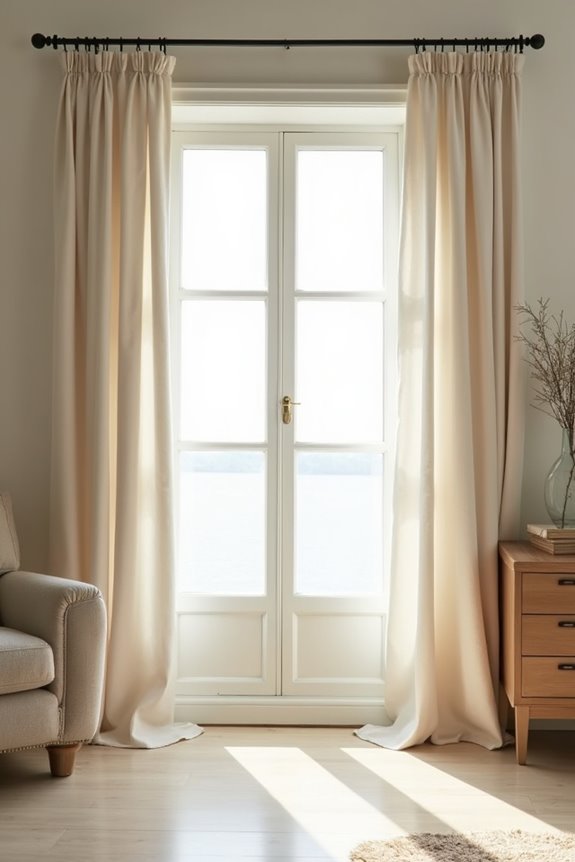
How much fabric should actually touch your floor? Your answer depends on your room’s purpose and lifestyle.
Float Length for Easy Living
You’ll want float length in high-traffic spaces. This style sits ½ to 1 inch above the floor, keeping curtains clean and maintenance simple. It delivers that crisp, modern aesthetic without sweeping up dust.
Break Length for Versatility
Break length works nearly everywhere. The fabric kisses the floor with 1–2 inches of material resting on the surface. You get balanced form and classic finishing while improving light control and insulation.
Puddle Length for Elegance
Reserve puddle length for formal, low-traffic rooms. Extending 3–6 inches onto the floor, it creates that luxurious appearance perfect for living rooms or bedrooms where you won’t constantly step over fabric.
Measure Your Windows and Choose Panel Width
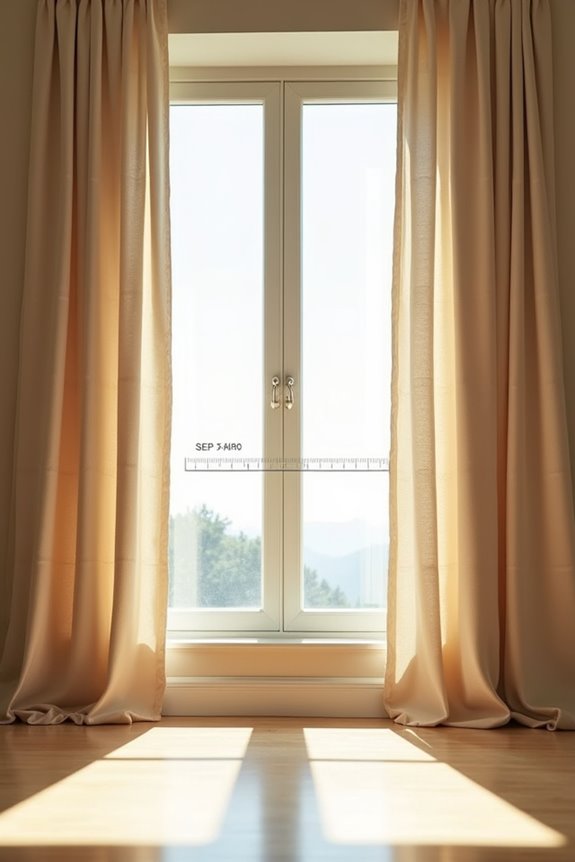
Now that you’ve decided on your curtain length, it’s time to measure from your rod to the floor and pick the right panel width for a polished look. You’ll need to account for fullness—how much fabric gathers across your window—and any overlap where panels meet in the middle, which typically ranges from 4 to 8 inches. Getting these measurements right means your curtains will hang beautifully and function properly, whether you’re going for break-length simplicity or puddle-length drama.
Measuring Rod To Floor
Where should your curtains actually end? Your rod-to-floor measurement determines everything. Grab a measuring tape and measure straight down from your curtain rod to the floor. This single measurement unlocks your panel length options.
You’ve got choices here. Float length sits ½ inch above the floor—perfect for high-traffic areas. Break-length kisses the floor, creating a polished floor-length look that works almost everywhere. Puddle-length dramatically pools 3–6 inches beyond the floor for dramatic flair.
Most rooms benefit from break-length curtains. They’re versatile, forgiving, and genuinely look finished without excessive drama. Measure your rod-to-floor distance, then add 1–2 inches for that ideal break-length panel length. This simple measurement transforms your curtain hang from guesswork into confident, intentional design.
Determining Proper Panel Width
Just as your rod-to-floor measurement determines length, your window width determines panel size. You’ll want each curtain panel to match your window width for that full, gathered appearance you’re after.
Here’s what you need to know:
- Two panels work best: Combined, they should equal your window width for balanced, uncluttered hanging
- Wider-than-window rods create fullness: Position your curtain rod placement 10–15 cm beyond each window edge so stacked fabric frames beautifully when closed
- Fullness requires proper calculation: Measure your window width, then select panel widths accordingly—never settle for single, narrow panels
This approach ensures your curtains gather luxuriously rather than hanging flat and thin. You’ll achieve that designer-quality look that makes your space feel intentional and polished.
Accounting For Fullness And Overlap
How much fabric you actually need is where most people stumble. You’re not simply covering your window width—you’re creating curtain fullness that looks intentional and polished.
For proper drapery fullness, your curtain panels should total twice your window width when paired together. This generous amount creates those soft, gathered folds you want when curtains are closed.
Don’t forget overlap. Your rod width should extend 10–15 centimeters beyond the window on each side. This ensures your curtains actually meet in the middle and block light effectively.
Here’s the reality: narrow windows need wider curtain panels per side, not single thin panels. One skimpy panel looks incomplete. Two substantial panels with adequate fabric create that sophisticated gathered appearance everyone admires.
Calculate your total curtain length carefully. Measure from rod to floor, then add for fullness as needed.
Position Your Curtain Rod for Maximum Impact
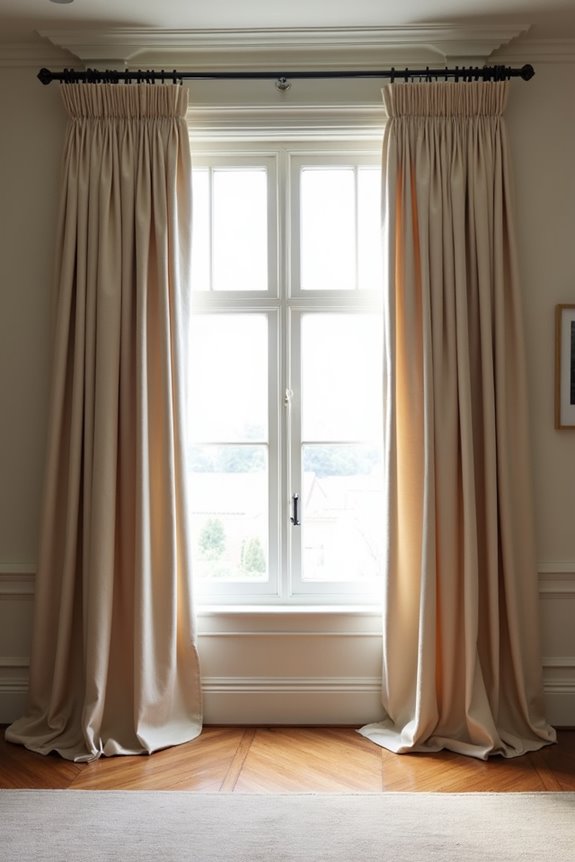
The placement of your curtain rod matters far more than you’d think. Where you hang it fundamentally changes how your entire room feels. Strategic curtain rod placement creates the illusion of higher ceilings and larger windows—two design wins you’ll notice immediately.
Here’s what works:
- Hang 8–10 inches above the window frame for tall ceilings that accent both window size and room height
- Position rods halfway to two-thirds up between your window top and ceiling to stretch the space visually
- Extend 10–15 cm wider than your window on each side for complete window coverage when drawn
Your floor-length or float-length choice depends on your style. Floor-length with 1–2 inches of contact feels formal. Float-length sitting ½ inch above the floor delivers contemporary appeal. Either way, proper above-window measurement ensures your wider-than-window framing creates that polished, intentional look you’re after.
Keep Your Floor-Length Curtains Looking New
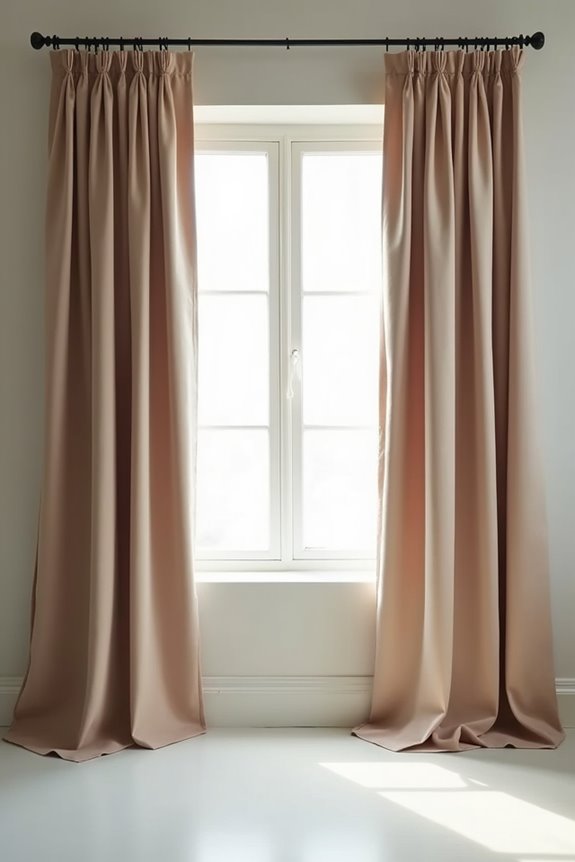
Once you’ve nailed your rod placement and chosen your ideal length—whether that’s a formal floor-kiss or a modern float—keeping those curtains pristine becomes your next priority. Your curtains length choice directly impacts your cleaning routine. Float and break lengths stay cleaner longer since they hover above dust and debris. Puddle curtains, while gorgeous, demand more frequent maintenance due to their extra 2–6 inches pooling on floors.
Vacuum regularly around your curtain base, especially with break and puddle styles. For floor-length curtains, establish a monthly cleaning schedule using a soft brush attachment. Steam cleaning works beautifully for most fabrics without harsh chemicals. Avoid dragging puddle curtains across dirty floors—lift them gently when opening and closing. This simple habit preserves their luxurious appearance and extends their lifespan significantly.