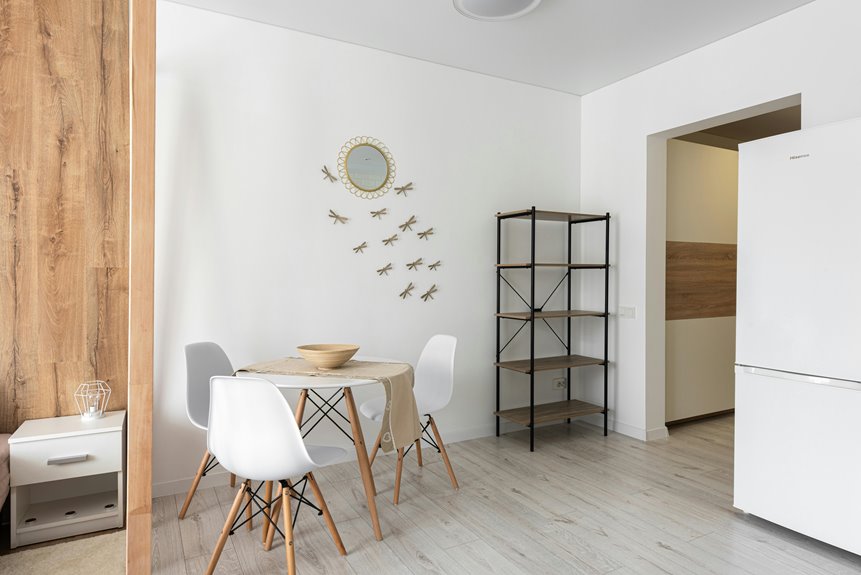
A standard kitchen typically measures between 100 and 200 square feet—though what works for you depends on your cooking style and who’s using the space. Solo cooks thrive in compact 70-square-foot layouts with efficient L-shapes or galleys. Multiple cooks need 18+ square meters with separate work zones. The real sweet spot? Landing zones beside appliances, proper traffic paths, and a tight work triangle. Your actual needs might differ considerably from this baseline.
What Counts as a Small Kitchen: And Why Size Matters?
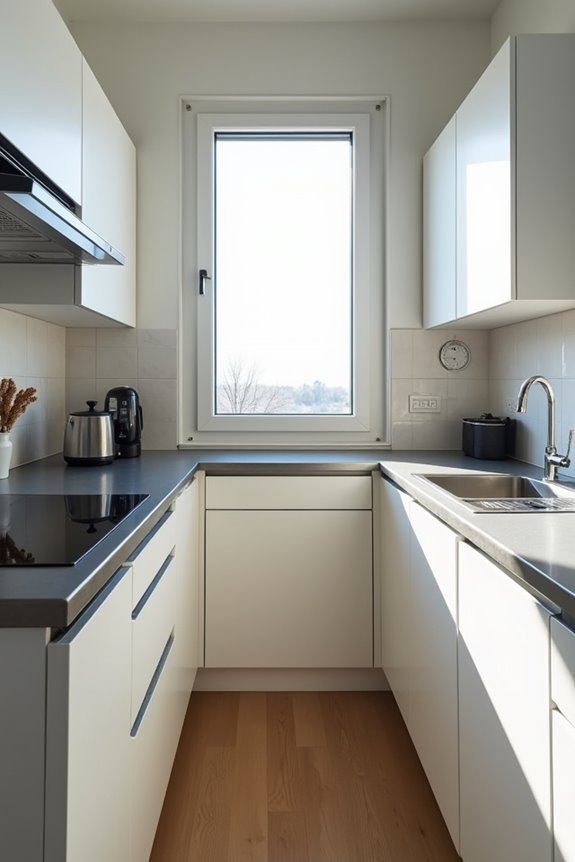
Ever wondered if your kitchen’s actually small, or does it just feel cramped? You’re likely dealing with a small kitchen if your space measures around 70 square feet. That’s roughly 6.5 to 7.5 square meters of working room.
Your kitchen size genuinely matters because it determines what you can fit and how you’ll move around. In tight spaces, you’ll work with minimal counter area and rely heavily on upper cabinets. The work triangle—your route between sink, stove, and refrigerator—becomes compact and efficient.
At the absolute minimum, you need 55 to 75 square feet for basic functionality. Most small kitchens skip luxuries like dishwashers entirely. You’ll likely arrange yours as a one-wall or L-shaped layout. Understanding these constraints helps you plan smarter storage and workflow decisions that actually work for your daily cooking needs.
Standard Kitchen Sizes for Typical Homes and Layouts
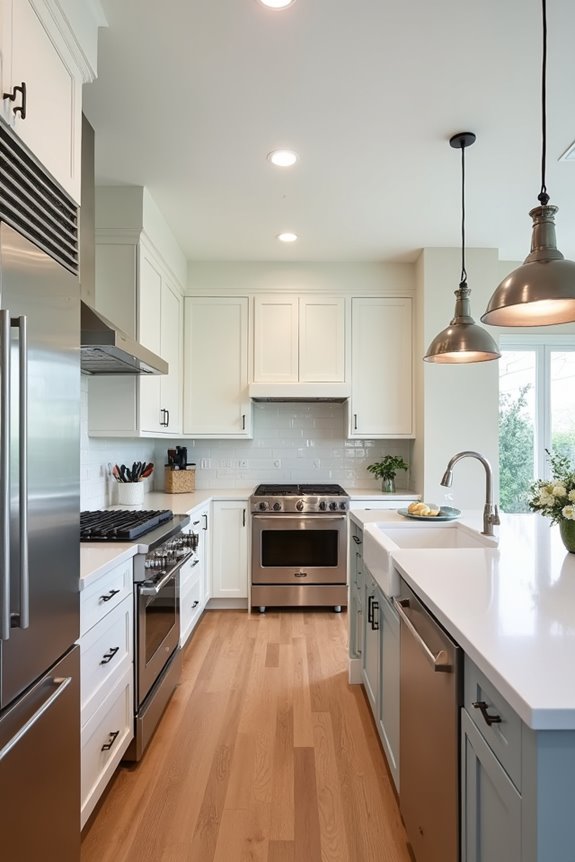
You’ll find that most kitchens fall into three practical categories based on square footage. Small kitchens under 100 square feet work great for apartments and compact homes, while medium kitchens between 100–200 square feet suit typical single-family houses and allow comfortable cooking with an eating area. Large kitchens over 200 square feet give you room for islands, dining spaces, and multiple people working at once.
Small Kitchens Under 100
What makes a kitchen truly “small”? You’re working with roughly 70 square feet or less—think apartments, condos, or cozy homes. These compact kitchens demand smart space planning and efficient kitchen dimensions to function well.
You’ll find most small kitchens fall between 55 to 110 square feet. They typically feature one-wall or L-shaped layouts, stretching cabinets to the ceiling for storage. Your work triangle stays tight. Islands rarely fit. Dishwashers? You’ll probably skip the full-size model.
| Kitchen Size | Best Layout |
|---|---|
| 55–75 sq ft | One-wall, galley |
| 75–110 sq ft | Compact L-shape |
| 70 sq ft average | Upper cabinets only |
You’ll maximize every inch through vertical storage and strategic counter placement. These kitchens work beautifully when you prioritize efficiency.
Medium Kitchens 100–200
When does a kitchen stop feeling cramped and start feeling functional? You’ve hit that sweet spot with a medium kitchen sized between 100 to 200 square feet. This kitchen size works beautifully for typical homes, offering you genuine flexibility without excessive wasted space.
You’ll find room for standard layouts: one-wall, galley, L-shape, or U-shape configurations. Many medium kitchens accommodate a small island or peninsula, plus a pantry and double sink. That’s real comfort.
Your work triangle—the path between sink, stove, and refrigerator—flows naturally with 120 to 270 centimeter sides. You’ll want 40 to 60 centimeters of counter space beside major appliances. A small dining area fits comfortably too, making your kitchen genuinely livable, not just functional.
Large Kitchens Over 200
Beyond the 200 square foot mark, your kitchen transforms into a genuinely spacious hub—not just for cooking, but for living. Large kitchens spanning 18 to 25+ m² (195 to 270+ ft²) become destinations where you entertain guests and create memories.
You’ll gain multiple work zones that let several people cook simultaneously without crowding. Full-size appliances—refrigerators paired with separate freezers, dual ovens, or wall units—become standard features.
A signature element you’ll enjoy is the island with seating. Many large kitchens integrate a dining area within kitchen space, blending food prep with gathering. Walk-in pantries and ample storage round out the experience.
This kitchen size transforms how you live, cook, and connect with others daily.
Large Kitchens: When and Why You Need 18+ M²
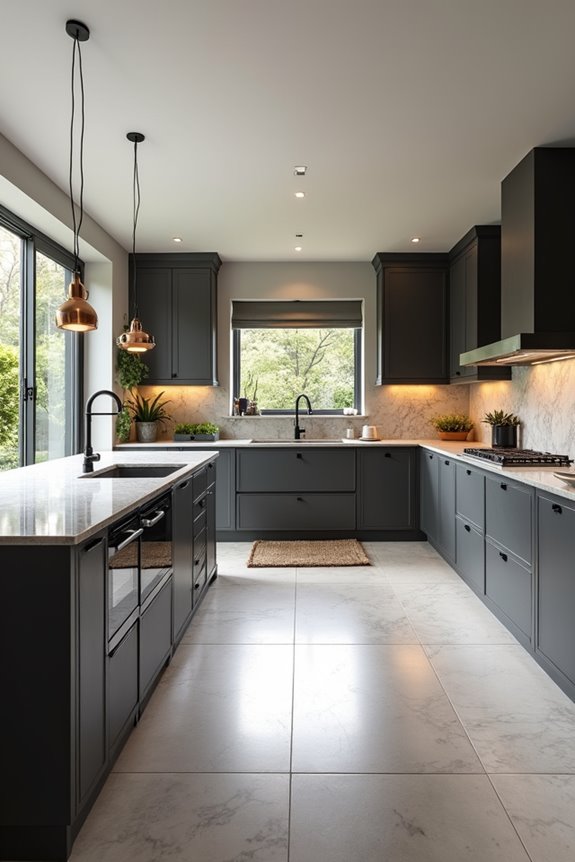
How do you know if you’ve outgrown a standard kitchen? You’re craving more space to cook, entertain, and live comfortably. When your kitchen sizes reach 18 m² (195 ft²) or beyond, you’ve entered large kitchen territory—perfect for open layout designs and modern homes.
| Feature | Small Kitchens | Large Kitchens |
|---|---|---|
| Square Footage | Under 100 ft² | 195+ ft² |
| Work Zones | Single | Multiple |
| Dining Area | Separate | Integrated |
You’ll appreciate the multiple work zones that prevent cooking bottlenecks. An opening layout connects your kitchen smoothly to living spaces, while an integrated dining area lets you interact with guests while preparing meals. Full-size appliances, dual ovens, and walk-in pantries become realistic additions. These kitchens transform how you cook, gather, and belong.
How Number of Cooks and Cooking Habits Shape Kitchen Size
Your kitchen’s ideal size depends less on trends and more on who’s actually cooking and how often they’re in there together. If you’re flying solo in the kitchen most nights, you’ll work fine in a compact 5–7 m² layout with one efficient work triangle (sink, stove, refrigerator). But when you’ve got multiple cooks prepping meals simultaneously or regularly hosting dinner parties, you’ll need separate work zones, a 40-inch traffic path between stations, and that larger 18–25+ m² footprint to keep everyone from bumping elbows.
Single Cook Workspace Needs
What’s the sweet spot for a kitchen designed around just one person cooking? You’ll want 12 to 16 m² (130 to 170 ft²) for comfortable movement and storage. This size gives you breathing room without wasting space.
The work triangle—your sink, stove, and refrigerator—forms your efficiency hub. Keep each leg between 4–9 feet apart. This layout minimizes your steps and maximizes your productivity.
Counter space matters tremendously. You need room for prep work without constantly shuffling items around. An appliance layout that separates your cooking and prep zones prevents bottlenecks during meal preparation.
| Kitchen Size | Best For | Work Triangle |
|---|---|---|
| 5–7 m² | Compact living | Minimal steps |
| 12–16 m² | Standard cooking | Optimal flow |
| 18+ m² | Frequent cooking | Multiple zones |
Multi-Cook Layout Requirements
When two or more people cook simultaneously, your kitchen needs room to breathe—literally. You’ll want 18 to 25+ square meters to create separate work zones where cooks won’t bump elbows. Each work zone needs its own landing zones—those crucial 15 to 24-inch spaces beside sinks and appliances. These spots hold hot pans safely and keep groceries organized.
Your walkway widths matter significantly. Aim for 40 to 48 inches between counters so two people can pass comfortably, even with drawers open. The traditional work triangle expands here, with each leg stretching 4 to 9 feet apart. Islands help divide space, though you’ll want to keep them modest: 24 inches deep, 48 inches wide maximum. This prevents traffic jams while maximizing efficiency.
Minimum Functional Kitchen Dimensions: Can You Go Smaller?
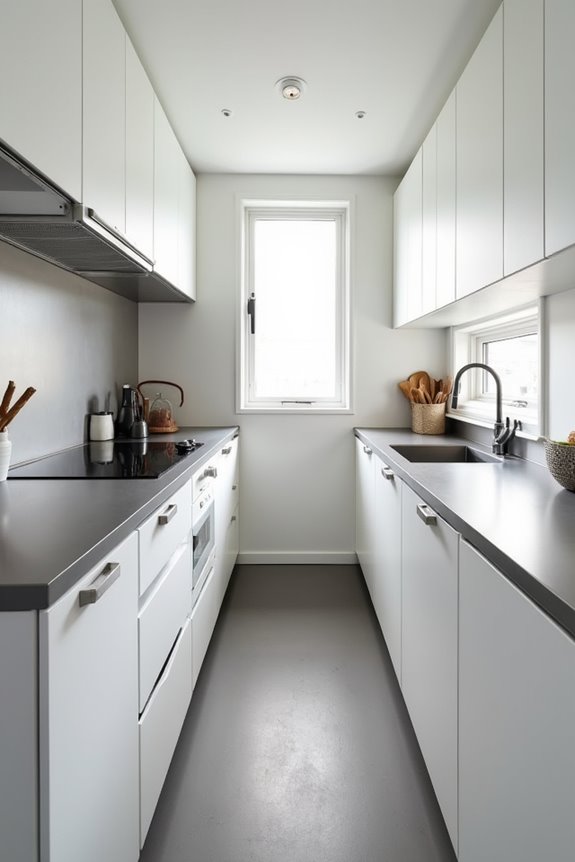
How small can a kitchen actually be and still work? You can absolutely create a functional kitchen in just 5 to 7 m² (55 to 75 ft²). It’s tight, but it’s doable.
You can absolutely create a functional kitchen in just 5 to 7 m². It’s tight, but it’s doable.
Your minimum kitchen size requires strategic planning. Consider these essentials:
- One-wall or compact L-shape layouts that maximize workflow
- Space-saving appliances like 45 cm dishwashers and under-counter fridges
- Vertical storage solutions extending cabinets to the ceiling
You’ll want to get creative with your small kitchen layout. Hooks, magnetic strips, and foldable tables become your best friends here. Even at 70 ft², you might skip the full dishwasher entirely. The real trick? You’re not sacrificing functionality—you’re just being intentional about every square inch.
Kitchen Size Clearances: Landing Zones Around Appliances
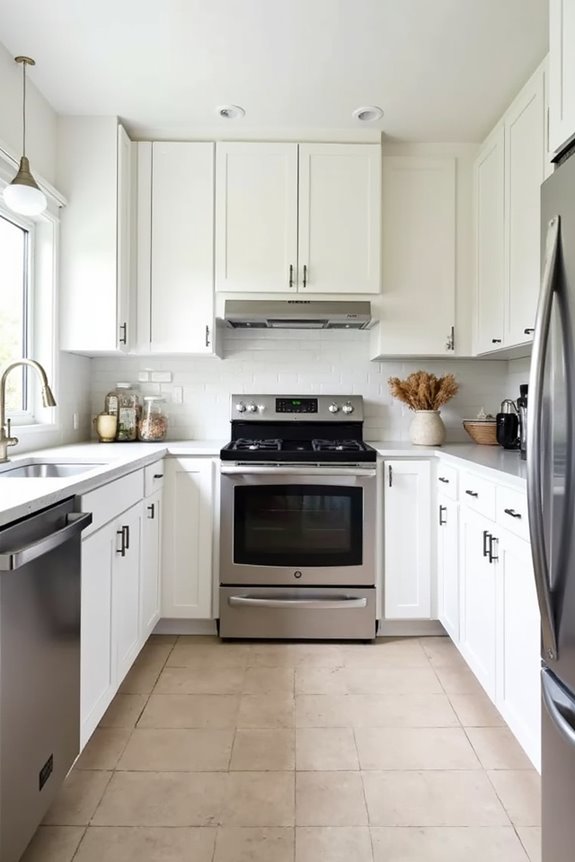
Your appliances need breathing room, and that’s where landing zones come in. These designated counter spaces let you set hot pans and groceries safely while you’re cooking.
You’ll want at least 15 inches of counter space next to your sink and fridge. That’s your minimum. The dishwasher deserves 24–36 inches on one side for smooth workflow. Your oven needs a minimum 15-inch landing zone too.
Think of landing zones as part of your kitchen’s circulation system. They prevent bottlenecks between major appliances and support accessible task work. A 40-inch traffic path flows better than 36 inches when you’re entertaining or cooking daily meals.
These clearances matter. They transform your kitchen from cramped to comfortable, creating spaces where you’ll actually want to spend time.
Sizing Mistakes That Kill Workflow and Resale Value
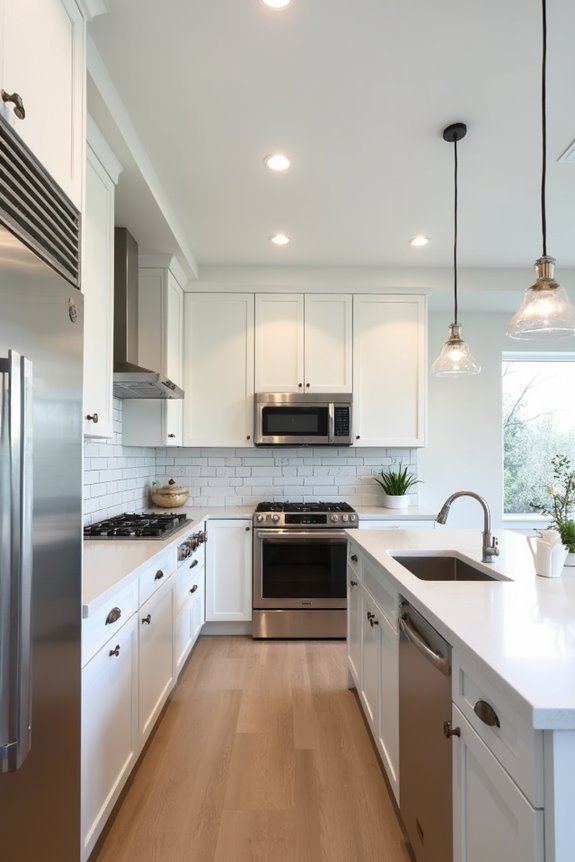
Even a perfectly designed kitchen can fail if you overlook basic sizing principles during planning. You’ll want to avoid these common pitfalls:
- Walkways narrower than 90 cm (35 inches) – cramped passages block movement and frustrate daily cooking
- Oversized islands in small rooms – they consume workspace and tank your home’s appeal to buyers
- Missing landing zones beside appliances – inadequate counter space next to the stove and sink kills workflow
Your layout directly impacts both functionality and resale value. When you skimp on counter space or ignore work triangle dimensions, you’re essentially creating a kitchen that doesn’t work for anyone. Buyers notice these layout failures immediately, and they’ll walk away. Smart sizing decisions protect your investment and ensure your kitchen serves you well for years.