You’ll want a 10–13 gallon trash can for most kitchens. This size matches standard store-bought bags, fits common countertop spaces, and handles weekly waste from typical households without constant emptying. Couples need 7–10 gallons; families of four should aim higher. Your actual choice depends on placement—under-sink spaces demand under-10-inch heights, while countertops allow more flexibility. Measure your space first, then match capacity to your household’s daily waste. The right fit prevents overflow and bag mishaps, though specifics vary by location and usage.
The Standard Kitchen Trash Can: 10–13 Gallons for Most Households
Why do most households reach for a 10–13 gallon trash can? Simple. This trash can size fits your life. A standard kitchen trash can in the 10–13 gallons range aligns perfectly with standard bag sizes you’ll find at any store. You’re not overstuffing or wasting space.
For two-person households that cook regularly, this capacity works well. You’ll empty it weekly without constant trips. A 13-gallon can specifically fits standard 13-gallon bags, making replacements effortless. Most families find this sweet spot between convenience and practicality.
Before buying, measure your placement space. Check under counters and corners. You want your standard kitchen trash fitting snugly without crowding cabinets. This practical sizing makes the 10–13 gallons the go-to choice for average home kitchens.
Placement Changes Everything: Footprint and Height Limits
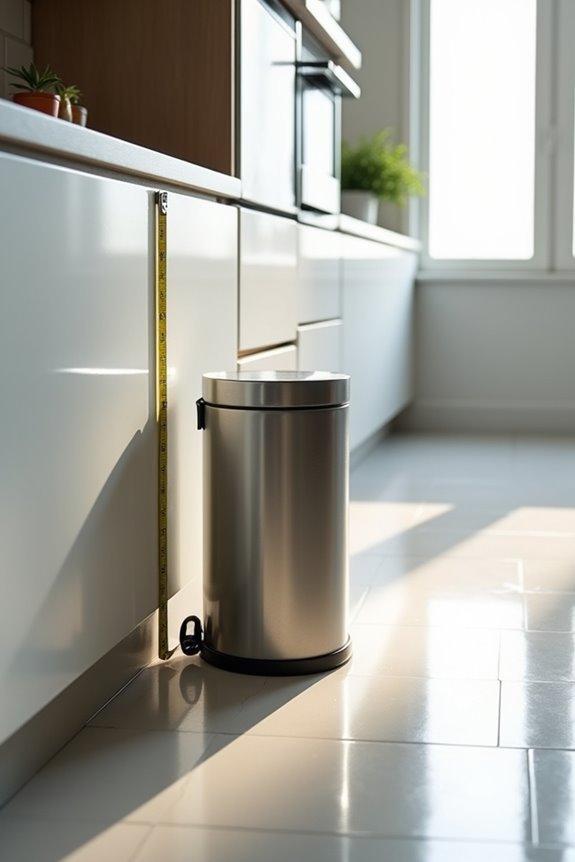
Where you put your trash can matters just as much as its size. Your kitchen’s layout determines what actually works. An under-sink can needs to stay under 10 inches tall to clear plumbing. Pull-out cabinet models require 12–24 inches of width depending on your setup. Open-floor kitchens near islands or pantries? You’ve got room for 16–30 gallon cans. Corner and countertop placements work best with free-standing units around 10–15 inches wide.
| Placement Type | Height Limit | Width Range | Best For |
|---|---|---|---|
| Under-sink | Under 10″ | Slim depth | Tight spaces |
| Cabinet pull-out | Variable | 12–24″ | Organization |
| Open floor | Flexible | 16–30″ | High-traffic zones |
| Countertop corner | 20–30″ | 10–15″ | Accessible spots |
Think about your actual space before buying anything.
Household Size and Daily Waste Volume
How many people live in your home? This question matters more than you’d think when selecting your trash can size. Your household waste volume directly influences your daily waste generation and ultimately, the trash can size you’ll need.
Couples and empty-nesters typically generate 7–10 gallons weekly, making smaller cans practical. A family of four produces notably more—expect 12–16 gallons for typical daily waste. Larger households or those with heavy packaging demands jump to 20–30 gallons to avoid constant emptying.
Cook frequently? Even two-person households often need 13–16 gallon capacity. Add pets, takeout habits, or high kitchen activity, and your needs climb significantly. Factor in composting or recycling too—these reduce miscellaneous waste considerably, letting you downsize confidently.
How Waste Type Shifts Your Capacity Needs
Wet waste demands serious space. If you’re generating food scraps and liquids regularly, you’ll want a 12–16 gallon bin to handle odors and prevent leaks. Dry-only waste? You can comfortably stick with 7–10 gallons and standard trash bag size options.
Here’s where *capacity planning* gets strategic. When you separate recyclables and compost, that miscellaneous waste shrinks dramatically. A smaller bin works perfectly. But if curbside recycling isn’t available in your area, plan for 20–30 gallons instead. You’re combining plastics, paper, and organics into one container now.
The takeaway: match your bin to your actual *waste type*. This prevents overflow and keeps your kitchen running smoothly.
Measure Before You Shop: Getting Dimensions Right
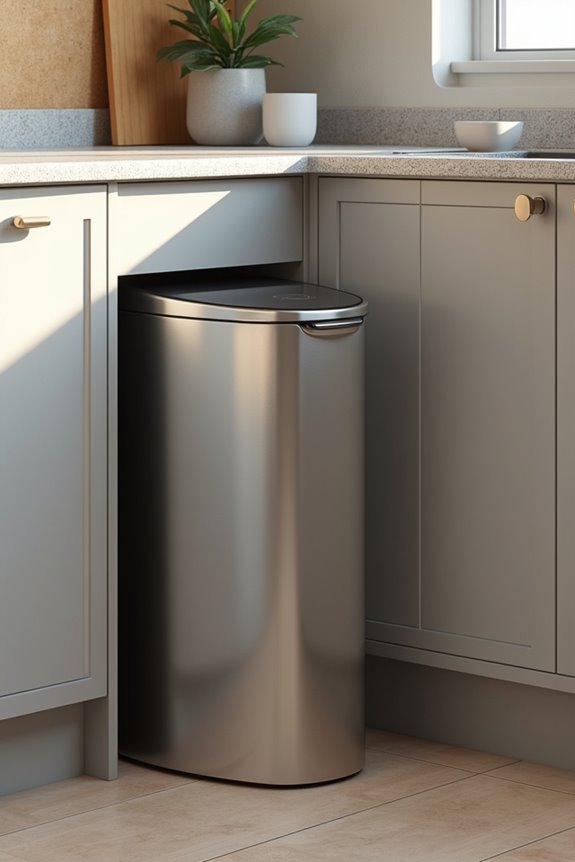
You’ll want to grab a measuring tape and check your actual space before browsing any cans, since what fits in one kitchen won’t fit in another. Start by recording your cabinet’s height, width, and depth—especially for under-sink spots where you’re limited by basin pipes and plumbing fixtures below. Knowing whether you’ve got 10 inches wide and 18 inches deep versus 15 inches wide and 24 inches deep changes everything about which can you can actually use.
Know Your Space Constraints
Before you even glance at a single trash can online or in a store, measure your kitchen space—seriously. You’ll save yourself frustration and returns by knowing your actual dimensions first.
Your space constraints determine everything about which can works:
- Under-sink placement requires cans under 10 inches high to fit below typical basin plumbing
- Footprint width for free-standing cans should stay between 9–13 gallons for standard cabinet spaces
- Open-floor spots beside sinks need up to 16 inches diameter clearance for comfortable use
- Pull-out cabinet bins demand exact internal measurements to prevent jamming or gaps
- Small kitchens benefit from slim 7–10 gallon profiles maximizing floor real estate
Compare your measured dimensions against common bin sizes. Don’t guess. Under-sink installations especially need precision—plumbing fixtures, drain pipes, and cabinet depth all matter. Measure twice, buy once. You’ll find the right fit that actually works for your kitchen.
Record Cabinet Dimensions Accurately
Getting the measurements right is where smart trash can shopping actually begins. You’ll want to grab a tape measure and document your cabinet’s exact dimensions: width, depth, and height. Don’t estimate—precision matters here.
For standard under-sink setups, keep your bin under 10 inches tall to accommodate plumbing. Pull-out canisters need 12–24 inches of internal width to function smoothly. Measure twice, noting every constraint your space presents.
Write down these numbers. Seriously. You’re building a profile of your space constraints that’ll guide your bin capacity decision later.
Tight pantry slots? Prioritize height and depth first, then width. Typical kitchens? You’ve got more flexibility. These cabinet dimensions directly determine whether you’re looking at 7–10 gallon capacity or 12–16 gallons. Your measurements are your shopping roadmap.
Account For Plumbing And Obstacles
Now that you’ve got your cabinet measurements locked down, it’s time to look at what’s actually living in that space. Pipes, shutoff valves, and basin hardware eat up real estate you can’t ignore.
Before finalizing your budget and measurements, account for these obstacles:
- Under-sink plumbing requires cans shorter than 10 inches high
- P-traps and supply lines often jut into cabinet floors unexpectedly
- Door hinges and handles demand clearance space you’ll need to verify
- Garbage disposal units eliminate valuable floor footprint on one side
- Sink basin depth determines how far back your can actually sits
Take your tape measure and map out every obstruction. Measure twice, buy once. You’re protecting your investment by acknowledging what’s already there. That’s smart shopping.
How to Pick Your Lid: Step-Cans vs. Touchless vs. Push-Buttons
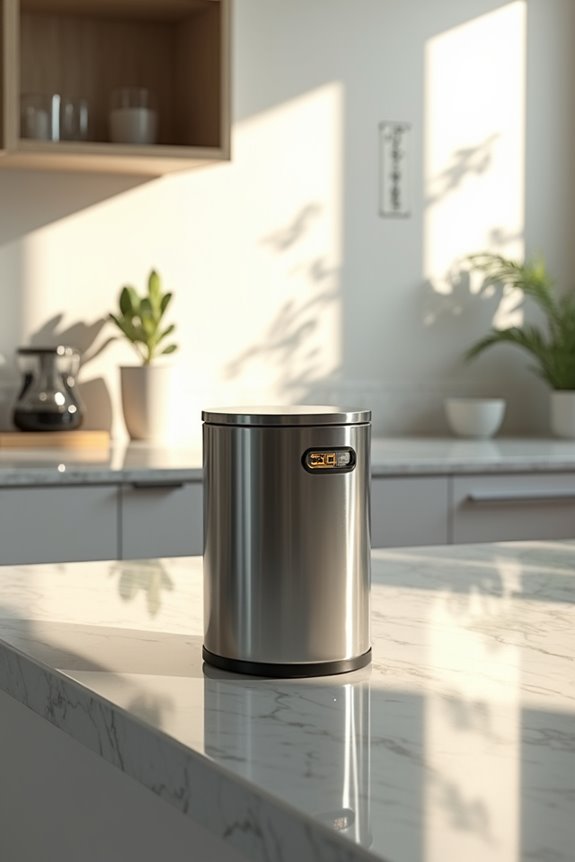
Which lid type you choose matters more than you’d think—it’ll shape your daily experience with the trash can and determine how long it actually lasts. Your pedal lid, sensor can, or push-button choice affects hygiene, convenience, and durability in your kitchen routine.
| Lid Type | Best For | Cost | Maintenance | Lifespan |
|---|---|---|---|---|
| Pedal Lid | Hands-free cooking | Moderate | Low | 5–10 years |
| Sensor Can | Busy kitchens | Higher | Battery checks | Variable |
| Push-Button | Budget-conscious | Low | Minimal | 3–7 years |
Step-can pedal mechanisms should open smoothly within 2–3 seconds with stainless steel pivots. Soft-close dampers prevent annoying slams. Touchless sensor cans work within 6–12 inches but risk false triggers. Push-buttons stay quiet and simple yet require hand contact. Full-perimeter seals contain odors effectively across all types.
Don’t Buy the Wrong Bags: Matching Can and Liner Sizes
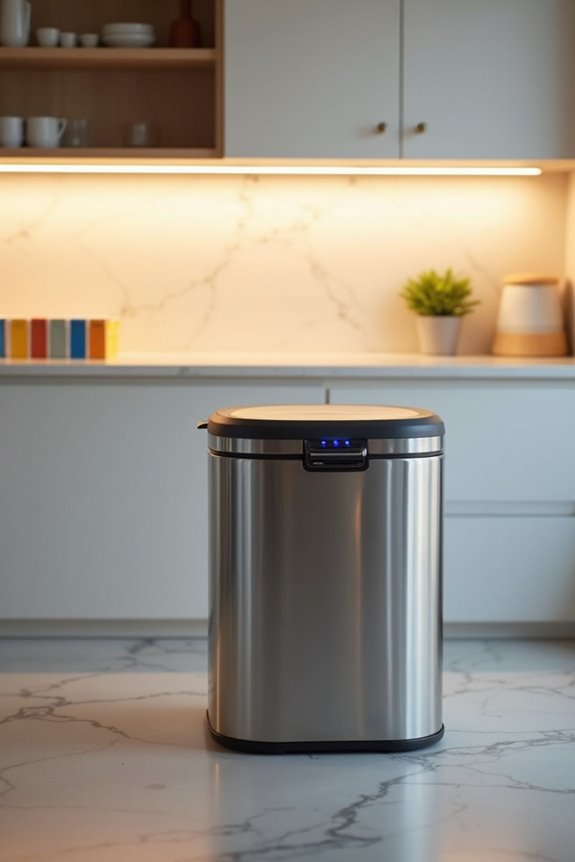
You’d be surprised how often people grab the wrong bag size, and it’ll cost you in spillage, slippage, and wasted money. The key is matching your bag capacity directly to your can size—a 13-gallon bag pairs with a 13-gallon can, while larger households should stick with 20–30 gallon combinations for the same reason. Before you checkout, measure your bin’s inner dimensions and verify that your chosen bags are designed for your specific can model, because rim-lock systems and anchors require exact thickness and brand compatibility to work properly.
Matching Dimensions For Fit
Have you ever stuffed a trash bag into your can, only to watch it slip down the sides or bunch up at the rim? That frustration happens because bag size, dimensions, and fit compatibility don’t match your actual can. You’ll want to measure your bin’s footprint—width and depth—then compare those numbers to your bag’s measurements.
Here’s what prevents fit problems:
- Match 13-gallon bags to 13-gallon cans for secure kitchen setups
- Measure bin footprint against bag dimensions to prevent slipping
- Check rim and interior bucket space for proper bag accommodation
- Use 7–10 gallon liners for slim, under-sink spaces
- Verify bag-anchor compatibility with your specific can model
Standard bags require snug fits. Oversized bags bunch. Undersized bags slip. You’ll achieve the right balance by simply checking dimensions before purchasing—it’s that straightforward.
Bag Compatibility And Spillage
Why does picking the wrong trash bag size feel like a small disaster waiting to happen? You’re not alone in this struggle.
Here’s the deal: your trash bags must match your can’s capacity. A 13-gallon bag fits a 13-gallon can perfectly. A 10-gallon bag pairs with a 10-gallon can. Mismatch them, and you’ll face overflow, slipping liners, and frustrating removal.
Check your can’s specifications before buying bags. Many cans feature rim-lock or anchor systems that require compatible bag thickness and brands. A 30-gallon bag stuffed into a 10-gallon can? That’s guaranteed trouble.
The solution’s simple: verify your bin’s compatible bag size range. You’ll prevent spillage, keep bags secure, and join the ranks of those who’ve mastered trash management basics.
Standard Pairings By Capacity
Getting the right bag-to-can match isn’t complicated—it just requires one simple step before checkout. You’ll want to verify your can’s capacity against the bag size you’re buying. Mismatches create leaks, spillage, and frustration you don’t need.
Here’s what works:
- 13-gallon bags pair perfectly with standard 13-gallon cans for typical families
- 10-gallon bags fit slim under-sink cans designed for compact spaces
- 7-gallon bags work best in tight kitchen corners where space matters
- Inner bucket attachments and ridge supports keep liners secure and leak-free
- Rim-lock features ensure your bag stays put during regular use
Check your can’s bag attachment mechanism before purchasing liners. Ridge supports or back-hole tucks prevent slipping and shifting. You’ll appreciate the stability when tossing daily trash. Match capacity, check attachments, problem solved.
Top Pick: Simplehuman Rectangular Step Can (10 Gallons)
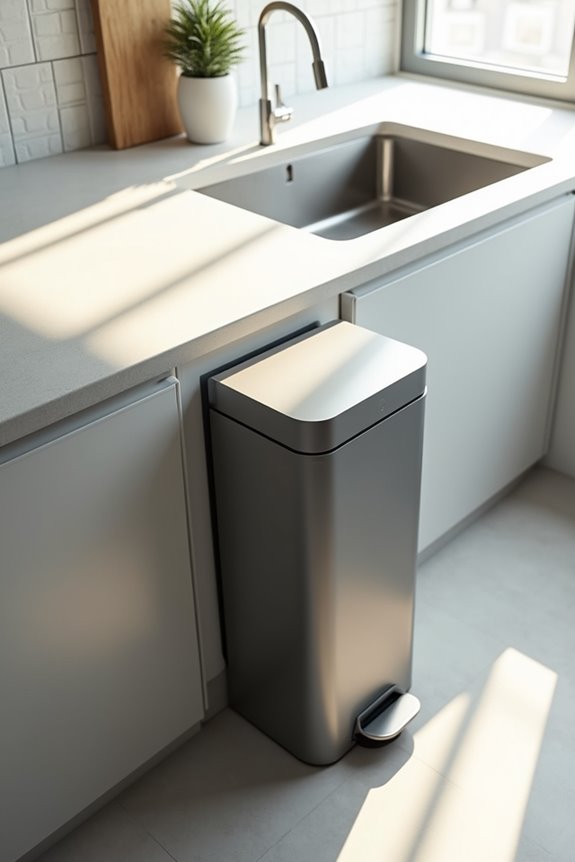
If you’re looking for a trash can that actually works the way it should, the Simplehuman Rectangular Step Can deserves your attention. This 10-gallon rectangular design fits standard 10- or 13-gallon bags perfectly, making replacements hassle-free.
What sets it apart? The removable inner bucket catches leaks and lets you hose it down without mess. You’ll appreciate the ridge system that secures bags in place while allowing excess material to tuck into a back hole for a tight fit.
The damped lid closes smoothly and quietly, limiting odors by minimizing gaps. A weighted base keeps everything stable, while the rear red switch locks the lid upright for easy cleaning. Plus, you’re protected by a solid 10-year warranty.
Best Budget Option: Rubbermaid Step-On (13 Gallons)
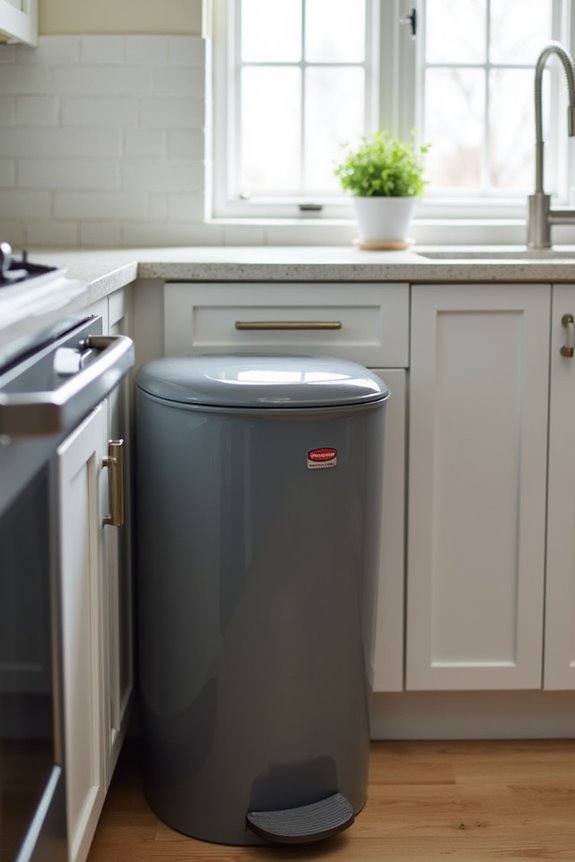
The Simplehuman’s premium features come with a premium price tag, but you don’t need to spend big money for a trash can that does its job. The Rubbermaid Step-On delivers solid performance at around $38, making it an accessible 13-gallon budget option that fits most kitchen spaces.
What You’re Getting:
- Hinged plastic arms secure bags without slipping
- Fully closing lid traps odors effectively
- Lightweight design for easy repositioning
- Standard countertop-friendly dimensions
- One-year limited warranty coverage
This trash can size suits typical household waste volumes. You’ll appreciate the step-on pedal’s convenience and straightforward operation. The trade-off? No removable inner bucket means cleaning requires more effort. Still, you’re getting reliable functionality without emptying your wallet on unnecessary features.
Specialty Options: Pull-Out and Under-Cabinet Cans
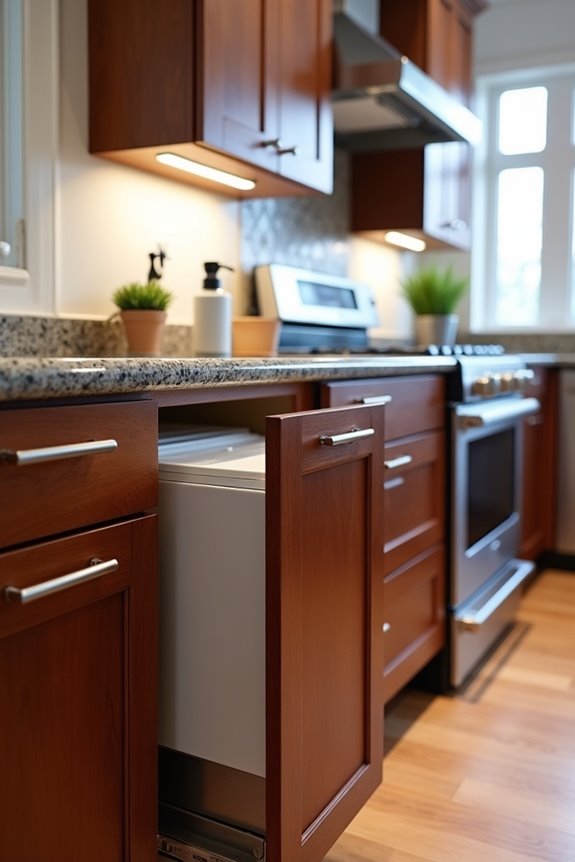
If you’re working with tight kitchen spaces, pull-out and under-cabinet cans might be exactly what you need. These specialty designs require careful measurement—pull-out models need a sturdy drawer or track system and typically hold 30 liters, while under-sink options must stay under 10 inches tall to clear plumbing. You’ll find that double-bin models and slim in-cabinet versions work especially well for compact kitchens where every inch counts and you want to separate recyclables from trash without eating up valuable floor space.
Pull-Out Installation Requirements
How much space do you actually have hiding inside your kitchen cabinet? Before you invest in a pull-out can, you’ll need to measure your cabinet dimensions carefully. These specialized cans demand exact footprint matches to slide smoothly and extend fully.
Your pull-out system requires:
- Internal cabinet space matching the can footprint precisely (typically 12–18 inches wide, 18–22 inches deep)
- Sturdy track systems with pre-assembled mounting for reliable operation
- Shallower depths and narrower widths than free-standing alternatives
- Capacity between 9–13 gallons for optimal performance
- Proper bag sizing and securing methods to prevent leaks
The Simplehuman Under-Counter model exemplifies this precision engineering. Its five-year warranty backs the sturdy track system. You’re getting flush cabinet integration that maximizes your kitchen’s functionality. Measure twice, order once. Your waste management setup depends on getting these dimensions right.
Under-Cabinet Space Constraints
When your kitchen cabinet real estate is shrinking, you’ll need to get creative with trash can placement. Under-cabinet options work brilliantly when vertical space matters most. These compact cans typically sit on cabinet doors, requiring minimal footprint while maintaining practical capacity.
Height becomes your biggest challenge here. Your can must stay shorter than about 10 inches to clear under-sink basins and plumbing fixtures without jamming or blocking access. In-cabinet models offer 10-liter capacity—perfectly sized for tight quarters without overwhelming your available space.
The key advantage? These cans include lids, controlling odors in confined areas. Prioritize models with removable inner buckets. They slide out easily for cleaning, making maintenance simple even when space feels cramped. This thoughtful design choice keeps your compact setup fresh and functional.
Compact Kitchen Compatibility
Space-saving trash cans come in two standout varieties: pull-out models that slide from your cabinet and door-mounted options that hang directly on cabinet fronts. You’ll find these specialty options perfect when kitchen real estate feels tight.
Pull-out cans require precise measurements. Your cabinet’s internal dimensions must match the can’s footprint exactly. Most compatible models feature 9–13 gallon capacity ranges. Door-mounted versions typically hold 10 liters, sitting flush against cabinet surfaces without consuming floor or counter space.
Key features you should prioritize:
- Slim profiles for tight spaces
- Removable inner buckets for easy cleaning
- Bag-anchor systems fitting 13-gallon liners
- Pre-assembled gliding tracks
- Under-cabinet clearance under 10 inches
You’ll appreciate how these designs maximize functionality. They work brilliantly in apartments, small homes, and galley kitchens where every inch counts.
Setup and Maintenance: Getting the Most From Your Can
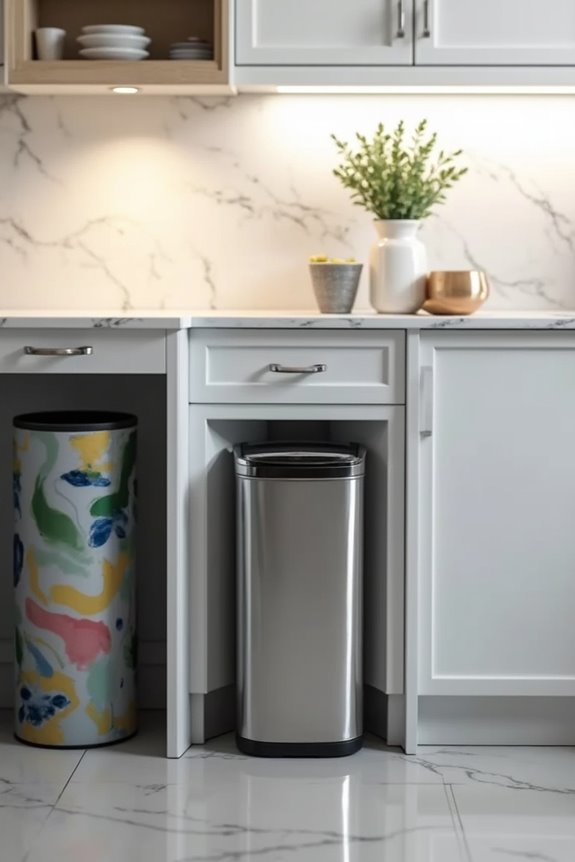
Why does your trash can start smelling funky after just a few days? You’re probably skipping the simple steps that keep odors locked away. Start by cleaning your can’s interior weekly during maintenance checks. This prevents staining on stainless steel and plastic finishes while stopping odor buildup before it starts.
Your removable inner bucket deserves attention too. Remove and clean it regularly to prevent leaks and make bag changes easier. Use standard 13-gallon bags with compatible rim-lock or anchor systems so bags won’t slip or tear during disposal.
Don’t forget testing your lid seals and pedal mechanisms. Check that they operate smoothly with soft-close action and create full-perimeter closure. These details maximize odor containment, keeping your kitchen fresh.