A scratch kitchen starts with fresh ingredients you transform into everything from sauces to desserts—all made in-house. You control every element, avoiding additives and preservatives that processed foods rely on. Daily local produce arrives; you roast, simmer, and season with technique that brings out natural flavors. The result? Dishes with genuine character and better nutrition. Speed-scratch operations typically hit 70–90% scratch production, balancing quality with efficiency. The specifics of making this work smoothly reveal themselves as you explore further.
What Defines a Scratch Kitchen?
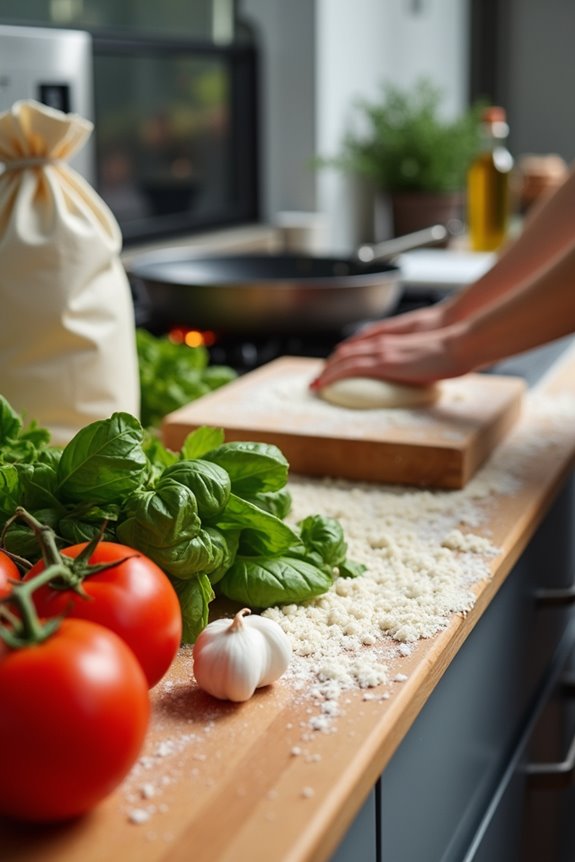
A scratch kitchen is where real cooking happens—from the ground up. You’re making everything yourself using fresh ingredients, not relying on shortcuts or pre-made components. Your sauces, dressings, bread, and desserts all come from basic raw materials prepared in-house.
This approach demands understanding how each ingredient works together. You’re not just following recipes; you’re mastering traditional techniques. Local sourcing becomes your foundation, connecting you with regional producers who supply peak-quality ingredients.
From-scratch cooking requires careful planning and just-in-time preparation. You avoid preservatives and additives entirely, ensuring maximum flavor and freshness. Some operations balance full scratch methods with speed-scratch products for practicality—there’s flexibility within the philosophy.
Ultimately, a scratch kitchen represents commitment. You’re choosing quality, transparency, and intentional cooking over convenience.
Scratch vs. Pre-Made: What’s Actually Different
The commitment you’re making in a scratch kitchen shows up most distinctly when you compare it side-by-side with pre-made alternatives. When you choose scratch cooking, you’re controlling every single element—the sauces, dressings, breads, and desserts all come together from raw fresh ingredients prepared in-house.
Pre-made foods take a different route. They’re designed for convenience, often arriving frozen or ready-to-reheat, relying heavily on additives and preservatives to extend shelf life. You’re trading control for speed and ease.
The real difference? In scratch kitchens, you decide what goes into your food. With pre-made processing, manufacturers make those decisions for you. You’re not just choosing a cooking method—you’re choosing who controls your plate’s integrity and flavor profile.
Inside the Scratch Kitchen: From Raw Ingredient to Plate
How does a single sauce transform from pantry staples into something that defines an entire dish? You start with fresh tomatoes, garlic, and olive oil. You chop, sauté, and season. That’s scratch cooking.
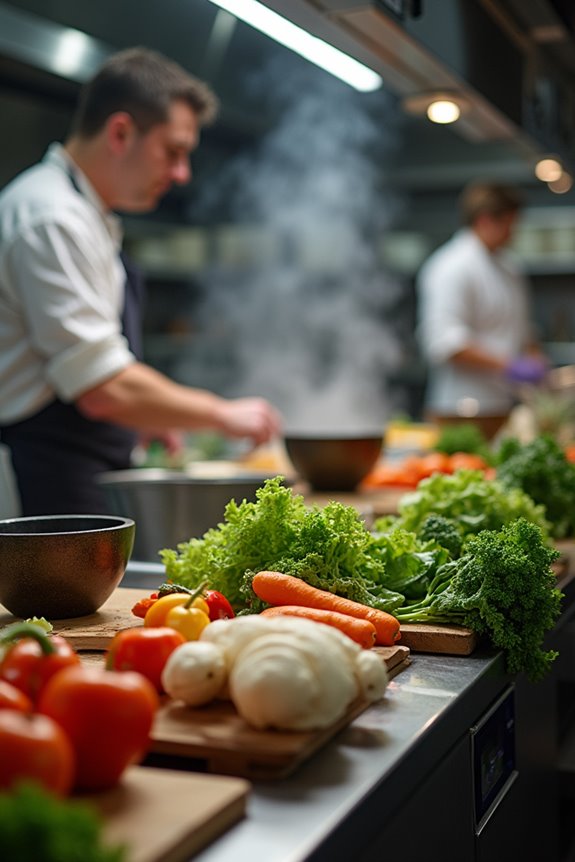
In your scratch kitchen, you’re building flavor from the ground up. Local produce arrives daily. You roast vegetables until caramelized. You simmer stocks for hours. You knead dough by hand.
This approach demands mastery of basics. Chopping creates texture. Sautéing develops depth. Roasting brings authenticity.
Your suppliers matter tremendously. You know where ingredients originate. You understand their freshness level. You control every component.
The result? Dishes with genuine character. Your guests taste the difference immediately.
Why Fresh Ingredients Taste So Much Better (And Are Healthier Too)
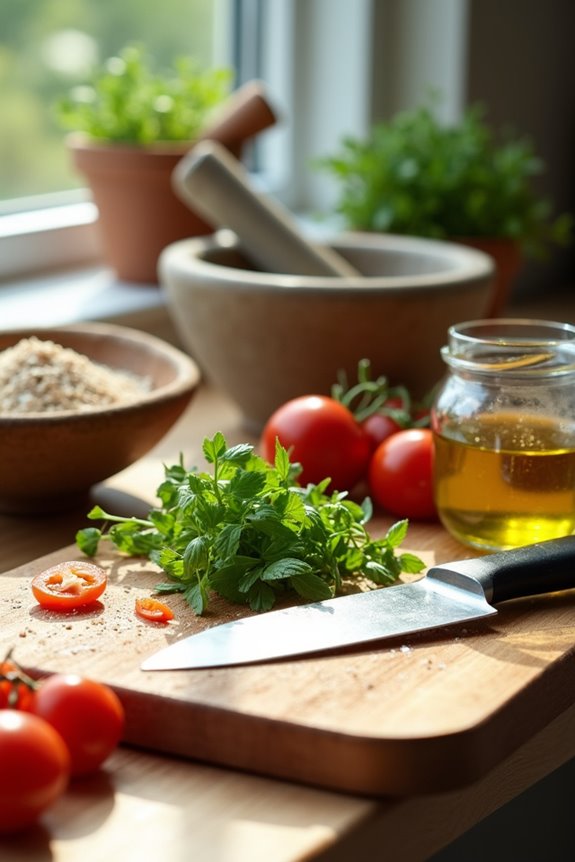
When you cook with fresh ingredients, you’re tasting flavors exactly as nature intended—no artificial enhancers, no preservatives masking what’s real. Processing strips away nutrients and requires adding sodium, sugar, and additives to compensate for lost taste, whereas fresh produce retains its natural density and complexity. You’ll notice the difference immediately: a tomato from a farmers market has 20-30% more lycopene than a processed alternative, and that vibrant taste comes straight from the ingredient itself, not a flavor packet.
Natural Flavors Without Additives
One of scratch cooking’s greatest rewards comes straight from your taste buds: food that actually tastes like food. When you cook with fresh ingredients, you’re building layers of genuine flavor without relying on chemical shortcuts.
Your roasted carrots taste like carrots—sweet and earthy. Your sautéed chicken delivers savory depth. These natural flavors emerge through proper technique, not additive enhancement. You control what enters your meals: real salt, actual herbs, whole spices. Nothing hidden.
Scratch cooking eliminates the sodium overload, hidden sugars, and mysterious preservatives lurking in processed foods. You know exactly what you’re eating. That transparency matters. Your body responds differently to meals crafted from whole ingredients versus those packed with additives.
The result? Food that nourishes and satisfies simultaneously.
Superior Nutritional Density Preserved
Why does a homemade vegetable soup feel more nourishing than its canned counterpart? You’re sensing real nutritional differences. When you cook from scratch, you preserve vitamins, minerals, and antioxidants that processed foods lose during manufacturing.
Fresh ingredients and whole foods maintain their natural fiber and phytonutrients. This combination enhances how your body absorbs nutrients and stays satisfied longer. Local sourcing amplifies these benefits—riper produce contains more nutrients than items traveling long supply chains.
Here’s what you gain:
- Reduced preservatives, sodium, and added sugars supporting healthier daily intake
- Natural fiber from whole foods improving digestion and satiety
- Nutrient-dense seasonal produce maximizing your body’s nutritional benefit
You’re not just cooking meals. You’re investing in meals that genuinely nourish you better.
Taste Difference From Processing
Beyond nutrition, scratch cooking delivers something your taste buds recognize immediately: genuine flavor. When you use fresh ingredients, you’re capturing natural oils and sugars that processing destroys. Pre-packaged alternatives lose these compounds during manufacturing.
Your house-made components—dressings, sauces, stocks—build layers of taste that bottled versions simply can’t match. Minimal processing means you’re tasting the actual food, not salt, sugar, and additives masking what’s underneath.
Fresh produce also shifts with the seasons, letting you create brighter, more complex dishes year-round. That seasonal variety keeps your palate engaged and satisfied in ways frozen or canned options never achieve.
Nutritional retention matters here too. Whole foods preserve vitamins and minerals that enhance both actual and perceived taste. You’re not just eating better—you’re tasting the difference.
Balancing Scratch Methods With Operational Efficiency
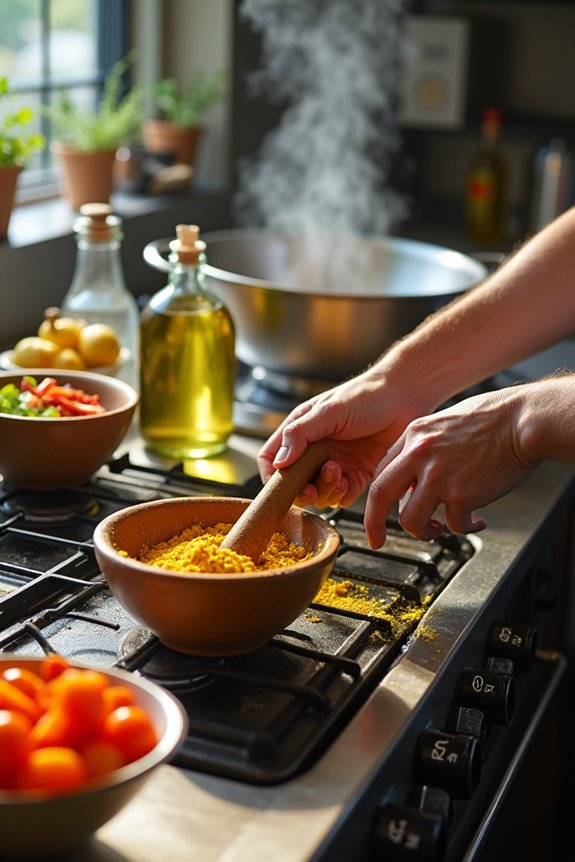
How do you cook from scratch when you’re feeding 500 people at a banquet? You blend traditional scratch cooking with smart operational shortcuts. Pure scratch cooking isn’t always practical for bulk service, so successful kitchens use a hybrid approach.
You’ll maintain fresh ingredients and quality while meeting tight timelines. Here’s how you balance both:
- Use speed scratch products like pre-cut vegetables or shredded cheese to save labor without sacrificing flavor
- Reserve full scratch cooking for à la carte items where diners expect maximum freshness and customization
- Pre-prep strategic components during slower periods so you’re ready for high-volume service
This balanced method keeps your operation running smoothly. You’re not compromising quality; you’re being realistic about what your team can handle while delivering excellent food consistently.
Speed-Scratch Kitchens: The Practical Middle Ground
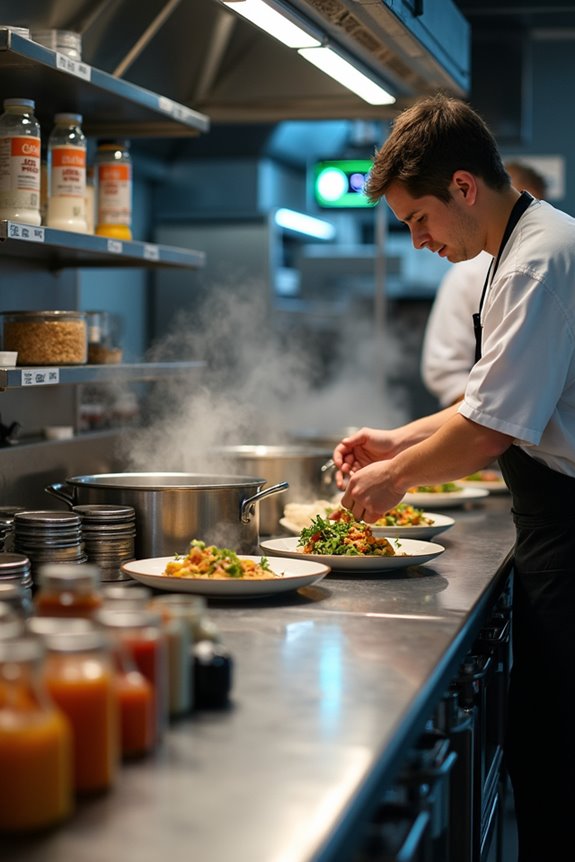
You’re looking at a smarter way to cook when you choose speed-scratch methods. Pre-cut vegetables, portioned proteins, and shredded cheese let you skip tedious prep work while you’re still building dishes from real ingredients, not frozen meals. You’ll find that saving two hours on vegetable chopping means you can handle a 200-person banquet without abandoning your scratch cooking standards.
Semi-Prepared Ingredient Solutions
What if you could skip the tedious prep work without sacrificing the quality that makes scratch cooking worth doing in the first place? Speed-scratch kitchens do exactly that using semi-prepared ingredients strategically.
You’re working smarter, not just faster. Pre-cut vegetables, shredded cheese, and partially finished sauces become your efficiency partners. This approach preserves flavor depth while cutting labor time dramatically. Your in-house preparation still matters—you’re completing dishes with care, maintaining that scratch-cooked integrity.
Consider what you gain:
- Pre-portioned proteins ensure consistency across every plate you serve
- Semi-prepped components reduce prep hours without compromising taste
- In-house finishing touches keep culinary craft alive in your kitchen
You’re joining kitchens that balance volume with quality. Speed-scratch isn’t cutting corners—it’s working intelligently within realistic constraints.
Labor Efficiency And Quality
When does maintaining kitchen quality actually require doing everything from absolute scratch? Speed-scratch solutions prove you don’t need to choose between fresh ingredients and smart labor efficiency.
You’re balancing two critical goals: preserving quality control while reducing prep hours. Speed-scratch ingredients—pre-cut vegetables, portioned proteins, shredded cheese—let you accomplish both simultaneously. These semi-prepped items eliminate repetitive tasks without compromising your finished dishes.
Consider protein portioning. Pre-sized portions streamline labor dramatically, ensuring consistent cooking times across high-volume service while reducing waste. You maintain recipe integrity and authentic flavor while cutting prep work significantly.
Your kitchen operates as a practical middle ground. You focus scratch preparation on core components where it matters most, then leverage semi-prepped items for bulk production. This approach scales quality without exhaustion.
Balancing Speed With Standards
The real challenge isn’t choosing between scratch cooking and efficiency—it’s knowing where to draw the line. You’re not abandoning your scratch kitchen philosophy by using pre-cut vegetables or portioned proteins. Instead, you’re making smart choices that preserve quality while respecting your team’s time and energy.
Speed-scratch operations typically achieve 70–90% scratch production. That’s still authentically yours. Fresh ingredients remain your foundation. Standardization becomes your ally, not your enemy.
- Pre-prep proteins in consistent sizes for faster, uniform cooking
- Use semi-prepared ingredients to reduce prep labor without sacrificing taste
- Train staff thoroughly so efficiency never compromises flavor or texture
You’re building a sustainable kitchen. One that serves customers well and treats your team fairly.
Creating Your Scratch Kitchen Menu: Where to Start
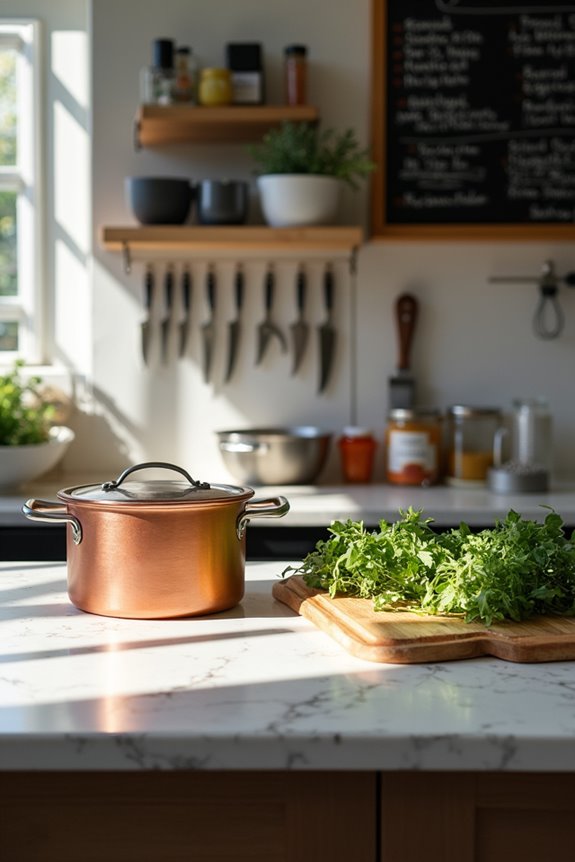
Before you’ll need to decide which dishes form your menu’s foundation—and that decision hinges on identifying your core components. You’re building from scratch, so prioritize what you’ll make in-house: sauces, dressings, and breads that define your kitchen’s identity.
Prioritize in-house sauces, dressings, and breads—they define your kitchen’s identity and form your menu’s foundation.
Next, map seasonal and local ingredients into a rotating menu. Peak-flavor produce drives both quality and cost-efficiency. Spring asparagus, summer tomatoes, fall squash—these aren’t just ingredients, they’re your menu’s backbone.
Then design for everyone. Build dietary accommodations into your foundation from day one: gluten-free, vegan, dairy-free options, plus allergen awareness. Clearly label everything.
Finally, develop standardized recipes with precise procedures. Consistency matters. Your team needs identical chopping techniques, heating methods, and plating guidelines across every event.
Common Mistakes When Transitioning to Scratch Cooking
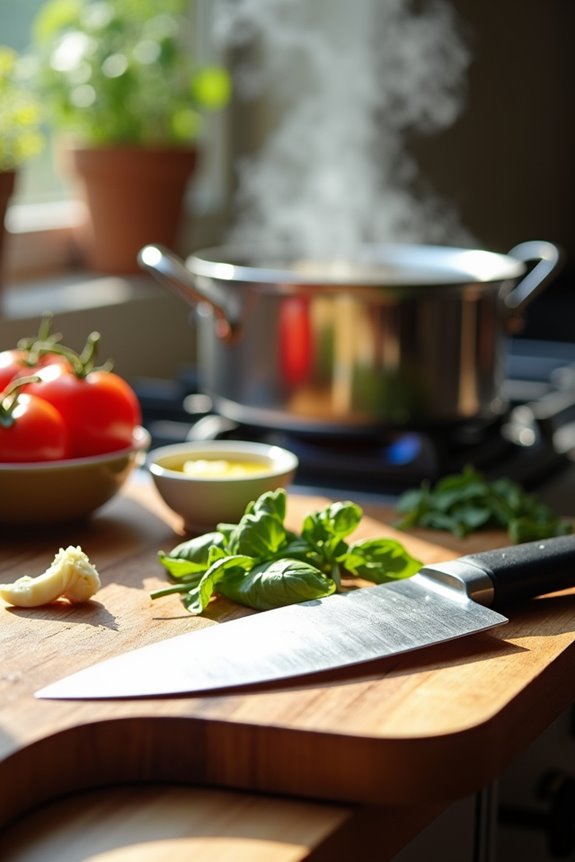
Many operations stumble when they commit to scratch cooking without realistic expectations. You’re not alone if you’ve felt overwhelmed. Most kitchens don’t jump to 100% scratch overnight—they adopt realistic targets instead, blending fully scratch dishes with speed-scratch items.
Your biggest challenges? Here’s what trips up operators:
- Skipping planning and mise en place — You’ll face service delays without advance prep and organized stations ready for execution.
- Underinvesting in labor and training — Scratch cooking demands skilled technique; untrained staff create inconsistent results and safety risks.
- Neglecting supplier vetting — Poor ingredient sources undermine quality and taste consistency, defeating your scratch kitchen’s purpose.
Balance ambition with practicality. You’ll build stronger operations by acknowledging these pitfalls upfront and addressing them systematically.