The standard bathroom vanity you’ll find almost everywhere measures 21 inches deep—that’s your benchmark. This depth balances storage space with bathroom function, accommodates plumbing behind the cabinet, and supports proper door swing. You’ve got options though: shallow 12–16 inch cabinets for tight spaces, mid-depth 18–20 inch models for versatility, or deeper 24+ inch vanities for primary bathrooms needing serious storage. Your specific choice depends on your bathroom layout, sink type, and how much gear you’re stashing. Get the measurements right, and you’ll unlock the perfect fit.
What Is Standard Bathroom Cabinet Depth?
Ever wonder why bathroom cabinets seem to have a standard size? Well, you’re not alone in noticing this pattern. Most bathroom vanities fall between 18 and 24 inches deep, with 21 inches being the most common depth you’ll encounter.
That 21-inch standard exists for good reason. It balances practical plumbing clearance, everyday usability, and efficient space management. You get enough depth for storage without sacrificing maneuverability in tight bathrooms.
Smaller spaces benefit from 18-inch cabinets, offering easier movement while maintaining decent storage capacity. Meanwhile, some vanities stretch to 23.5 inches, providing additional countertop surface area without dramatically compromising functionality.
Your depth choice directly impacts countertop overhang, door clearance, and how your vanity interacts with toilets and showers. Understanding these measurements helps you make informed decisions for your bathroom layout.
Why 21 Inches Is the Industry Benchmark
You’ll find that 21 inches became the standard because it solves three critical challenges at once: giving you enough storage and counter space, fitting smoothly with existing plumbing installations, and keeping your bathroom feeling spacious and accessible. Manufacturers and builders settled on this depth because it accommodates drain assemblies, supply lines, and P-traps without eating up precious floor space or forcing you to squeeze between fixtures. When you choose a 21-inch vanity, you’re getting the sweet spot that builders trust, plumbers expect, and your daily bathroom routine actually needs.
Storage and Functionality Balance
Why does almost every bathroom cabinet measure exactly 21 inches deep? You’re looking at the perfect sweet spot between storage space and usability. Manufacturers discovered that this standard depth gives you enough room for plumbing clearance behind the cabinet while keeping your countertop area accessible and comfortable.
| Depth | Storage | Plumbing Space | Countertop Feel |
|---|---|---|---|
| 18″ | Limited | Tight | Spacious |
| 21″ | Good | Adequate | Balanced |
| 23.5″ | Better | Comfortable | Slightly Cramped |
| 24″+ | Excellent | Very Roomy | Crowded |
You won’t feel squeezed when you’re brushing your teeth or applying makeup. The vanity cabinet depth allows proper P-trap installation without sacrificing your usable surface. Deeper options exist, but they’ll eat into your bathroom’s floor space. This balance makes 21 inches the industry benchmark—it’s genuinely the goldilocks solution for standard bathrooms.
Standard Installation Compatibility
That 21-inch depth isn’t arbitrary—it’s the result of plumbers, cabinet makers, and designers solving a real puzzle. You’re looking at a measurement that accounts for plumbing clearance, supply lines, and drain assemblies tucked behind your vanity cabinet depth. This standard depth gives you enough countertop overhang—typically around 22 inches finished—without cramping your bathroom layout.
The 21 inches ensures proper door swing, prevents you from stubbing toes, and maintains clearance between your vanity, toilet, and shower. When you install a vanity at this installation compatibility standard, plumbers access everything easily. You preserve foot traffic flow. Designers know exactly how much room they’re working with. That consistency across bathrooms means you’re choosing a vanity that’ll fit smoothly into most spaces, whether you’re renovating or building fresh.
Ergonomic Comfort and Accessibility
Most bathroom vanities settle at 21 inches deep for a straightforward reason: it’s the sweet spot where function meets comfort. You’ll appreciate how this standard cabinet depth balances ergonomic comfort with practical accessibility in your daily routine.
Here’s why 21 inches works so well:
- Sink access – You can reach your faucet and basin without stretching awkwardly or leaning forward excessively.
- Drawer usability – Items stored inside remain within comfortable arm’s reach for everyday grooming tasks.
- Foot traffic clearance – The bathroom vanity depth leaves adequate space between the vanity, toilet, and shower for natural movement.
- Plumbing clearance – Supply lines, drain assemblies, and P-traps fit neatly behind without pushing the cabinet too far into your bathroom.
This 21-inch benchmark delivers countertop space for essentials while maintaining the circulation patterns you need. You’re getting genuine ergonomic comfort, not compromise.
Shallow Cabinets: 12 to 16 Inches for Compact Spaces
When you’re working with a cramped bathroom, you’ve got to think strategically about storage. Shallow cabinets measuring 12 to 16 inches deep are your secret weapon for maximizing compact spaces without sacrificing style or function.
These bathroom vanity depth options work beautifully in powder rooms and tight bathrooms where floor space matters most. You’ll appreciate how they maintain an open feel while keeping walkways uncluttered. Standard cabinet sizes in this range store toilet paper, hand towels, and cleaning products efficiently.
| Feature | Benefit | Best For |
|---|---|---|
| 12-16 inch depth | Saves floor space | Small bathrooms |
| Slim profile | Open atmosphere | Powder rooms |
| Essential storage | Organized essentials | Compact homes |
| Less protruding | Better traffic flow | Narrow spaces |
| Strategic placement | Functional design | Tight layouts |
Yes, shallow cabinets offer less overall storage capacity than deeper models. However, they’re ideal when you’re prioritizing an uncluttered, welcoming bathroom environment.
Mid-Depth Options: 18 to 20 Inches for Versatility
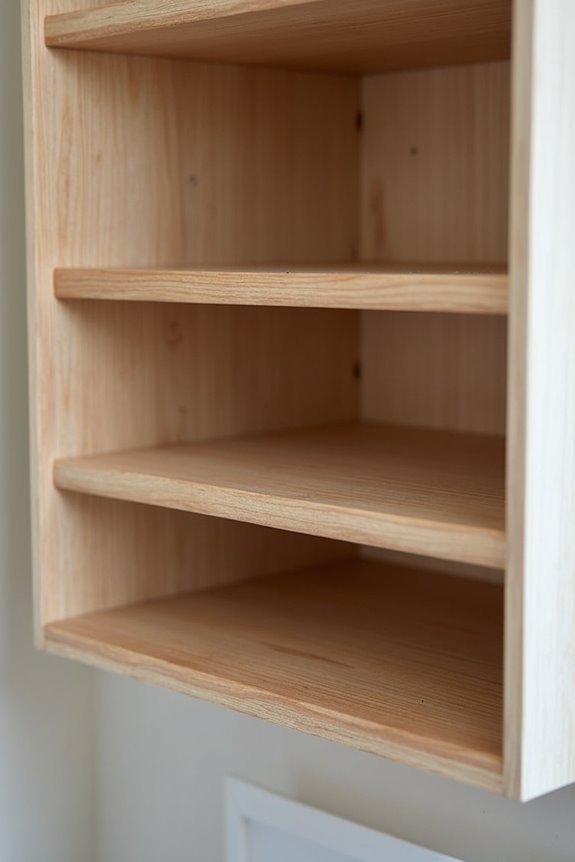
If shallow cabinets feel too cramped for your needs, you’re ready for the next step up. Mid-depth bathroom cabinets measuring 18–20 inches offer the sweet spot you’ve been looking for. They provide genuine storage space without dominating your bathroom layout.
These mid-depth units work wonderfully because they:
- Align with standard vanity depth, ensuring compatible drawer and door configurations
- Accommodate everyday essentials like toilet paper, hand towels, and cleaning supplies with easy accessibility
- Fit small-to-medium bathrooms and apartments while preserving valuable walkway clearance
- Balance storage capacity against space efficiency for most bathroom layouts
You’ll appreciate how 18–20 inch depths support quick access to stored items without overwhelming your room. These standard dimensions represent the practical choice for homeowners seeking both functionality and comfort in their bathroom spaces.
Deep Cabinets: 24 Inches and Beyond for Primary Bathrooms
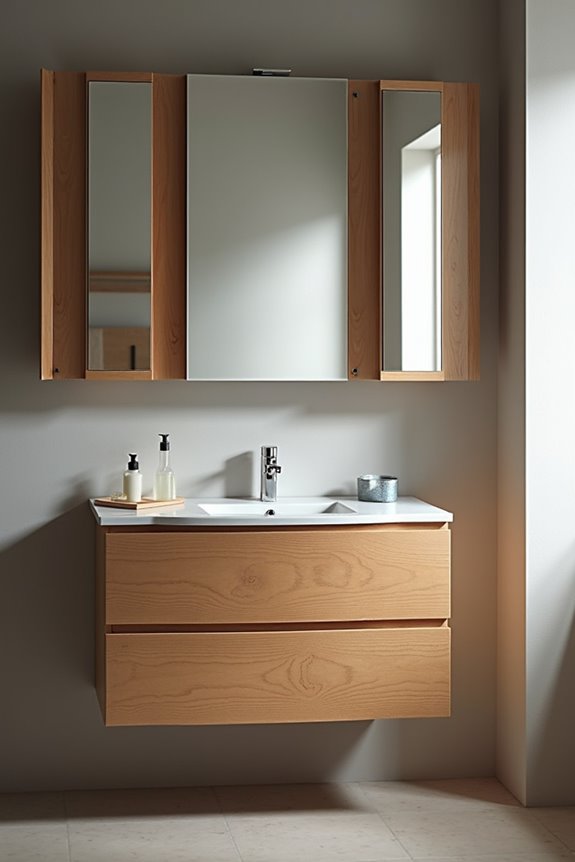
When you upgrade to cabinets deeper than 24 inches, you’re opening serious storage power—perfect for primary bathrooms where you and your family stash everything from towels to skincare products. You’ll need to contemplate whether your plumbing setup can handle this depth, since pipes and fixtures sometimes require repositioning to make room for the larger cabinet footprint. These deeper vanities shine in spacious bathrooms, especially when you pair two of them together, but they’ll demand careful planning in smaller spaces where they can block doorways or crowd the floor.
Maximum Storage Capacity
How much storage do you really need in your primary bathroom?
When you go deeper than standard cabinet sizes, you’re unlocking serious storage capacity. Twenty-four-inch-plus cabinet depth transforms your bathroom vanity depth into a powerhouse of organization. You’ll gain significantly more countertop space and room for strategic storage solutions.
Deep cabinets maximize your space through:
- Multiple drawer configurations for daily essentials
- Expanded shelving for towels and supplies
- Dedicated compartments for medications and toiletries
- Hidden storage behind cabinet doors and panels
This depth demands thoughtful space planning. You’re investing in a custom vanity that accommodates larger sinks and enhanced layouts. Your bathroom becomes more functional and luxurious. The tradeoff? You’ll need adequate floor space and careful clearance around fixtures. But for primary bathrooms, that extra depth delivers the storage capacity you’ve been craving.
Luxury Bathroom Applications
Why settle for standard when your primary bathroom can truly impress? You’ll find that deep vanities reaching 24 inches or beyond transform your space into something extraordinary. These expansive designs offer substantially more cabinet depth and countertop space than typical installations, creating the sophisticated bathrooms you deserve.
Your luxury bathroom becomes a personal retreat with integrated sinks and extended working surfaces. The plumbing layout requires careful planning to accommodate the increased depth, ensuring everything functions flawlessly. You’ll need custom countertops tailored to your vision and specifications.
Structural support matters tremendously here. Proper wall mounting with reinforced blocking handles the heavier cabinetry safely. Your designer adjusts door swings and mirror alignment thoughtfully, maximizing circulation while maintaining that high-end aesthetic. These considerations elevate your primary bathroom from functional to genuinely impressive.
Plumbing Modification Requirements
Just how much rearranging happens behind the walls when you install a 24-inch vanity? You’ll likely discover that deeper cabinets demand serious plumbing adjustments. Supply lines and drains need strategic rerouting to avoid interference.
Your plumbing chase—that wall space housing pipes—becomes tight real quick. You’ll need to coordinate several modifications:
- Relocate supply lines away from cabinet depth
- Reposition P-trap height for proper drain clearance
- Adjust sink location to maintain wall piping accessibility
- Verify code compliance throughout the project
Deep vanities encroach on critical plumbing space. Undermount or vessel sinks require especially careful planning. You’ll want to evaluate these changes early during design phases. This prevents costly rework and ensures your door swings freely. Proper drain clearance keeps everything functioning smoothly for years ahead.
How Countertop Overhang Affects Overall Depth?
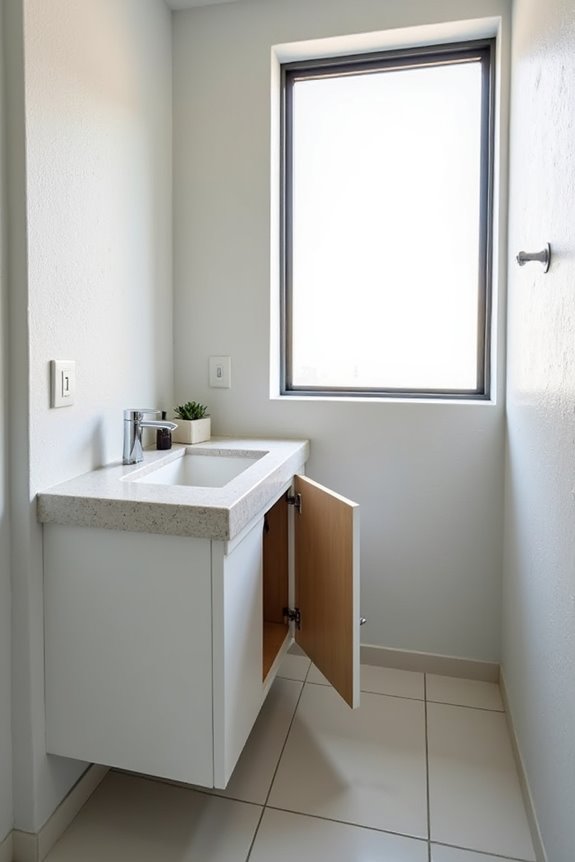
When you’re measuring your bathroom for a new vanity, here’s something that often surprises people: that 21-inch cabinet depth isn’t actually your finished depth.
Countertop overhang extends beyond your cabinet’s edge, typically adding 1 inch or more to your overall measurement. You’ll end up with a finished depth around 22 inches instead. This overhang matters because it directs water away from fronts, protecting your cabinet investment.
Why This Matters for Your Space
That extra inch affects door clearance significantly. Your sink placement and faucet positioning shift forward slightly. Backsplash alignment changes too. When measuring for fit, remember that mounted fixtures push usable depth closer to 20 inches, reducing interior storage accessibility.
Understanding these measurement considerations prevents installation surprises and ensures everything aligns perfectly in your bathroom layout.
Floating vs. Freestanding: Depth Implications for Installation
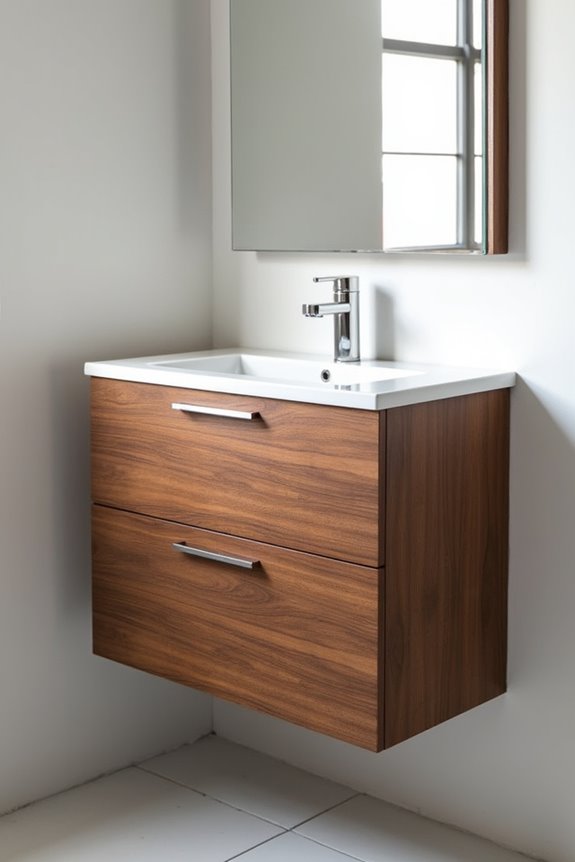
The choice between floating and freestanding vanities fundamentally reshapes how your bathroom functions and feels. You’ll notice significant differences in depth that affect installation complexity and your daily experience.
Consider these key depth factors:
- Floating vanities measure 8 to 12 inches deep, creating an airy, modern aesthetic while maximizing floor space
- Freestanding units typically reach 21 inches deep, offering superior storage and simpler plumbing connections
- Door swing clearance requires careful planning with floating options to prevent cramped spaces
- Wall reinforcement becomes necessary for floating installation, demanding structural consideration
Freestanding vanities align with standard cabinet depths, making installation straightforward with existing plumbing. Floating vanities demand precision; they need wall reinforcement and thoughtful layout planning to avoid conflicts. Your bathroom’s size and storage needs should guide this decision.
Measuring Your Bathroom Space for Proper Fit
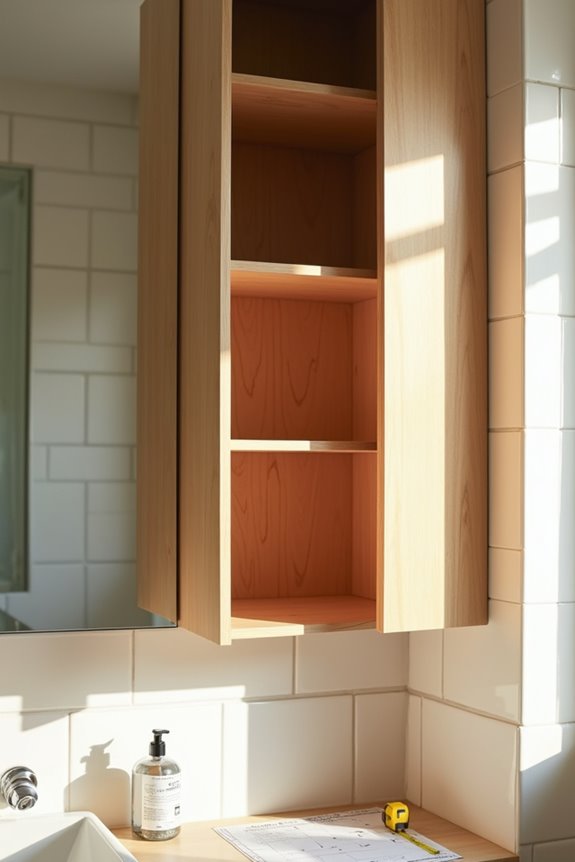
Before you buy any vanity, measure your bathroom’s floor space carefully, noting the width and length of the wall where you’ll install it. You’ll need to account for door swings, especially if your bathroom door opens inward, because a vanity that’s too deep can block the door and make your space feel cramped. Take time to identify where windows, existing fixtures, and electrical outlets sit, so you can choose a depth that fits your room’s layout without creating awkward traffic patterns.
Assessing Available Floor Space
How’s your bathroom layout working for you right now? Before choosing a vanity, you’ll want to evaluate your floor space carefully. Here’s what matters most:
- Measure clear floor space in front of the vanity (at least 21 inches for comfortable access)
- Check door swing clearance to prevent collisions with cabinet doors
- Verify plumbing location won’t interfere with your vanity’s footprint
- Confirm available wall cavity depth matches standard cabinet sizes (18–24 inches)
Your bathroom depth and overall dimensions determine what fits without cramping your space. Standard cabinet sizes work beautifully when you’ve planned ahead. Poor floor space assessment leads to awkward traffic patterns and regrets. Take time measuring now, and you’ll enjoy a functional bathroom that feels spacious and welcoming.
Accounting For Door Clearance
Where do your bathroom doors swing when you open them? You’ll want to measure your vanity area carefully. Your cabinet’s typical 22-inch finished depth with countertop overhang demands respect during full door travel.
Plan for at least 21 inches of open floor space in front of your vanity. This ensures comfortable door operation and proper toe-kick clearance. Your door swing arc shouldn’t hit surrounding cabinetry or adjacent fixtures like toilets or showers.
Check how your vanity depth relates to nearby doors and drawers in adjacent rooms. Misaligned placement causes interference during full door travel. Align your vanity edge with toilet and shower fronts to maintain clear sightlines and unobstructed entry.
| Measurement | Standard Depth | Your Space | Status |
|---|---|---|---|
| Vanity Depth | 22 inches | ___ | ✓ |
| Floor Clearance | 21 inches | ___ | ✓ |
| Door Swing Arc | Full swing | ___ | ✓ |
| Adjacent Space | Clear | ___ | ✓ |
Storage Needs and How They Influence Depth Selection
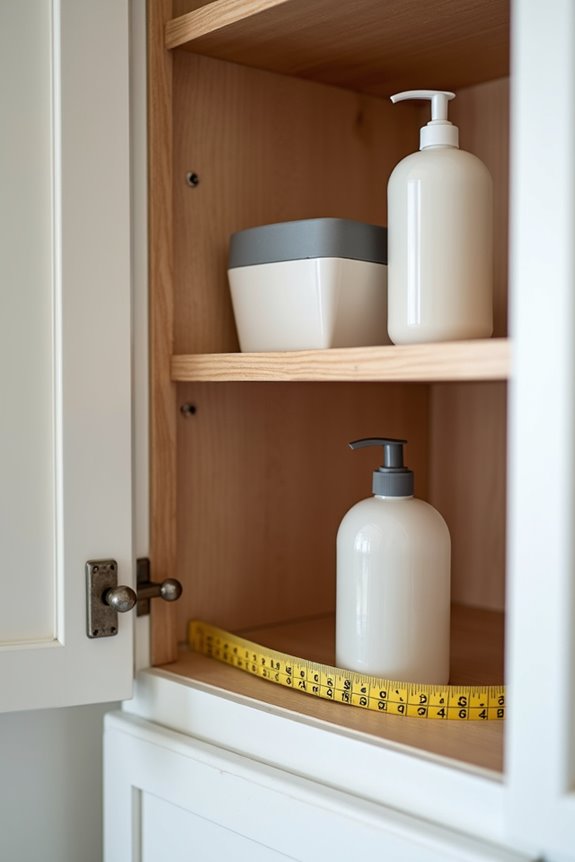
What you actually plan to store in your bathroom cabinet should drive your depth decision more than anything else. Your storage needs directly shape which vanity depth works best for your situation.
Consider these storage priorities:
- Daily essentials like toothbrushes and medications need minimal depth (18 inches suffices)
- Bulk items such as extra towels and toiletries demand deeper units (24+ inches)
- Organized drawers or shelves require adequate space planning within your chosen depth
- Specialty items like hair tools need 21-inch depths or more for functional storage
Shallower depth options work well if you’re mainly storing lightweight items. Deeper cabinets maximize countertop space while providing substantial internal organization. Vessel sinks pair nicely with standard cabinet depths since they don’t require under-sink plumbing space. Match your vanity depth to what you’re actually storing, not what you might store someday.
Sink Type Compatibility With Cabinet Depth
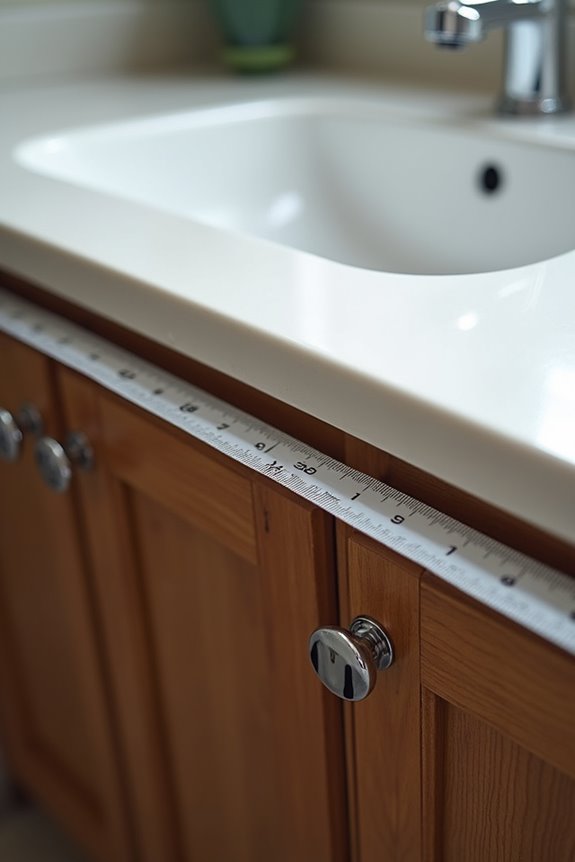
Your sink choice actually matters more than you might think when picking a cabinet depth. Different sink styles demand different vanity depth requirements, and understanding sink type compatibility helps you make smarter decisions.
Undermount sinks work beautifully with standard 21-inch cabinet depths because they don’t need extra space above the rim. You’ll maximize usable countertop area behind the sink while maintaining proper plumbing clearance underneath.
Vessel sinks require shallower vanities—typically 18 inches or less—to keep the sink bowl at comfortable heights. This preserves both ergonomic clearance and functional countertop space.
Drop-in sinks offer flexibility. You can use standard 21-inch cabinets or go deeper without major complications, making them adaptable for various bathroom layouts and plumbing configurations.
ADA Accessibility and Comfortable Knee Clearance
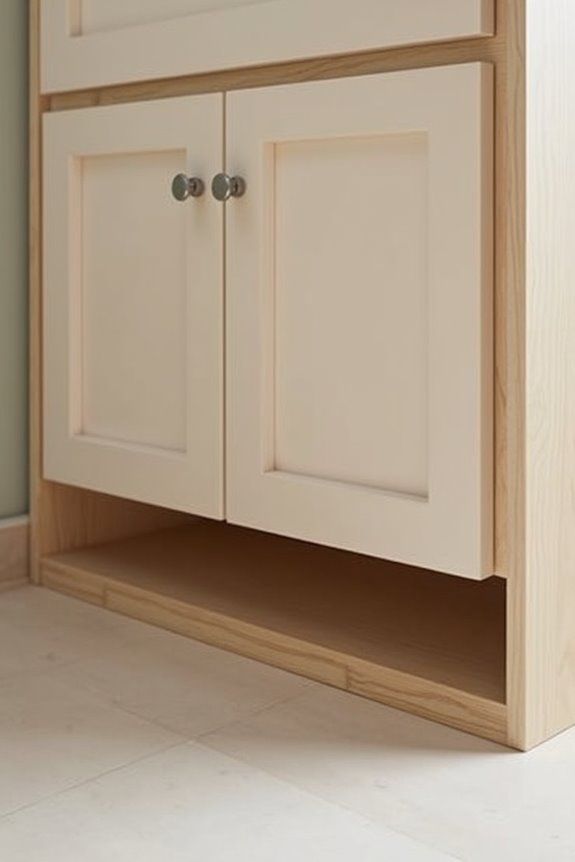
How’d you like a bathroom vanity that actually works for everyone?
When you’re designing accessible bathrooms, ADA guidelines shape what makes a vanity truly functional. A standard 21-inch cabinet depth accommodates plumbing while preserving essential knee clearance underneath.
Consider these accessibility features:
- Counter height up to 34 inches allows comfortable reach for different users
- Knee clearance of about 20 inches high and 27 inches wide creates usable space
- Knee height of 17 to 19 inches ensures comfortable seating or standing
- Toe clearance minimum 11 to 12 inches lets you move closer to the sink
You’ll want an open knee space below the countertop, free from plumbing obstacles. Adjustable-height options work beautifully too. When you arrange fixtures strategically, under-sink clearance becomes genuinely accessible rather than an afterthought.
Choosing the Right Depth for Your Bathroom Layout
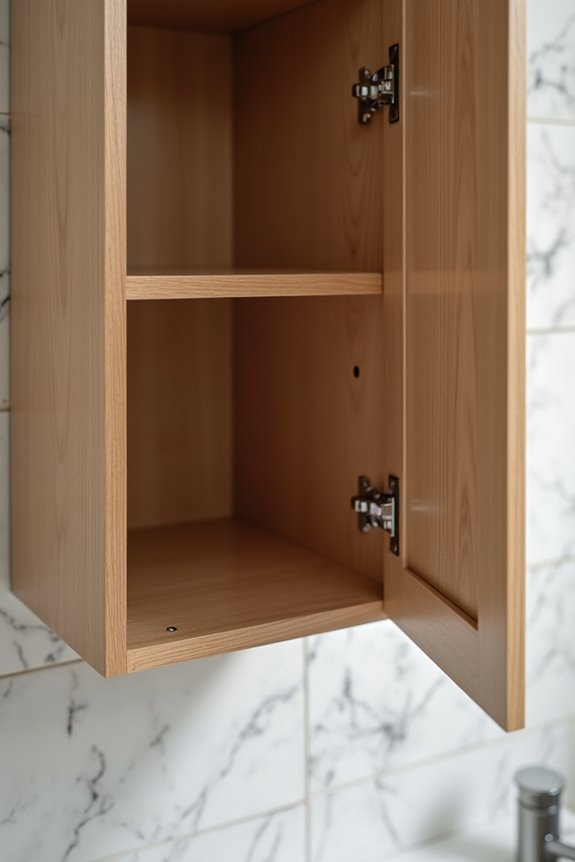
Once you’ve got accessibility in mind, it’s time to think practically about your space. Your bathroom layout determines which standard bathroom cabinet depth works best for you. Tight bathrooms benefit from shallow vanities at 12–16 inches, preserving traffic flow and door swings. Mid-depth options spanning 18–20 inches offer versatile storage capacity without overwhelming your room.
Consider your countertop overhang carefully. Most finished depths reach 22 inches, which affects how doors open and affects knee clearance underneath. Deeper 24-inch vanities maximize storage but demand more floor space and potential plumbing adjustments. Measure your bathroom layout thoroughly before deciding. Think about how you move through the space and whether countertop space matters most. Your ideal depth balances storage, accessibility, and comfortable daily use.