
A kitchen soffit is that boxy structure above your cabinets—typically 12 to 18 inches tall—hiding HVAC ducts, plumbing pipes, electrical wiring, and vents. It’s usually made from drywall or wood. To remove it, you’ll need to turn off power, drill an inspection hole to identify what’s inside, then carefully cut through studs and segment the boards. Relocating utilities requires licensed electricians and plumbers. The process takes about a day and a half for demolition, though finishing extends the timeline. But there’s more to consider before you grab your tools.
What Is a Kitchen Soffit?
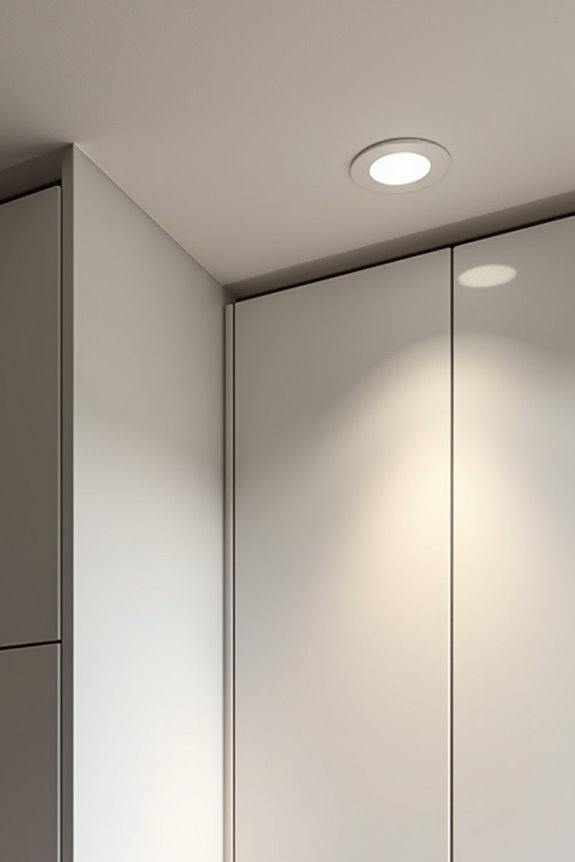
Ever wonder what that boxy structure is sitting on top of your kitchen cabinets? That’s your kitchen soffit. It’s a bulky, box-shaped area that extends from your cabinet tops toward the ceiling, typically matching the cabinet depth.
You’ll find soffits in most older kitchens. They’re usually constructed from drywall or wood and serve an important purpose: hiding plumbing, ductwork, vents, wiring, and pipes that’d otherwise be visible. These utilities need somewhere to go, and your soffit provides that concealed space.
Soffits can be purely functional or aesthetic. Some finish the cabinet line nicely, while others simply contain necessary systems. Either way, they affect how your kitchen feels. Many homeowners considering soffit removal discover that eliminating these structures makes ceilings feel taller and opens up the entire space dramatically.
Why Are Soffits Built Above Cabinets?
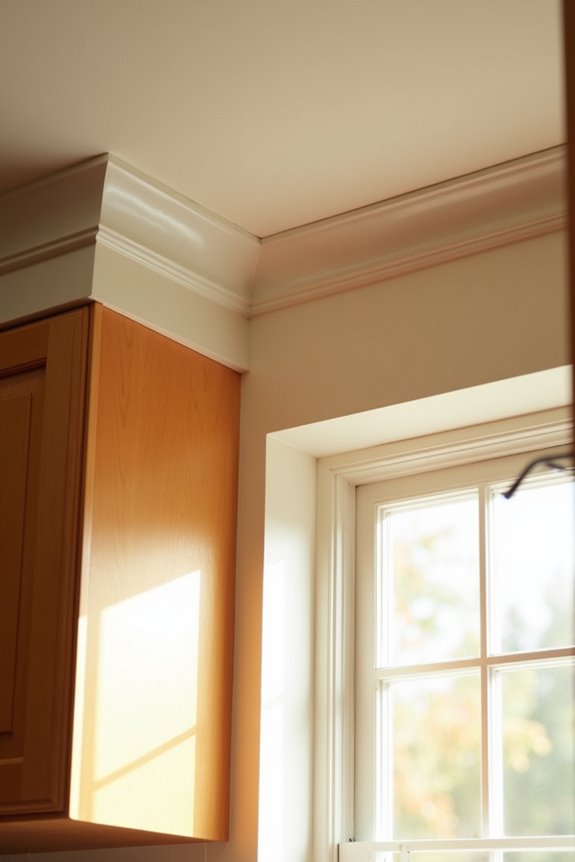
You’ll find soffits built above your cabinets for three main reasons: they hide the messy utilities running overhead, they create a polished, finished look in your kitchen, and they help manage awkward spaces between your cabinets and ceiling. When plumbing, electrical wiring, and ductwork need somewhere to go, a soffit gives them a clean home instead of leaving them exposed. They’re also practical problem-solvers that let builders work with non-standard ceiling heights and fill gaps that’d otherwise look incomplete.
Concealing Utilities And Pipes
Why does your kitchen ceiling suddenly drop down above the cabinets? That boxed-in space, called a soffit, isn’t decorative—it’s working hard for you. Behind that drywall or plywood enclosure sits a network of essential systems: HVAC ducts delivering heated and cooled air, plumbing pipes carrying water, and electrical conduits powering your kitchen. Soffits conceal these utilities, keeping them out of sight while maintaining your kitchen’s finished appearance. Without soffits, you’d see exposed ductwork, pipes, and wiring running across your ceiling—not exactly the polished look you’re after. These systems typically need clearance and routing space, sometimes 12-18 inches of vertical room. Builders frame soffits with wood or metal, then cover them to create seamless integration with your walls and cabinets.
Creating Finished Kitchen Aesthetics
Beyond just hiding pipes and ducts, soffits serve a vital design purpose in your kitchen. They create a polished, intentional look that ties your space together. You’ll find that soffits accomplish several aesthetic goals:
- Create a clean visual line where cabinets meet the ceiling
- Make ceilings appear higher through careful proportion and design
- Establish a finished, built-in appearance throughout your kitchen
- Allow you to incorporate design elements like paint, molding, or lighting
When you’re considering soffit removal, you’re not just removing a box—you’re changing your kitchen’s entire visual balance. Smart designers use soffits strategically, painting them to match cabinets or adding crown molding for architectural interest. The finished aesthetics they provide makes kitchens feel intentional and complete. That’s why they’ve remained a kitchen staple for decades.
Managing Space And Proportions
How’d kitchen designers end up boxing in the space above your cabinets? They built soffits to solve real problems. Your kitchen likely has plumbing, ductwork, and wiring running overhead that need hiding. Soffits conceal these utilities while managing the awkward gap between cabinet tops and ceiling.
But here’s the trade-off: those wooden frames and drywall boxes eat up valuable ceiling height. A soffit typically consumes 12 to 18 inches of vertical space, making rooms feel cramped and smaller than they actually are.
You’re also losing potential storage space. That gap above your cabinets could hold decorative baskets, cookbooks, or display items. Removing the soffit opens everything up, literally and visually, creating a more spacious, inviting kitchen that feels taller and more open.
What Plumbing, Wiring, and Ducts Are Hiding?
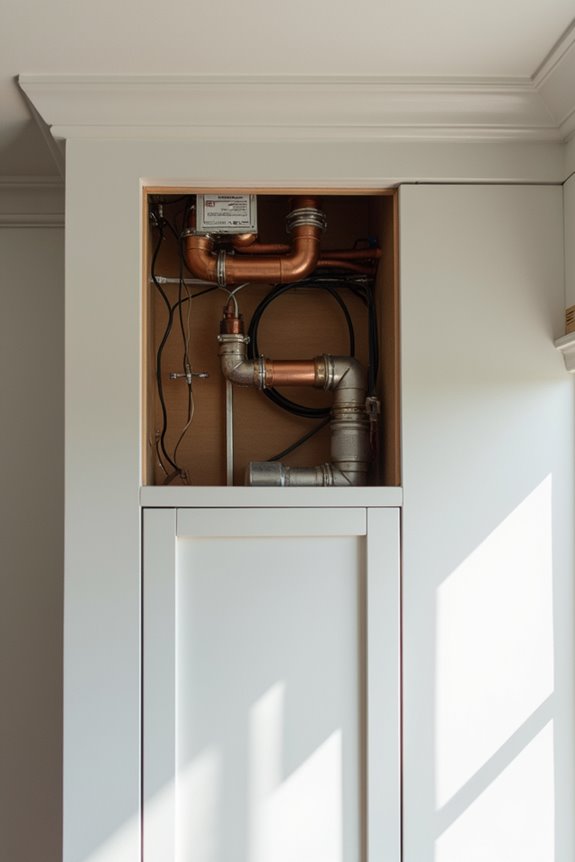
Behind your kitchen soffit, you’ll likely discover a tangle of essential utilities—plumbing pipes, electrical wiring, and ventilation ducts—that’d be unsightly if exposed to view. Before you remove anything, you’ll need to inspect what’s actually hiding up there, which often means drilling a small exploratory hole or carefully peeking inside to identify everything safely. Understanding what utilities lurk above your cabinets helps you plan removal properly and avoid accidentally damaging something crucial to your home’s function.
Common Hidden Utilities
What’s actually lurking inside that soffit above your cabinets? You’ll typically find several hidden utilities running through the wall and ceiling space. These systems are tucked away to maintain clean aesthetics while keeping essential infrastructure accessible.
Behind your soffit, you may discover:
- HVAC ductwork that distributes heated or cooled air throughout your kitchen
- Plumbing lines carrying water to sinks, dishwashers, or refrigerators
- Electrical Romex wiring powering outlets, lights, and appliances
- Venting systems for range hoods or other kitchen equipment
Before removing your soffit, you need to identify what’s hiding there. This inspection requires cutting a small access hole to safely view interior components. Knowing what sits above prevents costly damage and ensures proper rerouting during remodeling. Licensed professionals should handle any utility relocation work required.
Inspection and Discovery Methods
Before you tear into that soffit, you’ll want to know exactly what’s running through it. Smart soffit removal starts with understanding your hidden utilities.
Drilling a small hole—about one inch wide—lets you peek inside safely. You’ll spot HVAC ducts, plumbing lines, and electrical wiring bundled together. Look for 90-degree elbows on pipes, which take up considerable space and need careful navigation.
Head-in Inspection Matters
Get your head up there. This direct inspection reveals exactly how components are arranged, preventing costly damage during removal. You’ll see where Romex wiring runs, spot conduit pathways, and identify vent lines from appliances.
Document everything you find. Take photos. Note locations. This groundwork protects your project, saves time, and ensures you’re ready to call licensed trades when needed—because some relocations require professionals.
Should You Remove Your Kitchen Soffit?
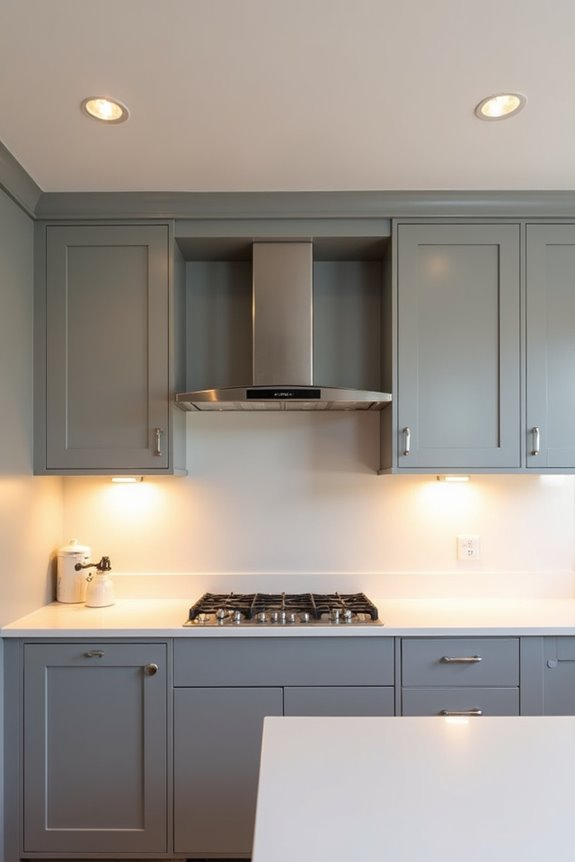
Removing a kitchen soffit sounds appealing—more space, cleaner lines, a contemporary look—but it’s rarely a simple project. Before you commit, consider what you’re actually signing up for:
- Hidden utilities running behind the soffit (ducts, pipes, electrical wiring)
- Extensive cabinet reconfiguration or replacement costs
- Ceiling and wall patching, repainting, and finishing work
- Multiple contractors needed (plumber, electrician, carpenter)
You’ll face significant expenses and disruption. Removing soffit and reconfiguring cabinets easily runs thousands of dollars. Plus, you might discover obstacles that complicate everything further.
Think strategically. Sometimes disguising the soffit with crown molding costs far less. Extending cabinets to the ceiling creates that open feel without the headache. Weigh your options carefully before removing anything.
What Are 6 Design Alternatives to Removal?
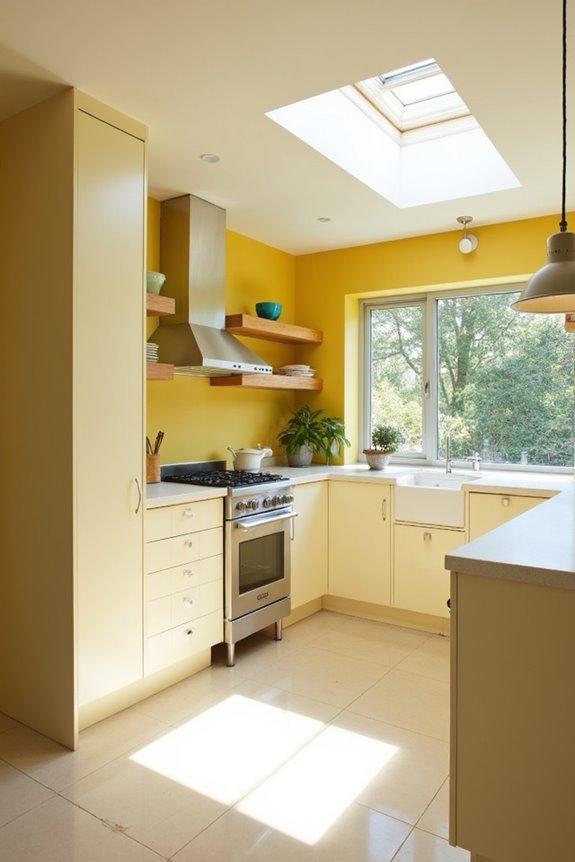
Why tear out a perfectly functional soffit when you can work with it instead? You’ve got smart options that transform your kitchen without the hassle of removal.
| Design Alternative | What It Does | Best For |
|---|---|---|
| Extend cabinets to ceiling | Fills the gap seamlessly | Modern, clean looks |
| Add crown molding | Creates finished, balanced design | Traditional kitchens |
| Match soffit color | Minimizes visual impact | Budget-conscious updates |
| Install taller cabinets | Reaches ceiling for updated appearance | Contemporary spaces |
| Create faux beams | Adds architectural interest | Farmhouse or rustic styles |
| Add interior shelving | Converts space into storage | Maximizing functionality |
You’ll find that working with kitchen soffits opens creative design alternatives. Matching your soffit to cabinet colors disguises it effectively. Crown molding adds polish without removal costs. Extending upper cabinets to the ceiling modernizes your space instantly. Open shelving above existing units provides that trendy, updated feel. You’re part of a growing community embracing smart renovation choices.
How Do You Know What’s Inside Before Starting?
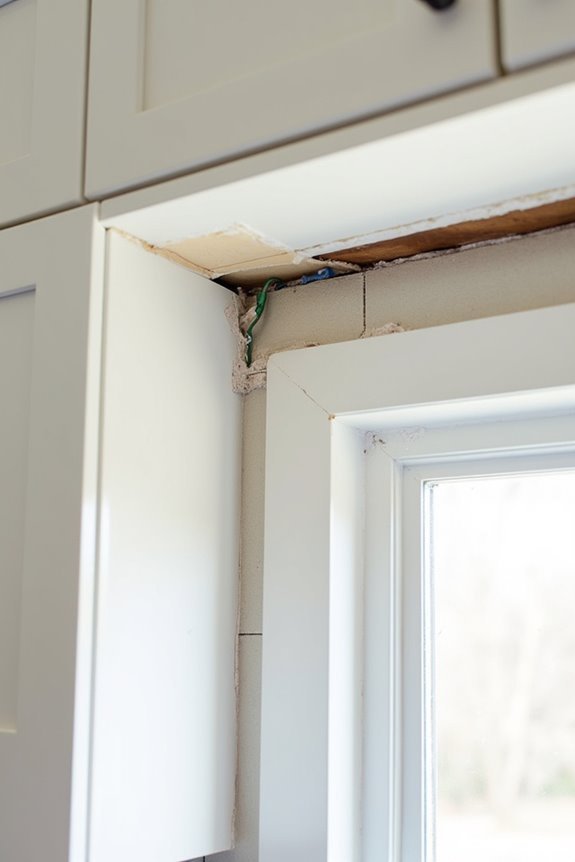
Before you tear into that soffit, you’ll want to peek inside and see what you’re actually dealing with. Drilling a small inspection hole lets you look directly into the space, identify pipes and wires, and spot any HVAC ducts hiding up there. This quick visual check tells you whether removal is safe or if you need to call in an electrician, plumber, or HVAC pro first.
Inspection Hole Technique
How can you safely remove a kitchen soffit when you don’t know what’s lurking inside? An inspection hole is your concealed asset. You’ll drill a head-sized opening into the soffit’s end, allowing you to look inside and identify hidden components before removal begins.
Here’s what you’re checking for:
- Ductwork from range hoods or ventilation systems
- Plumbing stacks or water lines behind cabinets
- Electrical wiring that needs protection or relocation
- Structural obstructions affecting safe removal
Position your hole near a corner or joint to minimize framing damage. This strategic placement makes patching simpler later. Once you’ve inspected the interior and mapped those hidden utilities, you’ll know exactly what professional help you need. Smart planning prevents costly mistakes during removal.
Visual Assessment Methods
Once you’ve drilled your inspection hole and peered inside, you’re ready to expand your knowledge of what’s actually hiding up there. You’ll spot the wooden frame, plywood, and drywall construction that makes up most soffits. Look carefully for HVAC ducts, plumbing pipes, electrical wiring, or conduits running through the space. Angled stacks and recessed lighting fixtures are common obstructions you’ll encounter. These visual clues directly influence your removal strategy. If you can’t access original building plans, this inspection becomes your most reliable method for understanding the soffit’s contents. Take photos through your hole. Document everything you see. This assessment protects you from unexpected complications during actual removal work. You’re building the knowledge foundation that’ll guide your next steps confidently.
Utility Identification Checklist
What’s lurking behind that soffit could make or break your removal project—and you won’t know until you look. Before you grab your tools, you’ll need to identify what’s actually hidden up there. This utility identification step prevents costly mistakes and keeps your project on track.
Create a checklist to guide your inspection:
- HVAC ductwork routing through the soffit space
- Electrical wiring and junction boxes along the ceiling
- Plumbing pipes for water or drain lines
- Ventilation ducts from range hoods or bathroom fans
You’ll likely need professional help assessing what you find. A small inspection hole gives you a peek, but experienced eyes catch details you might miss. This checklist approach ensures your soffit removal stays manageable and safe.
How Do You Remove a Soffit (Step-by-Step)?
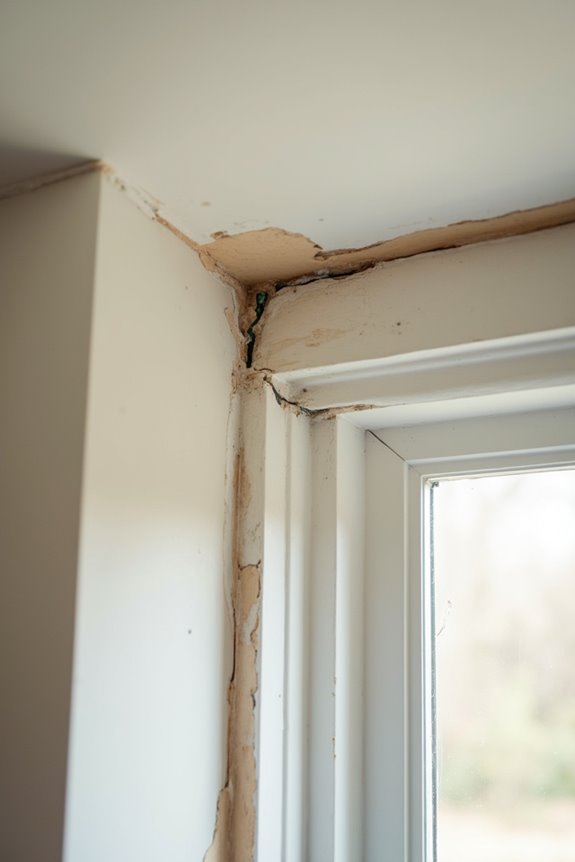
Before you grab a sledgehammer and start swinging, you’ll need to prep your kitchen properly—and that means safety first. Turn off power to any circuits running through the soffit area. Drill a hole large enough to inspect what’s hiding inside—ducts, pipes, and wiring need identifying before soffit removal begins.
Next, remove upper cabinets if they’re attached. Cut through vertical studs carefully, then segment the horizontal soffit boards into manageable pieces. Work methodically; rushing creates safety hazards during kitchen remodeling projects.
After removal, you’re facing ceiling and wall patching. Drywall and textures get disrupted, requiring repairs and repainting. Depending on what utilities you’ve discovered, you might need contractors to relocate ductwork or wiring before finishing your ceiling.
What Happens to Your Ceiling and Walls After Removal?
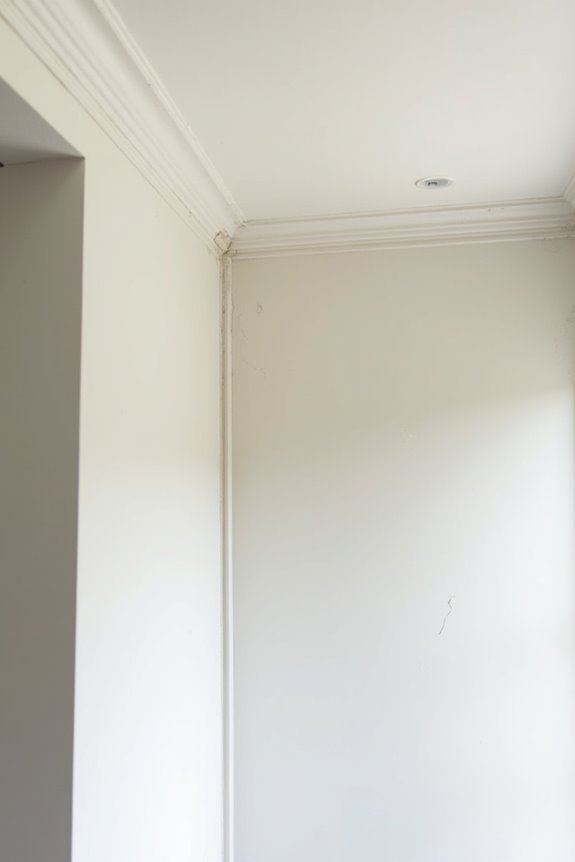
How does your kitchen look once that soffit comes down? You’ll notice immediate visual changes, but significant finishing work awaits you. Your ceiling and walls need serious attention to look polished and intentional.
Removing a soffit reveals taller ceilings instantly, but finishing work transforms that raw look into seamless perfection.
Here’s what you’re tackling:
- Filling fastener holes left behind from soffit brackets
- Taping and mudding drywall to create smooth transitions
- Matching existing ceiling textures, which often requires repainting entire surfaces
- Sanding construction marks and blending seams into surrounding finishes
Your ceilings appear taller instantly, which feels fantastic. However, patching and repainting transform that raw look into something seamless. You’ll sand visible transitions where framing connected to your soffit. Texture matching complicates finishing work considerably. Many homeowners find the final integration step requires patience and precision to avoid obvious color or texture adjustments.
How Do You Relocate Wiring, Plumbing, and Ductwork?
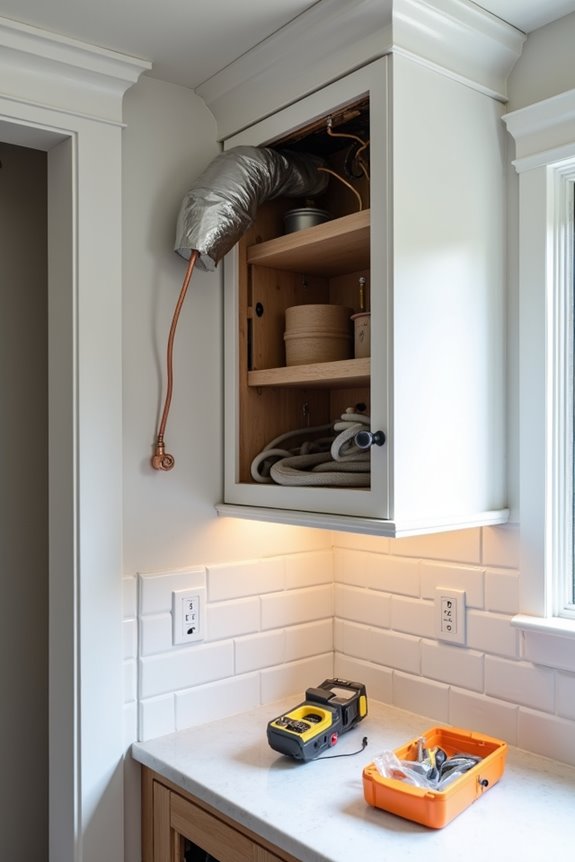
Once you’ve removed the soffit, you’ll discover that utilities don’t just vanish—they’re tucked inside that space, and they need new homes. You’ve got three main systems to handle: wiring, plumbing, and ductwork.
Wiring requires a licensed electrician to re-run Romex or conduit through new walls or ceilings. It’s not a DIY project. Protect relocated wires with nail plates where they pass through studs or top plates.
Plumbing redirects more easily. You’ll use 90-degree elbows and appropriate fittings to route pipes through top plates smoothly.
Ductwork demands new routing paths through walls or ceilings, possibly requiring elbow fittings and bulkhead redesign.
Coordinate with all trades early. Relocation work directly impacts cabinet installation schedules, ceiling patching, and your entire remodeling timeline.
How Long Does Soffit Removal and Finishing Take?
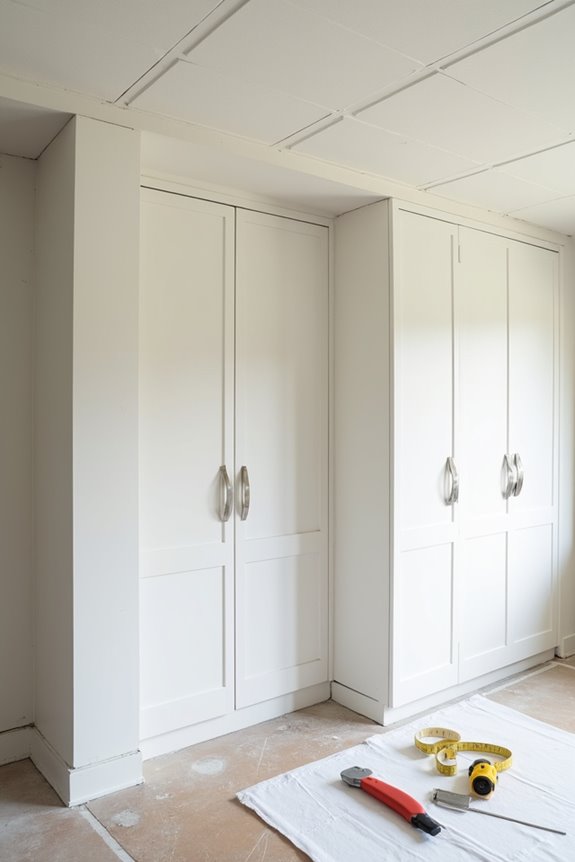
Just how much time you’ll need depends on what you’re actually removing and what comes after. The demolition time itself typically runs about a day and a half, though you’ll want to build in breaks during the process.
Demolition itself takes about a day and a half, but timeline depends on what you’re removing and what comes after.
Here’s what extends your timeline:
- Finishing drywall installation and mudding
- Spackling ceiling patches and seams
- Repainting to match existing texture
- Addressing construction marks and damage
The finishing drywall work often becomes your longest phase. You’re not just removing—you’re restoring. Ceiling patching and repainting demand precision since texture mismatches stand out immediately.
Consider bringing in professionals for finishing touches. They’ll ensure quality results and save you frustration. Your kitchen’s final look depends on getting these details right, so plan accordingly.
When Should You Call a Professional?
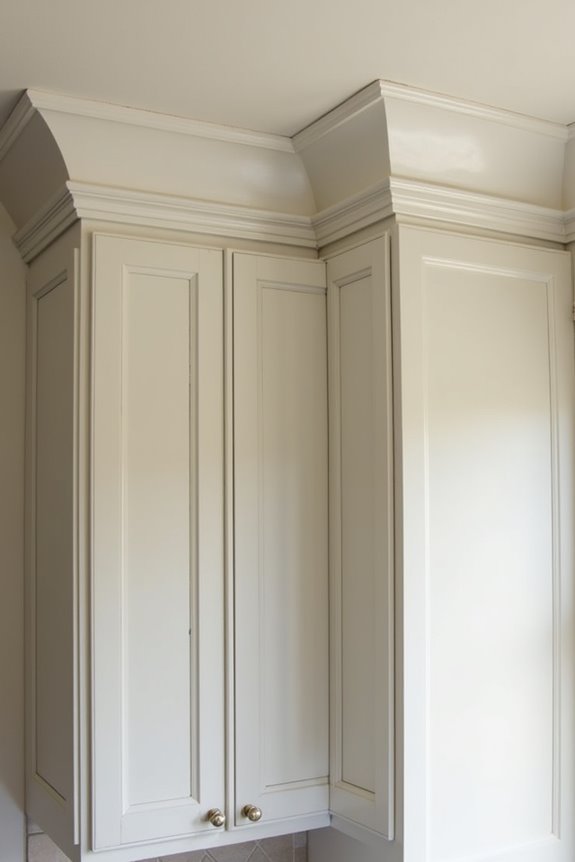
Why risk damaging hidden utilities when experts can handle the job safely? You’re dealing with potential plumbing, electrical wiring, and ductwork behind that soffit. Professional help ensures you won’t accidentally puncture a water line or sever critical wiring during inspection or removal.
Contractors assess what’s hiding behind your soffit by drilling small viewing holes. They coordinate with plumbers and electricians to relocate utilities safely. This teamwork prevents costly mistakes and project delays.
You’ll want professional guidance if your soffit removal requires significant reworking of cabinets or extensive utility relocation. These situations demand specialized knowledge and proper equipment. Experts handle permits, safety codes, and finishing work too.
Getting multiple quotes helps you understand true costs before committing to soffit removal.