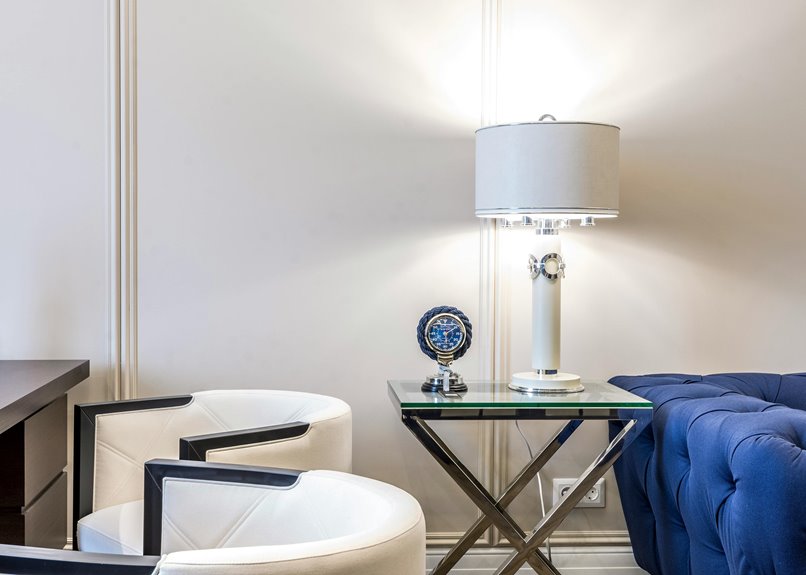
Position your floor lamp beside seating or slightly behind it to balance light without blocking pathways. Keep the shade at eye level (60–66 inches) to minimize glare. Choose adjustable lamps with dimmers for flexible task lighting. Place lamps near focal points like sofas to create inviting zones. Match finishes—brass, bronze, or matte black—to your existing hardware, and select warm bulbs (2700–3000K) for cozy comfort. The right setup elevates your entire space’s functionality and feel.
Where to Place Your Floor Lamp for Task and Accent Light
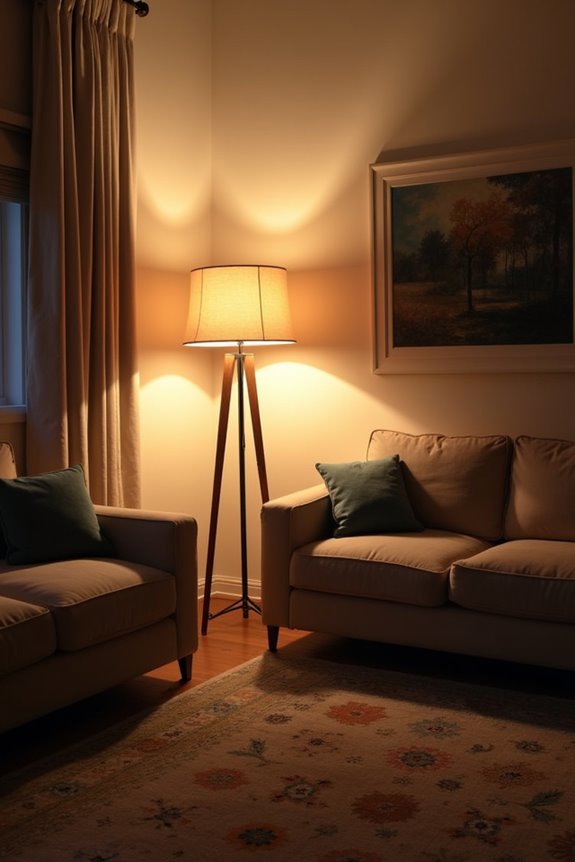
Ever wonder why some reading corners feel perfectly lit while others leave you squinting at the page? Strategic lamp placement makes all the difference in your living room.
Position your floor lamp slightly behind or beside your seating to balance illumination without blocking pathways. Task lighting works best when you place adjustable-arm lamps next to sofas or chairs, directing light onto reading surfaces. Keep the shade at eye level—roughly 60 to 66 inches from the floor—to reduce glare effectively.
For your reading nook, choose a lamp with a dimmer or multiple brightness settings. This flexibility lets you adjust light for different activities, whether you’re reading or hosting game nights. You’ll create a warm, welcoming space that invites relaxation and connection with those around you.
Choose the Right Height and Shade for Your Seating
Now that you’ve nailed the placement, it’s time to dial in the lamp itself—because the right height and shade transform a decent reading light into something genuinely comfortable.
Your floor lamp height matters more than you’d think. For high ceilings, aim for 65–80 inches; lower ceilings work better with 50–60 inch lamps. The goal? Position your shade at or just above eye level when seated. This eye-level placement reduces glare while maximizing task lighting for reading nooks.
Position your shade at eye level when seated to reduce glare and maximize task lighting for reading.
Consider an adjustable-height lamp. These flexible options let you shift light exactly where you need it without moving the entire fixture.
For shade selection, think about your needs. Translucent shades soften ambient light and minimize harsh shadows. Opaque shades concentrate light for focused task lighting. Position your shade roughly 1–2 feet above your chair’s back for comfortable, glare-free illumination.
Position Lamps to Avoid Glare and Screen Reflection
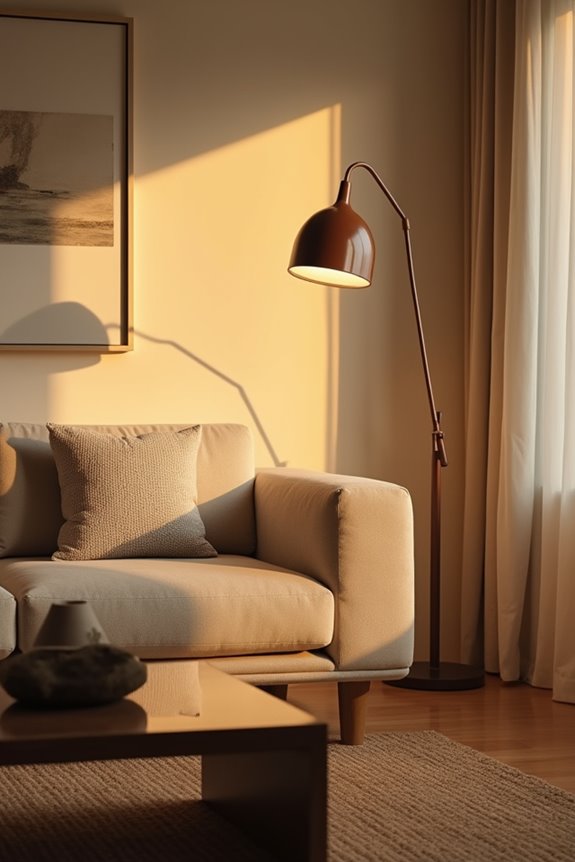
Why does your TV screen suddenly look like a mirror when you turn on the floor lamp? Strategic lighting placement prevents this frustration in your living room. You’ll want an adjustable lamp positioned at an angle to your seating area rather than directly facing screens.
- Place floor lamps 1–2 feet away, behind or beside seating for optimal ambient lighting
- Choose adjustable lamps with swivel heads to direct light away from screens
- Select matte finishes and diffuse light shades that reduce reflective hotspots
- Test your setup at different times and screen brightness levels
Position your floor lamp thoughtfully to illuminate without creating glare. An anti-glare strategy ensures comfortable viewing while maintaining welcoming ambient lighting throughout your space. Your seating area deserves lighting that enhances rather than competes with screen time.
Best Floor Lamp Placements Around Focal Points and Furniture
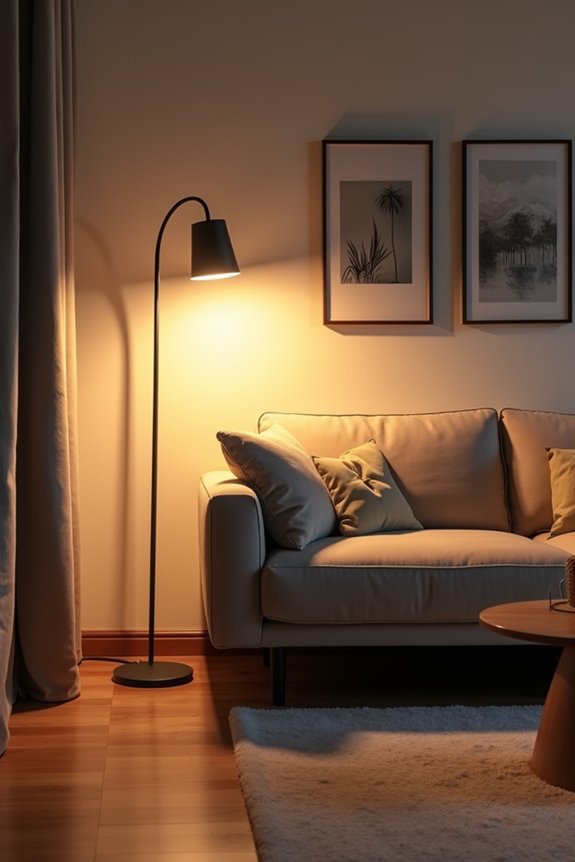
Where you position your floor lamp makes all the difference in how your living room feels and functions. You’ll want to anchor lamps beside sofas and chairs to create dedicated reading nooks with adjustable brightness. This task lighting lets you direct illumination exactly where you need it.
Corner lamps work brilliantly for dark spaces. Position them to bounce light off walls, creating ambient lighting that balances your entire room. Wide-shade designs scatter light broadly without overwhelming your space.
Behind sectionals, lamps define lounge seating while maintaining traffic flow. For proportional lighting in high-ceilinged rooms, choose tall arched lamps (65–80 inches). These focal points anchor furniture arrangements and establish inviting zones where people naturally gather and connect.
Match Your Floor Lamp Style to Existing Decor
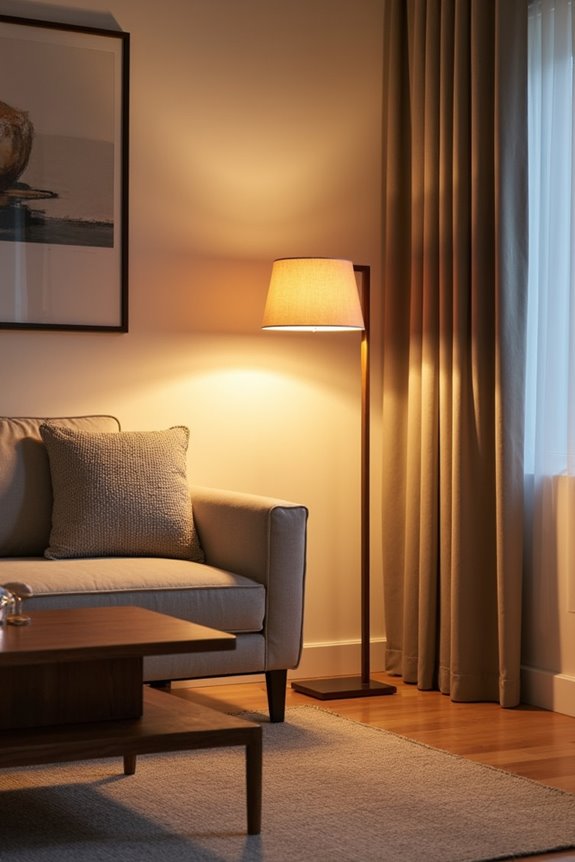
Your floor lamp should feel like it belongs in your room, not like an afterthought you grabbed from a clearance bin. The right floor lamp style creates cohesive accents that tie your living room together flawlessly.
Consider these four essential elements:
- Silhouette and scale — A tall, slim lamp fits beside sofas without crowding; chunky bases suit spacious areas
- Metal finishes — Match brass, bronze, or matte black to existing hardware for visual harmony
- Lampshade shape — Translucent fabric shades work for traditional rooms; bold drum shades reinforce modern interiors
- Color temperature — Warm white bulbs (2700–3000K) suit cozy spaces; neutral tones (3500K–4000K) complement contemporary rooms
Your floor lamp style should echo your furniture’s era and aesthetic. A traditional brass lamp complements antique pieces, while modern arc lamps pair with minimalist spaces. Aligning these elements creates a thoughtfully curated living room lighting scheme that genuinely reflects your style.