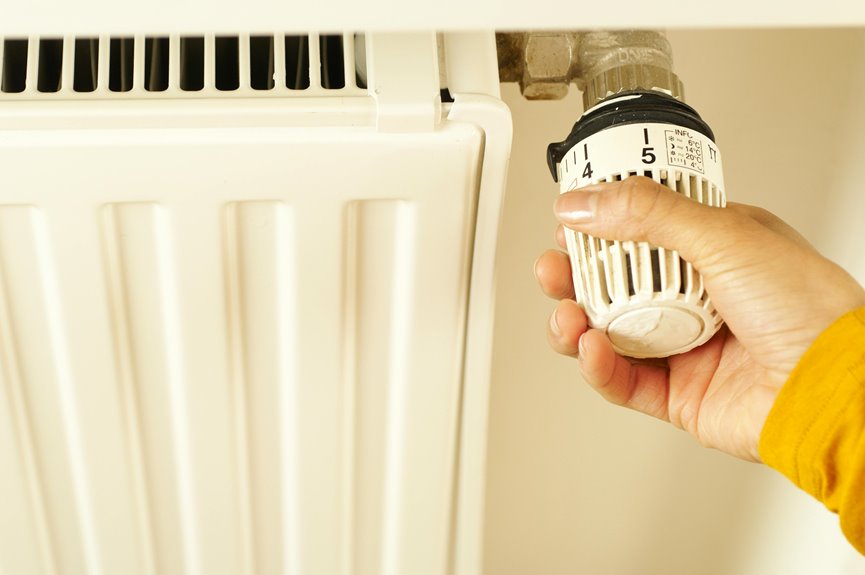
Your bedroom’s probably hot because sunlight streams through windows, heating surfaces directly, while old window seals let warm air leak in. Poor insulation in walls and ceilings can’t block that heat effectively. If you’re upstairs, your attic might exceed 100°F, radiating downward through the ceiling. Blocked vents from furniture or closed doors stop cool air circulation. Electronics running nearby add extra warmth. A combination of these factors—not just one—typically creates that stuffy feeling, but pinpointing your specific culprits reveals surprisingly simple fixes.
Direct Sunlight and Solar Heat Gain
Have you ever noticed how your bedroom feels like an oven on a sunny afternoon? That’s because direct sunlight streaming through your windows creates solar heat gain. When radiant heat enters your room, it warms surfaces like your bed, walls, and floor, trapping warmth indoors.
Your bedroom’s orientation matters considerably. West or south-facing rooms absorb stronger afternoon sunlight, intensifying heat buildup throughout the day. The larger your window area, the more solar energy floods in, amplifying this greenhouse effect.
Here’s the good news: window treatments work. Blinds, curtains, and heavy coverings block daylight effectively, reducing solar heat gain noticeably. By closing these treatments during peak afternoon hours, you’ll notice your room stays relatively cooler. It’s a simple solution that tackles the root problem directly.
Air Leaks in Old or Poorly Sealed Windows
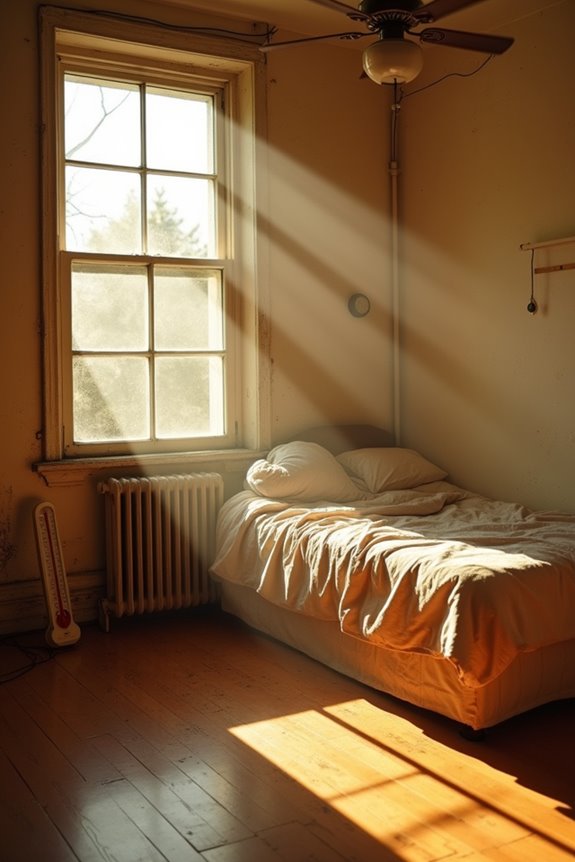
Ever wonder why your bedroom stays uncomfortably warm even when your air conditioning’s running full blast?
Your old windows might be the culprit. Single-pane windows and worn seals let hot outdoor air infiltrate while your cooled indoor air leaks out. This constant exchange raises your cooling load and discomfort significantly.
Deteriorating caulking around window frames creates gaps that funnel heat directly inside. You’re essentially paying to cool the outdoors.
The good news? You’ve got quick fixes. Seal gaps with fresh caulking around frames. Install insulated blinds or curtains to block heat gain. These steps provide immediate relief without major expenses.
Ready for lasting results? Energy-efficient, well-sealed windows reduce both summer heat and winter heat loss, improving overall comfort year-round.
Inadequate Insulation in Walls and Ceilings
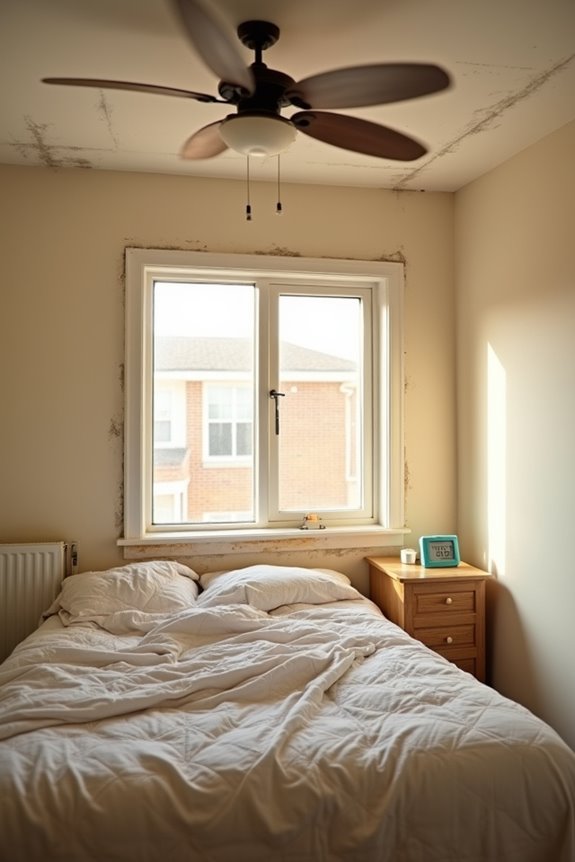
Your bedroom’s walls and ceiling are likely letting heat slip right through them, especially if your home was built before modern insulation standards took hold. Poor insulation in these areas allows outdoor heat to transfer directly into your sleeping space, while your attic—if inadequately insulated—can reach temperatures exceeding 130 degrees Fahrenheit on hot days, radiating that excess warmth downward. If your ceiling or exterior walls feel warm to the touch, you’ve found your culprit: inadequate insulation is working against your air conditioning rather than with it.
Heat Transfer Through Walls
What’s happening inside your bedroom walls might be the real culprit behind that persistent heat. Your walls act like highways for temperature changes. Without proper wall insulation, heat travels straight through them from outside or from your attic above.
Sun-beating on exterior walls creates intense heat that penetrates inward, especially in bedrooms on the western or southern sides. When insulation gaps exist—even small ones—warm air sneaks through, pushing your room temperature higher.
Air leaks compound the problem. Tiny cracks and gaps let conditioned air escape while outdoor heat rushes in. Attic heat intensifies this effect, warming ceiling cavities and transferring downward into your sleeping space.
The solution? Upgrading wall insulation and sealing air leaks stops this transfer, keeping your bedroom cooler and your HVAC system efficient.
Ceiling Insulation and Attics
How much insulation sits between you and that scorching attic above? On hot days, attic temperatures can exceed 100°F, and without proper ceiling insulation, that heat transfers directly downward into your bedroom. You’re essentially living under an oven.
Inadequate attic insulation and air sealing create a perfect storm for heat gain. Warm attic air infiltrates through ceiling gaps and roof junctions, raising your indoor temperature and forcing your cooling system to work overtime. This inefficiency costs you money and comfort.
Upgrading your attic insulation and sealing air leaks work together to block downward heat transfer. Energy efficiency improves when you reduce these thermal bridges. Consider an energy audit to identify problem areas. These attic insulation upgrades transform your bedroom from uncomfortably hot to genuinely livable during summer months.
Hot Attics and Roof Exposure
Ever wonder why the second floor feels like an oven while downstairs stays relatively cool? Your attic’s the culprit. On scorching days, attic heat can exceed 100°F, and that intense warmth travels directly downward into your upper-floor rooms through the ceiling. This happens because your roof exposure captures tremendous solar energy all day long.
The problem intensifies when attic insulation falls short or insulation gaps exist around vents and penetrations. Heat transfer becomes rapid and relentless. Your bedroom’s exterior walls and roof surface area absorb endless sun, essentially baking your space from above and the sides.
| Heat Source | Temperature Impact |
|---|---|
| Direct attic heat | 100°F+ attic temps |
| Roof exposure | Constant solar gain |
| Missing insulation | Unrestricted downward flow |
| Ceiling gaps | Direct heat transfer |
| Upper-floor walls | Additional sun absorption |
Sealing these gaps and boosting attic insulation dramatically reduces unwanted heat transfer.
Bedrooms Above Garages or Home Additions
Your bedroom feels unusually warm partly because of where it’s built. Bedrooms above garages or home additions struggle with temperature control for specific reasons. Long duct runs from your central system favor cooling lower floors, leaving upstairs heat trapped where you sleep. Your HVAC design simply doesn’t reach these spaces as efficiently.
Inadequate attic insulation above your room allows heat to conduct downward, especially during summer. Meanwhile, exterior walls create radiant heat that warms your space throughout the day. Limited thermostat control on higher floors prevents timely cooling adjustments.
The combination matters: weak airflow, poor insulation, sun exposure, and temperature sensing gaps create the perfect storm. You’re experiencing a common problem with a fixable solution through strategic improvements.
Supply Vents Blocked by Furniture or Curtains
Beyond structural issues like inadequate insulation and weak ductwork, something simpler might be keeping your room hot: blocked vents. You’d be surprised how often furniture and curtains obstruct supply vents, restricting airflow and preventing cooled air from reaching your bedroom.
When you block these vents, you’re essentially choking your cooling system. The air can’t flow freely into your space, so your room temperature stays higher than adjacent rooms. This imbalance creates frustration—you’re paying for comfort you’re not receiving.
| Obstruction Type | Impact | Solution |
|---|---|---|
| Heavy curtains | Reduces airflow by 40-60% | Reposition or shorten panels |
| Furniture placement | Completely blocks air delivery | Move beds and dressers away |
| Area rugs | Partial obstruction | Secure rugs away from vents |
| Decorative items | Minor blockage | Clear decorations regularly |
Regularly checking that nothing covers your vents maintains even temperatures throughout your home.
Restricted Return Air and Closed Bedroom Doors
Your bedroom door plays a bigger role in temperature control than you’d think, and keeping it closed might actually be working against you. When you shut that door, you’re blocking warm air from flowing back to your HVAC system’s return vents, which prevents the system from pulling and cooling that stale, hot air. Opening your door before bed—or ensuring return vents aren’t hidden behind furniture or curtains—lets your cooling system do its job properly and keeps temperatures balanced throughout your home.
Return Vents Need Clearing
Ever wonder why cool air seems to disappear the moment it enters your bedroom? Your return vent might be blocked. Furniture, rugs, and clutter obstruct airflow, preventing your HVAC system from pulling air back effectively. This creates hot spots and stuffy conditions.
| Obstruction Type | Impact Level | Solution |
|---|---|---|
| Furniture placement | High | Move items 12 inches away |
| Area rugs | Medium | Reposition or remove temporarily |
| Dust buildup | Medium | Vacuum vents monthly |
| Closed doors | High | Install transfer grille |
| Curtains/drapes | Low | Tie back or adjust |
Clearing obstructions dramatically improves air circulation. When you remove blocked items, your HVAC system breathes easier, pulling cooled air efficiently. If your bedroom door stays closed for privacy, consider installing a transfer grille. This maintains adequate airflow without sacrificing your space’s functionality, balancing temperatures between rooms effectively.
Open Door Before Sleeping
Why does your bedroom feel like an oven when your door’s closed? A shut door traps warm air inside, blocking the airflow your HVAC system needs. When you close that door, return air can’t flow back to your cooling system properly. Your room stays hotter longer.
Here’s the fix: crack your bedroom door open slightly before sleeping. This simple move creates an airflow path between your bedroom and the hallway. Cooler air circulates in while warm air returns to your HVAC unit. Your room temperature drops noticeably without touching the thermostat.
This isn’t a permanent solution, but it works fast. You’re essentially helping your cooling system do its job by removing the barrier that blocks return air. Give it a try tonight.
Dirty Air Filters Reducing Cooling Power
Have you checked your AC’s air filter lately? Most people haven’t, and that’s exactly why your bedroom feels like an oven. Dirty air filters restrict airflow throughout your HVAC system, choking your cooling power when you need it most.
Here’s what happens: clogged filters force your blower to work overtime, straining the system while reducing efficiency. This restricted airflow means less conditioned air reaches your bedroom, creating those frustrating hot spots. Dust and debris accumulate in your ductwork too, further blocking cool air from flowing where it belongs.
Monthly filter checks prevent this problem entirely. Clean filters let your system breathe, delivering powerful cooling performance evenly throughout your home. You’ll notice the difference immediately—your bedroom finally stays comfortable, and your system runs smoothly without unnecessary strain.
Leaky or Undersized Ductwork Losing Cold Air
Your ductwork might be quietly sabotaging your bedroom’s comfort—leaks, poor connections, and undersized pipes waste cold air before it ever reaches you. If your ducts aren’t properly sealed or insulated, especially on longer runs from your HVAC unit, you’re losing precious cooled air through gaps and thin spots along the way. The farther your bedroom sits from the furnace or air handler, the more temperature drop you’ll experience, making that cold air feel merely lukewarm by arrival time.
Air Pressure Loss Along Ducts
Leaky or undersized ductwork is often the culprit behind that frustratingly warm bedroom. Here’s what’s happening: when your ducts develop leaks or aren’t sized properly for your home’s layout, you’re losing valuable cooled air before it reaches you.
Think of it like a garden hose with holes in it. You turn on the water, but pressure drops substantially before reaching the end. Your ducts work similarly. Leaks allow cold air to escape into attics, walls, or crawl spaces instead of flowing directly into your bedroom.
Longer duct runs also create friction, reducing duct pressure and cooling efficiency throughout your system. Poorly balanced ducts compound the problem, prioritizing airflow to closer rooms while starving distant bedrooms of cold air.
The result? Uneven temperatures you can’t control.
Ductwork Leaks Reduce Cooling
How much cooled air never reaches your bedroom? More than you’d think. Leaky HVAC ducts waste cooled air before it arrives, leaving your bedroom uncomfortably warm while other rooms stay cool.
| Problem | Result |
|---|---|
| Cracks in ducts | Air escapes into attic |
| Loose connections | Cooled air lost to crawlspace |
| Damaged insulation | Reduced cooling efficiency |
| Sealed properly | Better temperature control |
| Professional repair | Noticeably improved comfort |
Duct leaks are especially common in older homes and after additions. Your system works harder, cooling air that never reaches you. Sealing ducts with foil-backed tape and insulating them improves cooling efficiency significantly.
For persistent issues, a HVAC professional evaluates your system thoroughly. They might recommend duct repairs, complete sealing, or a ductless option for your bedroom—a modern solution that bypasses problematic ductwork entirely.
Distance From HVAC System
Even sealed ductwork can’t overcome physics. Your bedroom’s location matters more than you might think. If your room sits far from the furnace or air handler, cooled air must travel through lengthy ducts before reaching you. This distance creates pressure loss—the air loses its cooling power along the way.
Think of it like this: cooler air arrives last to distant rooms. Meanwhile, rooms near your HVAC system stay comfortably cool. That imbalance explains why bedrooms in additions or upper floors struggle most.
Duct leaks worsen the problem significantly. Holes and damaged seals compound pressure loss, reducing cooling efficiency even more. The farther your bedroom sits from the system, the harder your ducts work—and the hotter you’ll feel.
Thermostat Location (and Why It Matters)
Where’s your thermostat sitting right now? Its placement directly affects your bedroom’s room temperature and overall comfort. Your thermostat reads only the air around it, not your entire home, so poor thermostat placement creates uneven cooling throughout your space.
If your thermostat sits in direct sunlight or near kitchen appliances, it overestimates cooling needs. This causes your system to short-cycle, leaving distant bedrooms hot while other areas freeze. You’re essentially fighting against faulty readings.
The solution? Position your thermostat on an interior wall, away from windows and heat sources. This spot provides accurate whole-home cooling signals. You’ll notice better temperature balance in every room, including your bedroom. Consider a zoned system if repositioning isn’t possible—it’s the game-changer you need for consistent comfort.
Is Your AC System Undersized or Aging?
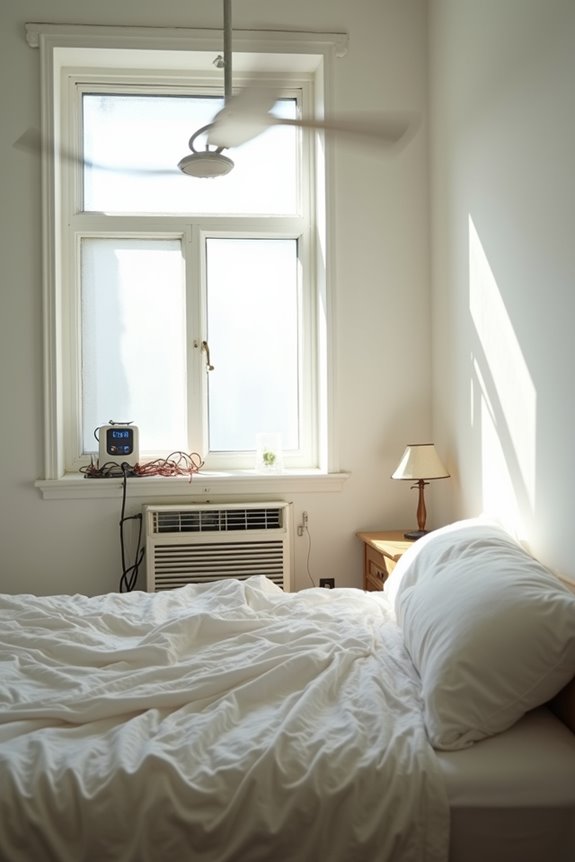
Sometimes your bedroom stays hot because your AC system itself is the culprit. An undersized AC or aging system struggles to cool your entire home effectively. Here’s what you’re likely experiencing:
An undersized or aging AC system struggles to cool your entire home effectively, leaving your bedroom uncomfortably hot.
- Your AC runs longer than normal but still can’t reach your bedroom
- Cooled air takes forever to travel through ducts to distant rooms
- Higher humidity levels persist because the system lacks cooling capacity
When your air distribution system can’t keep up, your bedroom temperature climbs while other areas feel comfortable. The problem intensifies if your home’s layout places your bedroom far from the unit.
A professional size-analysis reveals whether upgrading to a properly sized central unit or installing a ductless mini-split in your bedroom makes sense. Don’t ignore persistent hot spots—they signal your system needs help.
Electronics and Appliances as Hidden Heat Sources
Did you realize your bedroom might be warming itself? Your electronics and appliances are silent heat sources working against your comfort. TVs, computers, gaming consoles, and chargers continuously emit warmth during operation. Even idle devices plugged in draw power and add background heat, quietly raising your room’s temperature over time.
| Device Type | Heat Output | Solution |
|---|---|---|
| Gaming console | High | Unplug when inactive |
| Desk lamp | Medium | Switch to LED bulbs |
| Phone charger | Low | Use power strips |
When multiple devices cluster on one side, they create uneven cooling and noticeable warmth spots. Your HVAC system works harder compensating. Replace incandescent bulbs with LED alternatives to slash heat while maintaining brightness. Relocate heat-generating equipment to cooler areas and use power strips for complete device shutdown, significantly lowering your bedroom’s energy consumption and temperature.
High Humidity and Perceived Temperature
Your bedroom might actually feel hotter than it really is, and humidity deserves much of the blame. High humidity creates a significant gap between what your thermometer reads and what your body experiences. Here’s how moisture in air affects your comfort:
- Sweat won’t evaporate properly, so your body’s natural cooling system fails
- Surfaces feel warmer because fabrics and walls retain moisture longer
- Heat stress increases, making you feel several degrees hotter than the actual temperature
This humidity impact means you’re genuinely uncomfortable, not just imagining things. Your perceived temperature can jump dramatically when moisture levels rise. Rather than lowering your thermostat, try running a dehumidifier or exhaust fan instead. Reducing moisture directly improves your comfortable cooling without wasting energy, helping you reclaim your bedroom sanctuary.
Why Upstairs Bedrooms Run Hotter
If you’re sleeping upstairs, you’re fighting physics itself—heat rises naturally through your home, and your thermostat down on the first floor never catches this problem. Your upper bedroom likely sits directly under a hot attic or roof that absorbs intense sun exposure, while poor attic insulation and air gaps allow that heat to radiate straight down into your space. Combined with more exterior walls catching afternoon sun, your upstairs isn’t just warmer by chance; it’s warmer by design.
Heat Rise and Stratification
Ever notice how your upstairs bedroom feels like an oven while downstairs stays tolerable? That’s heat stratification at work. Hot air naturally rises throughout your home, concentrating on upper levels where it gets trapped. Your thermostat sits downstairs, so it stops cooling before your bedroom reaches comfort.
Here’s what’s happening in your space:
- Heat rises constantly — warm air flows upward, leaving cooler air below
- Your HVAC efficiency drops — air ducts struggle delivering cool air to upper floors
- Ceiling temperature climbs — heat from attic insulation transfers downward through your bedroom ceiling
This upstairs heat rise creates temperature differences of 5-10 degrees between floors. Poor attic insulation amplifies the problem significantly. You’re experiencing what most homeowners face: uneven cooling that leaves you uncomfortable while fighting rising energy costs.
Attic Insulation and Exposure
What’s cooking above your head? Your attic, probably. On hot days, attic temperatures soar past 100°F, radiating downward into your bedroom. Poor attic insulation and unsealed gaps create a highway for heat transfer directly into your sleeping space.
Upstairs rooms face extra challenges. They’re exposed to more exterior roof surface than lower floors, meaning more heat enters from outside. Without proper air sealing, warm air flows freely through insulation gaps into the rooms below.
Here’s the fix: Boost your attic insulation thickness and seal those gaps completely. When you improve attic temperature control through better insulation and air sealing, your upstairs rooms finally get relief. The heat transfer stops working against you, and your bedroom stays noticeably cooler at night.
Quick Fixes for a Hot Bedroom Tonight
You don’t need to wait for a technician or renovate your room to feel cooler tonight. Several immediate strategies can dramatically improve your bedroom heat situation and boost airflow within hours.
- Turn off electronics and chargers that draw power even when idle, reducing unnecessary heat generation
- Clear supply vents and remove obstructions like furniture and rugs blocking ventilation pathways
- Crack your window or run a fan to promote air circulation and heat dissipation
Switch to lighter, breathable bedding to avoid trapping body heat while sleeping. Open your bedroom door slightly before bed, allowing cooler hallway air to circulate and preventing heat from pooling in your closed space.
These quick fixes restore airflow and cooling efficiency immediately. You’ll notice meaningful temperature drops without major investments or complicated solutions.