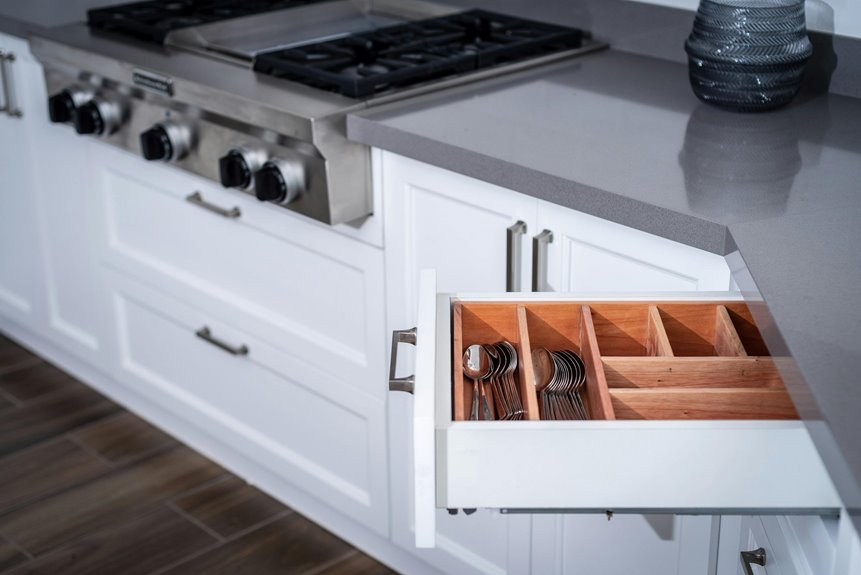
Standard base cabinets run 24 inches deep, though you’ll actually use about 23 inches for storage. Wall cabinets sit shallower at 12 inches. To measure yours, grab a tape measure and check from the wall to the cabinet’s front face—that’s your depth. Don’t forget that countertops add 1 to 1.5 inches, and doors plus hardware tack on another three-quarters inch. These depths matter because they affect appliance fit, workspace comfort, and how efficiently you’ll move around your kitchen. The specifics get more interesting when you consider islands and deeper options.
Kitchen Cabinet Depths: Standard Sizes Explained
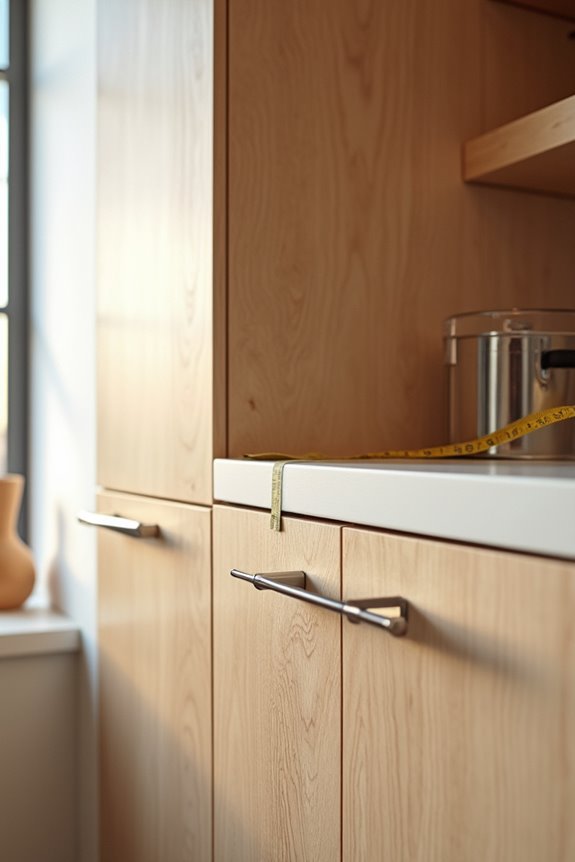
Why does cabinet depth matter so much? You’ll discover that understanding cabinetry measurements transforms your kitchen layout from cramped to functional. Your base cabinets typically measure 24 inches deep, though interior depth runs about 23 inches. Add countertop overhang—roughly 1 to 1.5 inches—and you’re looking at a total depth around 25–26 inches.
Wall cabinets follow different rules. You’ll find standard depth at 12 inches, perfect for most kitchens. However, deeper options extending to 24 inches work great above refrigerators or pantry areas.
Pantry cabinets usually match base cabinets at 24 inches deep. Need something slimmer? Twelve-inch pantry options exist for tighter spaces. Depth increments follow predictable patterns: 12, 15, 18, 21, and 24 inches. Knowing these standard depth measurements helps you plan confidently and avoid costly mistakes during installation.
Base Cabinet Depth Explained
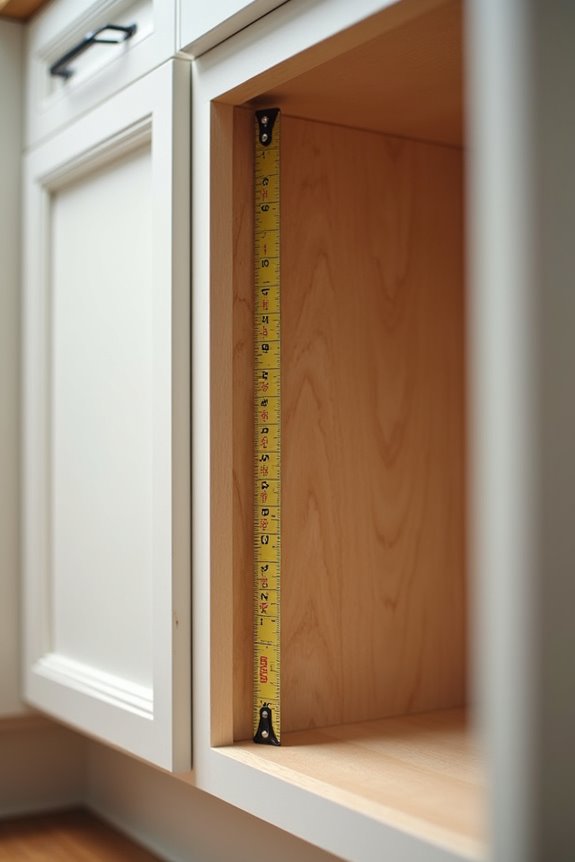
How much space do your base cabinets actually consume? Understanding base cabinet depth helps you plan your kitchen layout effectively. You’re looking at standard measurements that shape your entire cooking space.
Here’s what you need to know about base cabinet depth:
- Standard depth: 24 inches from back to front
- Inside depth: approximately 23 inches for actual storage
- Total visible depth: 25–26 inches with countertop overhang added
- Shallow alternatives: 12–18 inches for tight spaces
The 24 inches measurement is industry standard because it balances storage capacity with walkway accessibility. When your countertop overhang extends forward, your total measurement increases slightly. If you’re working with limited square footage, shallow base cabinets offer flexible solutions. Islands often use two 24-inch-deep cabinets back-to-back, creating consistent depth throughout your kitchen.
Wall Cabinet Depth and Installation Heights
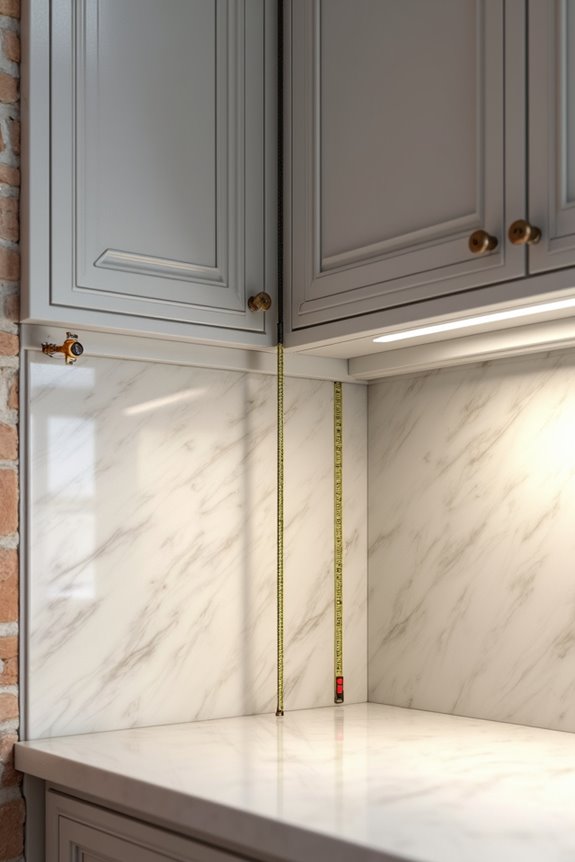
Wall cabinets don’t take up nearly as much space as their base counterparts, and that’s exactly the point. The standard wall cabinet depth measures just 12 inches in North America, which protects your countertop workspace from obstruction. You’ll find deeper options reaching 24 inches, but these upper cabinet extension units work best over refrigerators or in tall pantry runs away from prep zones.
Installation height matters equally. Your wall cabinet depths perform optimally when mounted approximately 18 inches above base cabinet height clearance. This positioning places the bottom edge around 54 inches from your floor, assuming 36-inch base cabinets. Your ceiling height alignment determines cabinet sizing—30-inch units fit comfortably under 8-foot ceilings. Standard widths range from 9 to 36 inches in 3-inch increments, letting you customize your layout perfectly.
Tall Cabinets and Pantry Depths
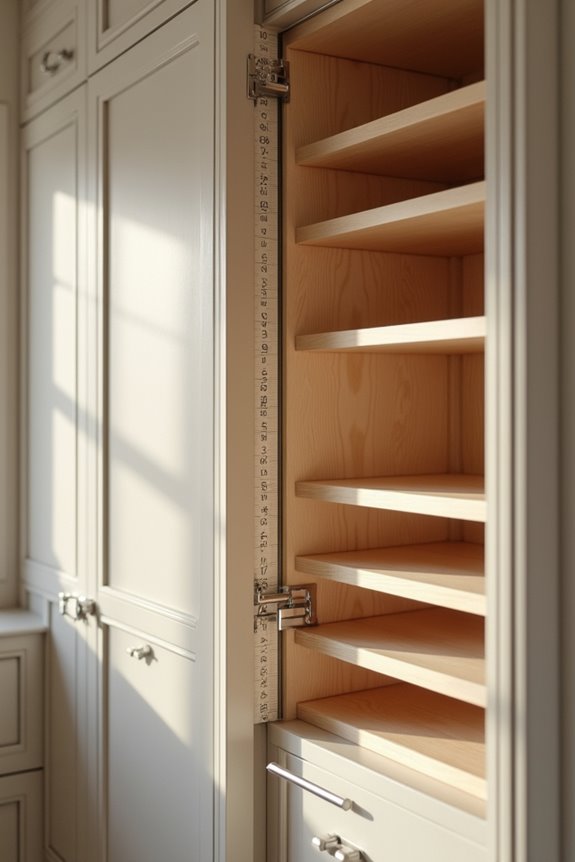
You’ll find tall cabinets and pantry units run 84 to 96 inches high, offering depths of 12 to 24 inches depending on your storage needs and kitchen layout. The standard pantry depth sits at 12 inches, though you can bump that up to 14–24 inches if you’re stocking serious supplies and want maximum capacity. When you’re planning floor-to-ceiling storage, matching your pantry’s 24-inch depth to your base cabinets creates a sleek, unified look while giving you genuine room for everything from canned goods to small appliances.
Tall Cabinet Depth Options
What makes tall cabinets different from their shorter counterparts? Their impressive floor-to-ceiling height and depth flexibility. Standard tall cabinets typically reach 84, 90, or 96 inches high, requiring thoughtful depth planning.
You’ll find several tall cabinet depth options suited to different kitchen layouts:
- 24 inches deep – aligns with base cabinets for unified cabinetry flow
- 12 inches deep – works for narrow pantry layouts when space is tight
- Pantry widths of 12, 24, or 36 inches – accommodates various pantry cabinet depth needs
- Oven cabinet configurations – start at 24 inches wide to house built-in appliances
When you’re planning your kitchen, consider your available space and how appliances integrate. Narrower pantry variants at 12 inches deep suit tight spots. Deeper 24-inch units offer substantial storage. Matching your tall cabinet depth with base cabinets creates visual harmony throughout your kitchen design.
Pantry Storage Capacity Needs
How much storage do you actually need in your pantry? That depends on your household size and shopping habits. You’ll find that pantry tall cabinets ranging from 84 to 96 inches tall maximize your floor-to-ceiling pantry storage options. Consider your cabinet depth carefully. A 24-inch depth aligns perfectly with your base cabinets, creating a unified storage wall depth throughout your kitchen. However, if you’re working with limited space, 12-inch deep pantries offer smart vertical solutions. Your pantry width options matter too—choose 12, 24, or 36-inch widths based on available space. Deeper 24-inch depth cabinets suit families buying in bulk, while narrower options work beautifully in tight kitchens. Match your pantry storage capacity to what you actually store regularly.
Floor-To-Ceiling Installation Considerations
Installing tall cabinets that stretch from floor to ceiling demands more planning than standard base cabinet work. You’ll need to account for several critical measurements and clearance issues that ensure your pantry fits perfectly.
Consider these essential factors:
- Ceiling clearance – Measure twice to confirm your space actually reaches 84–96 inches without obstacles
- Base cabinet depth alignment – Match your tall pantry cabinets’ 24-inch depth with existing base cabinet depth for visual consistency
- Wall cabinet depth coordination – Ensure wall cabinet depth doesn’t interfere with tall unit installation
- Cabinet measurements verification – Confirm all cabinet measurements account for trim, flooring, and crown molding
Your floor-to-ceiling installation creates a cohesive, unified kitchen design. Proper depth planning maximizes storage while maintaining that polished, intentional look you’re building together.
Why Cabinet Depth Matters in Kitchen Design
You’ll find that cabinet depth directly shapes how much you can store, how comfortably you’ll work, and whether your appliances actually fit your space. Your choice between standard 24-inch bases and deeper 27–30-inch options affects everything from accessibility to counter flow, plus your ability to match upper cabinets or squeeze in that new refrigerator. Getting depth right means you’re not constantly shuffling items around or bumping elbows while cooking.
Storage Capacity And Functionality
Why does cabinet depth matter so much when you’re planning your kitchen? Your cabinet measurements directly shape how much you’ll actually store. Consider these key benefits:
- Base cabinet depth (24 inches standard) gives you roughly 23 inches of usable space for pots, appliances, and cookware
- Wall cabinet depth options (12–24 inches) let you customize storage above refrigerators or in tall runs
- Working depth (25–26 inches total) combines your base cabinet depth plus countertop overhang for practical workspace
- Pantries at 84–96 inches high with 12–24 inch depths maximize vertical interior usable space
Shallower depths improve kitchen flow in compact spaces but sacrifice storage for bulky items. Deeper cabinets boost capacity significantly. You’ll find the right balance matches your lifestyle and cooking habits perfectly.
Workspace And Ergonomic Flow
How does cabinet depth actually affect how you move and work in your kitchen?
Your cabinet depth directly shapes your daily workflow. Standard 24-inch base cabinets maximize storage, but they can reduce accessibility for shorter users. You’ll want to consider ergonomics when planning your layout.
The 15 to 18-inch clearance between base and upper cabinets creates your working zone. This measurement determines comfortable reach and movement patterns. Your optimal reach zone spans 31 to 43 inches above the floor—this guides where you’ll place frequently used items.
Upper cabinets typically measure 12 inches deep, though deeper options exist. Deeper uppers demand careful measurement to avoid interfering with your countertop workspace. That standard 18-inch countertop-to-cabinet clearance ensures smooth workflow.
Smart depth measurement prevents cramped workspaces and awkward reaching.
Appliance Compatibility And Fit
Think your cabinet depth is just about storage space? It’s actually crucial for fitting appliances seamlessly into your kitchen. When you plan your layout, appliance compatibility depends directly on matching cabinet depth with your equipment’s needs.
Here’s what you need to know:
- Base cabinet depth (24 inches) aligns with standard appliances like 24-inch-wide dishwashers
- Built-in ovens require 22–24 inch deep spaces for proper fit
- Refrigerators (30–36 inches deep) need matching cabinetry or spacers for a cohesive look
- Wall cabinet depth (12 inches) provides 18 inches countertop-to-upper-cabinet clearance for ergonomics
Your appliance clearance matters too. Cabinet doors and drawer swings shouldn’t collide with appliances or each other. By coordinating cabinet depth with your equipment dimensions upfront, you’ll achieve a professional, integrated kitchen that works beautifully for everyone using it.
Common Depth Measurement Mistakes to Avoid
When you’re measuring kitchen cabinets, it’s surprisingly easy to get it wrong—and those small errors add up fast. You’ll want to avoid measuring from the wrong reference points. Don’t measure from the cabinet face when you should measure from the back wall, or vice versa. This mistake throws off your entire layout.
Neglecting countertop overhang creates real problems. Base cabinets extend 24 inches, but that overhang adds another inch or two. Forgetting door and drawer swing wastes your working space. You need 18 inches between your countertop and wall cabinet depth for comfortable access.
Interior depth differs from total depth, too. Base cabinets have roughly 23 inches inside versus 25-26 inches total. Measure carefully at multiple points. Small mistakes compound when you’re installing appliances or planning layouts.
What You’ll Need Before You Start Measuring
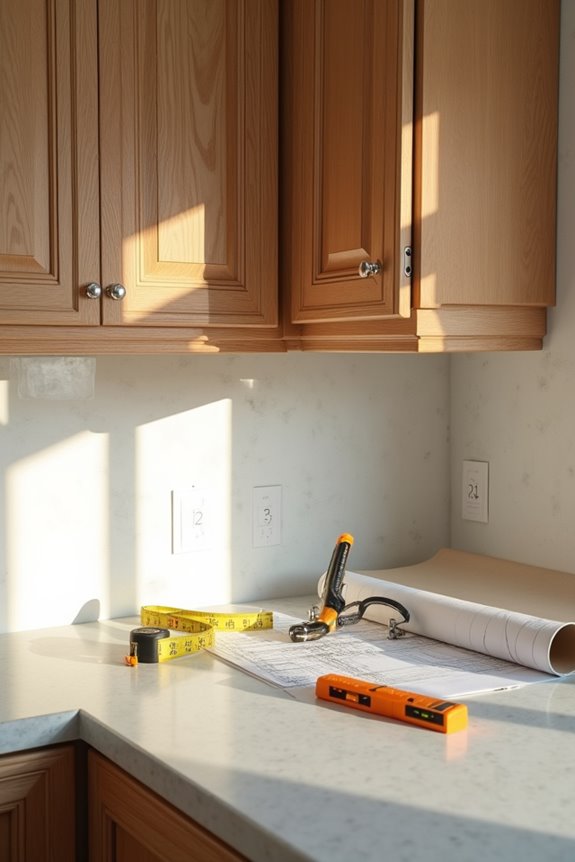
Before you grab your tape measure and start measuring, gather the right tools—you’ll thank yourself later. Having everything ready prevents frustrating trips back to the garage mid-project.
Here’s what you need:
- Tape measure (both metric and imperial) for accurate depth, width, and height measurements
- Graph paper and pencil to sketch your kitchen layout and record each measurement clearly
- Step stool for safely reaching upper wall cabinet heights and ceiling lines
- Assistant to help with tall areas and ensure you capture every dimension correctly
Clear your workspace completely. Remove obstacles blocking base cabinet and backsplash access. This creates accurate measurement opportunities you won’t miss. Label each measurement with specific locations—”base cabinet depth” or “wall cabinet height”—in your running log. This organization prevents confusion during installation planning later.
How to Measure Base Cabinet Depth?
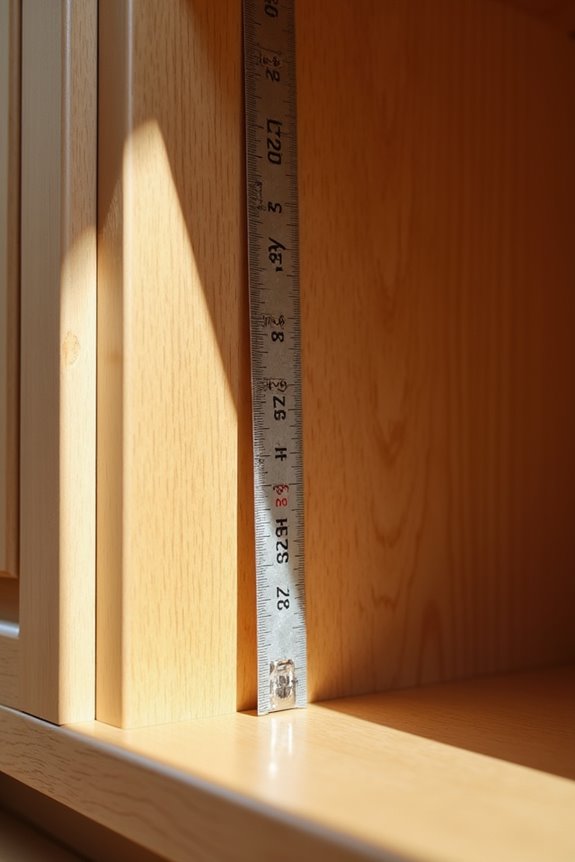
Ready to get the real depth of your base cabinets? You’ll discover three key measurements that matter for your kitchen layouts.
First, measure the wall-to-front depth. This standard depth runs 24 inches from your wall to the cabinet’s front face. Next, check the interior depth—you’ll typically find about 23 inches of usable space inside.
Standard base cabinets measure 24 inches deep from wall to front, with approximately 23 inches of usable interior space.
Don’t forget the countertop overhang. You’ll add roughly 1 to 1.5 inches when your countertop sits on top, bringing your total depth to 25 or 26 inches.
For compact spaces, shallow options exist too. You might choose 12 to 18-inch base cabinet depth instead.
Grab your measuring tape and note these three measurements. Accurate base cabinet depth measurement ensures your kitchen layouts work perfectly for your lifestyle and space constraints.
Wall Cabinet Depth: Clearance and Installation Height
Most kitchens rely on wall cabinets that measure 12 inches deep—a standard that works well for nearly all spaces in North America. You’ll find this standard depth strikes the perfect balance between storage and functionality.
Here’s what you need to know about installation height and clearance:
- 54-inch bottom edge placement — Your upper cabinets sit approximately 54 inches from the floor when paired with 36-inch base cabinets
- 18-inch countertop clearance — This gap between countertop and upper cabinets provides comfortable working space
- 30–42 inch cabinet heights — Standard wall cabinet dimensions accommodate most kitchen designs
- Deeper options require planning — Anything beyond 12 inches needs careful placement around range hoods and microwaves
Getting these measurements right ensures your kitchen functions smoothly and feels spacious.
Accounting for Doors, Hardware, and Countertop Overhang
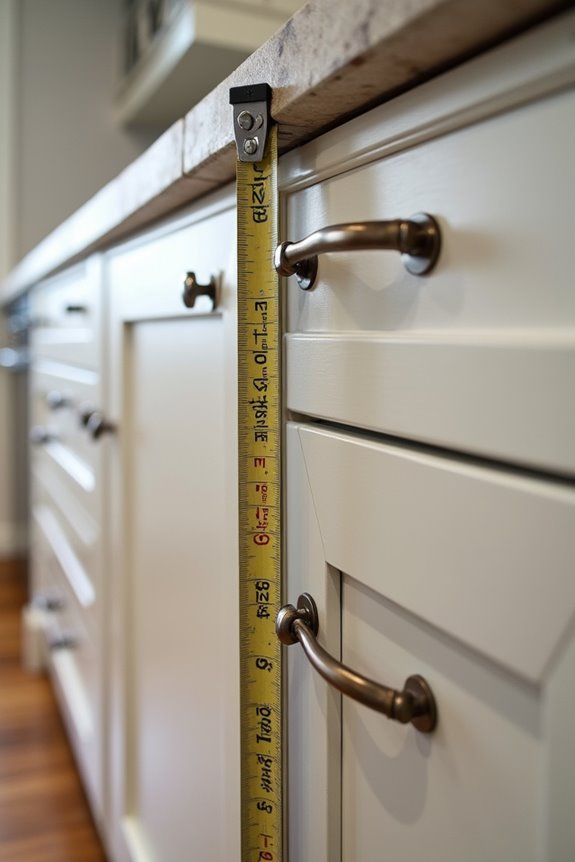
Have you ever noticed that your cabinet’s actual footprint seems bigger than its listed dimensions? That’s because doors and hardware add real depth. Your base cabinet depth of 24 inches grows when you factor in hinges, handles, and the door itself—typically adding 3/4 to 1 inch total. Wall cabinet depth follows the same principle. Doors clearance matters too; you’ll need 1/4 to 1/2 inch extra space per door so they swing freely without hitting adjacent cabinets or walls. Then there’s your countertop overhang, which extends 1 to 1.5 inches beyond the cabinet box, bringing your total base cabinet depth to roughly 25–26 inches. Understanding these additions helps you plan accurate kitchen layouts and avoid costly installation mistakes.
Customizing Depth for Appliances and Islands
You’ll find that standard 24-inch base cabinets don’t always match your appliances or design goals, so customization becomes your best move. Your refrigerator, range, or dishwasher might require deeper cabinetry—sometimes pushing toward 30 inches—while islands demand a different approach entirely: typically 24-inch bases with 12–15 inch overhangs for seating and legroom. Getting these measurements right means you’ll maximize storage and function without cramping your workspace or blocking essential clearances.
Appliance-Specific Depth Requirements
Why should you care about appliance depth when planning your kitchen? Mismatched measurements create gaps, uneven countertops, and wasted space. You’ll want to align your appliance depth with your base cabinet depth for a seamless, professional look.
Here’s what you need to know:
- Oven cabinet depth starts at 30 inches wide with 22–24 inch interior dimensions for standard built-in appliances
- Base cabinet depth typically measures 24 inches, matching most appliance requirements perfectly
- Refrigerator surround depth reaches 24–30 inches, accommodating 30–36 inch deep units with flush panels
- Built-in appliances need aligned cabinetry plus spacers or panels for that polished appearance
Measuring your appliance depth first prevents costly mistakes. You’ll avoid awkward overhangs and create the integrated kitchen you deserve.
Island Cabinet Configuration Options
When designing an island, depth matters just as much as width—maybe even more. You’ll typically find island cabinet depths ranging from 24 to 36 inches, depending on your appliance choices and design goals. Most islands use back-to-back 24-inch base cabinets with a 12–15 inch seating overhang, creating a total depth of 36–39 inches.
Your island configuration should balance function with comfort. When matching your island to adjacent counters, align the working side at 24 inches for efficient workflow. Then add knee clearance on the seating side with that additional overhang.
For built-in appliances like ovens or refrigerators, you’ll need deeper configurations. Custom options extend beyond standard depths to 30 inches or more, requiring careful planning for door swings and walkway access throughout your kitchen.
Making Your Cabinets Easier to Reach and Use
How’s this for a kitchen upgrade: positioning your cabinets so everything you need is actually within arm’s reach?
You can transform your kitchen’s reachability with smart measurement and placement strategies:
- Adjust upper cabinets to sit 15–18 inches above countertops, balancing accessibility with usable counter space
- Lower upper cabinets or raise base cabinets so items fall within your comfortable reach zone of 31–43 inches
- Choose shallower base cabinets (12–18 inches deep) for improved access in compact kitchens
- Install pull-out drawers in tall cabinets to eliminate stretching and searching
Cabinet accessibility isn’t just about comfort—it’s about creating a kitchen that works *for* you. By optimizing dimensions and depth considerations, you’ll reduce frustration and improve daily functionality. These practical adjustments transform cabinet usage into something effortless and intuitive.
US vs. European Cabinet Standards: Key Differences
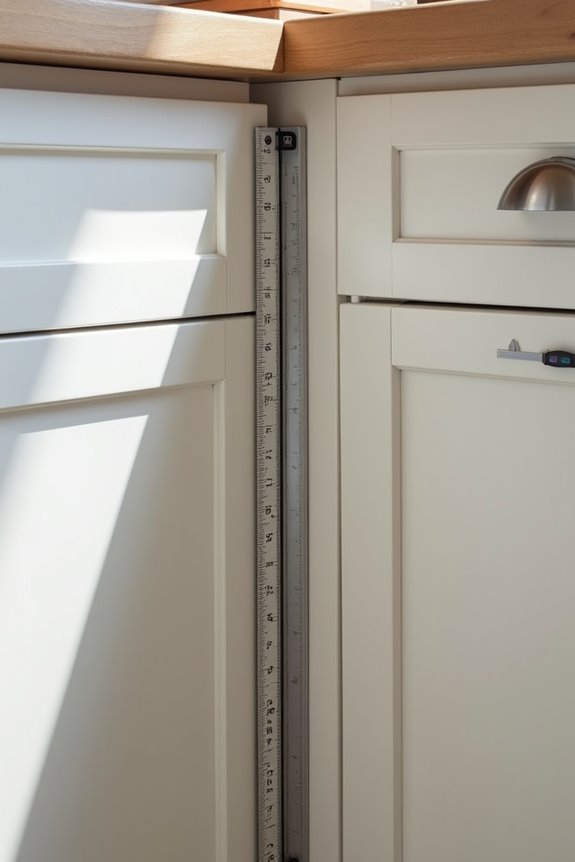
Ever notice that kitchen cabinets look slightly different depending on where they’re made?
That’s because the US and Europe follow different cabinet dimensions standards. You’ll find that US base cabinet depth typically measures 24 inches, while European versions run about 22–23.6 inches. Wall cabinet depth differs too: American 12-inch wall cabinets contrast with European 12–14.5-inch options.
| Measurement | US Standard | European Standard |
|---|---|---|
| Base Cabinet Depth | 24 inches | 22–23.6 inches |
| Wall Cabinet Depth | 12 inches | 12–14.5 inches |
| Working Depth | 25–26 inches | 25–26 inches |
| Width Increments | 3-inch steps | Metric-based |
| Total Countertop Depth | ~25–26 inches | ~25–26 inches |
Despite these US vs European standards differences, both deliver similar working depth when you add countertop overhang. Width increments vary significantly though. American cabinets increase by three inches, whereas European measurements align with centimeters. Understanding these cabinet dimensions helps you choose the right fit for your space.
From Measurements to Your Final Cabinet Order
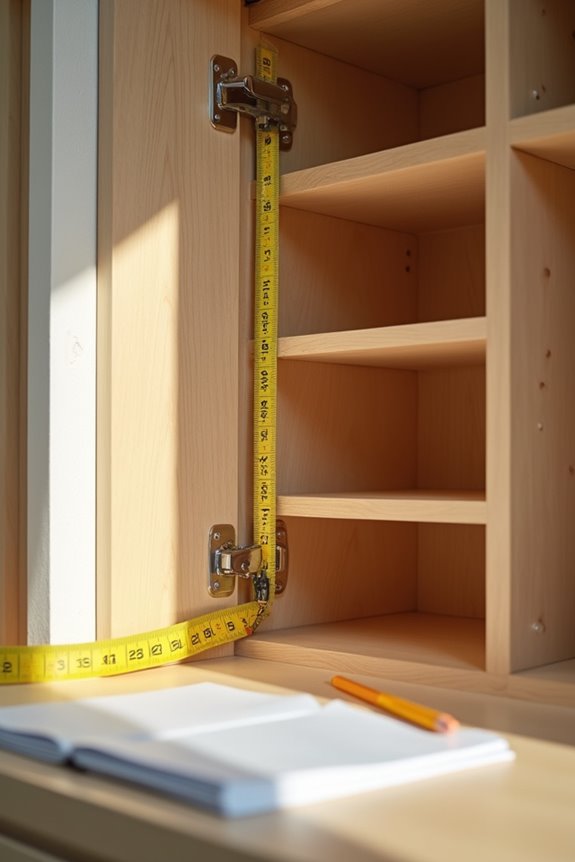
Once you’ve gathered all your kitchen measurements, you’ll convert those numbers into the cabinet specifications that manufacturers actually need—widths in 3-inch increments, depths matched to your appliances and countertops, and heights tailored to your space. You’ll then document everything clearly, organizing your findings so you can spot any inconsistencies or obstructions that might affect your order. Finally, you’ll finalize those cabinet details with your supplier, ensuring your base cabinets sit at 24 inches deep, your wall units at 12 inches deep, and everything coordinates properly for installation.
Documenting Your Kitchen Measurements
Why does jotting down your measurements matter so much? You’re creating your kitchen’s blueprint. Without proper documentation, you’ll face costly ordering mistakes and installation headaches. Here’s how to organize your dimensions effectively:
- List every cabinet space with width, height, and depth measurements
- Note wall cabinet sections, gaps, and any obstructions along the run
- Record base cabinet height (typically 34.5 inches) and countertop clearance (usually 18 inches)
- Create a scaled drawing on graph paper marking cabinet footprints and appliance openings
Your measurements become your contract with reality. Mark electrical outlets, plumbing features, and door swing spaces on your drawing. This scaled drawing guides final cabinet ordering and prevents surprises during installation. You’re not just measuring—you’re building confidence in your project’s success.
Converting Measurements To Cabinet Specs
How do your raw measurements transform into actual cabinet orders? You’ll match your space dimensions to standard cabinet depths and widths, creating a personalized blueprint for your kitchen.
Base cabinets typically measure 24 inches deep with 23 inches of interior depth. When you add countertop overhang, your total depth reaches 25–26 inches—the sweet spot for functionality. Wall cabinets come standard at 12 inches deep, though deeper 24-inch options exist for increased storage.
Next, select widths in 3-inch increments: 12, 15, 18, 21, or 24 inches. These standard dimensions ensure your cabinets fit (replaceable word) together.
Finally, verify heights. Base cabinets stand 34.5 or 36 inches tall with countertops included. Wall cabinets range 30–42 inches. This measurement conversion process bridges your kitchen’s unique layout and your final cabinet order.
Finalizing Your Cabinet Order Details
Now comes the moment when your measurements become an actual cabinet order—and getting this part right means the difference between a kitchen that fits perfectly and one with awkward gaps.
Your cabinet measurements convert into standardized SKUs that manufacturers stock. You’ll specify:
- Cabinet type and exact widths (12″, 24″, 36″)
- Heights (34.5″ base or 30–42″ wall units)
- Depth customization options (12–30″ depending on your layout)
- Door swing direction, interior configuration, and hardware placement
Don’t forget critical spacing details. Account for countertop overhang (1–1.5″) and toe kick space (3–4″) when finalizing dimensions. These affect how appliances and sinks fit inside.
Your final order plan documents everything precisely. This detailed blueprint ensures you’re ordering exactly what your kitchen needs—nothing generic, nothing forced.