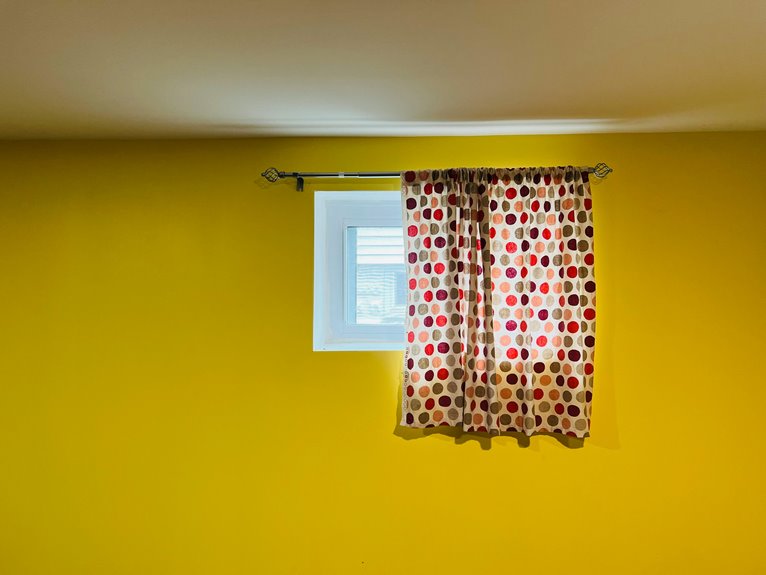
Grab a metal measuring tape, pencil, level, and stepstool—you’ll need precision tools. First, decide between inside or outside mounting since this changes everything about your measurements. Next, measure your width and height based on your chosen mount type. Then multiply your rod width by a fullness factor (1.5x to 2x) to determine fabric needed. Finally, pick your curtain length—sill, full, or puddle—and you’re ready to order. Each step builds on the last, creating the foundation for perfectly hung curtains that’ll transform your space.
Step 1: Gather Your Tools and Measure to 1/8 Inch Precision

Before you even approach your window, you’ll want to gather the right equipment. A metal measuring tape is essential—it won’t stretch like fabric ones do. You’ll also need a pencil for marking, a stepstool for reaching, and a level to keep everything straight.
A metal measuring tape, pencil, stepstool, and level are essential tools before measuring your windows for curtains.
These tools matter because accurate curtain measurements determine whether your new curtains hang perfectly. Measure to the nearest 1/8 inch rather than rounding. This precision prevents costly mistakes when ordering.
Decide your mounting type first: inside mount or outside mount. Inside mount uses your window width as the base measurement. Outside mount adds 6–12 inches total for side clearance beyond the window width.
Write everything down immediately. Double-check all measurements at multiple points to account for variations in your trim and level surfaces.
Step 2: Choose Your Mount Type (This Affects Your Measurements)
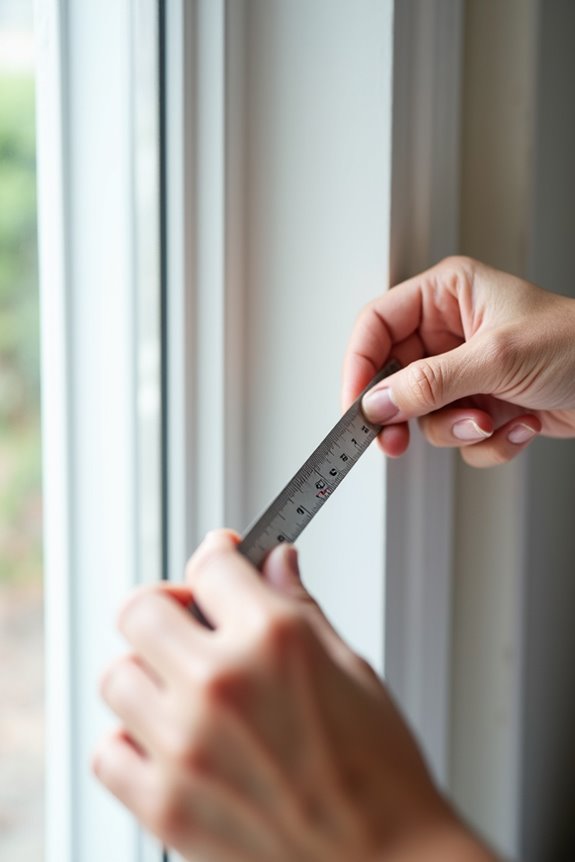
Why does your mounting choice matter so much? Your decision between inside mount and outside mount fundamentally changes how you’ll measure everything else. These aren’t interchangeable options—they require different measurement methods and produce distinctly different results.
Inside Mount vs. Outside Mount
Inside mounts fit snugly within your window frame trim, using only your window width and window height measurements. Outside mounts sit beyond the frame, extending 6–12 inches on each side for light clearance and a full look.
Why This Matters for Rod Length
Your mounting method directly determines your rod length and bracket placement. Inside mounts need less material. Outside mounts require additional width for side clearance and visual impact. Understanding this distinction now prevents costly remeasuring later and ensures your curtains hang perfectly.
Step 3: Measure Window Width and Height for Your Mount Style
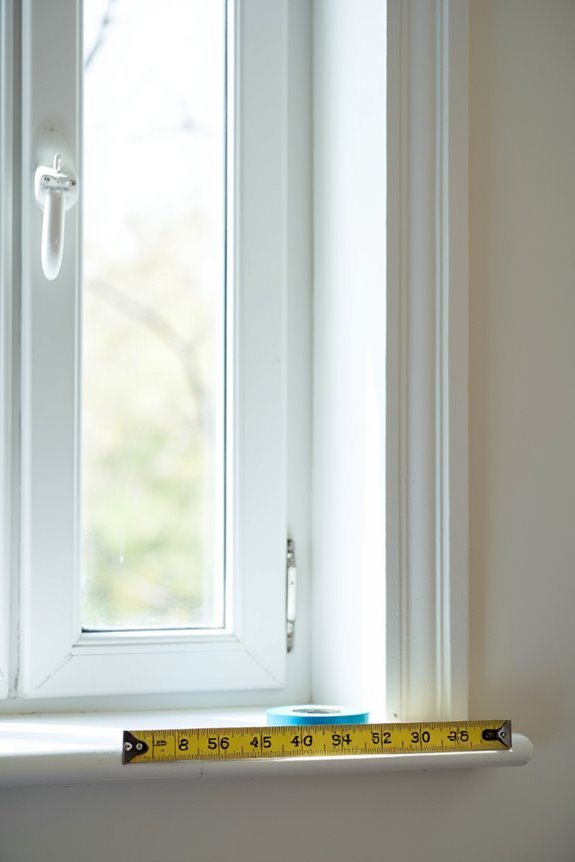
Now comes the part where your mount choice actually pays off—the measuring itself. Your mount type determines exactly where you’ll measure, so let’s break down what you need to do for each style.
| Measurement Type | Inside Mount | Outside Mount |
|---|---|---|
| Width | Inside trim to inside trim | Window width plus 6–12 inches total |
| Height | Sash to sill | From desired rod placement point |
| Rod Placement | Within window frame | 6–8 inches from each side |
| Light Control | Limited side light | Better light control when closed |
| Visual Effect | Minimal frame | Wider, more dramatic appearance |
For inside mounts, you’re measuring the actual window opening itself. For outside mounts, you’ll add that extra width for proper rod placement and side clearance. Hold your curtain rod in position before measuring height—this ensures accurate measuring for curtains that’ll hang perfectly.
Step 4: Multiply Your Rod Width by Fullness (1.5x to 2x)

Here’s where your curtains transform from flat fabric to luxurious drapes: you’ll multiply your rod width by a fullness multiplier. This calculation determines how much curtain fabric you actually need.
Finding Your Fullness Option
Standard curtain fabrics typically use a 1.5x to 2x multiplier. A 48-inch window with outside mount might have a 60-inch total rod width. Multiply that by 1.5x, and you’re ordering 90 inches of fabric. Double it to 2x, and you’ll need 120 inches instead.
Thinner materials deserve higher multipliers. Consider 2.5x or even 5x for lightweight fabrics that drape beautifully. Your chosen fullness directly impacts how your curtains stack when open and how elegantly they fold when closed.
Step 5: Pick Your Curtain Length and Order With Confidence
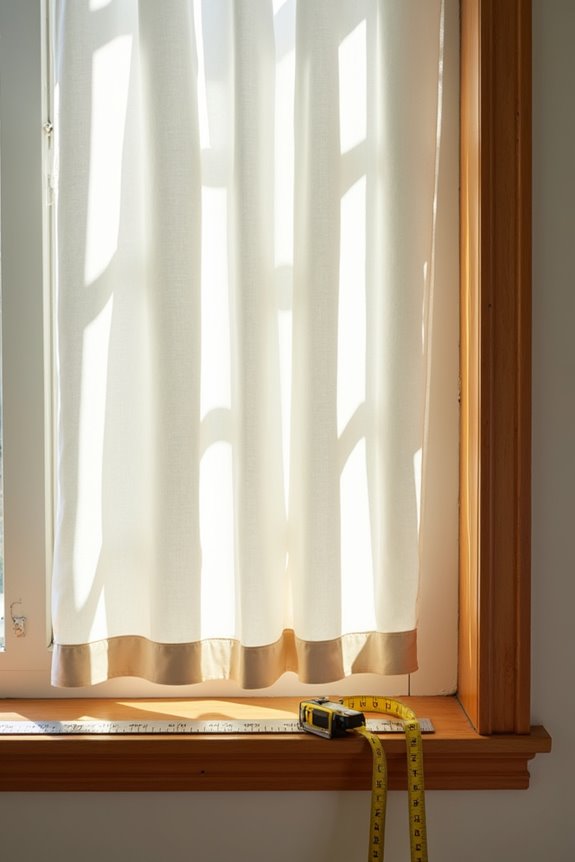
Once you’ve calculated your fabric width and fullness, the final measurement—curtain length—determines whether your drapes look polished or awkward.
The final measurement—curtain length—determines whether your drapes look polished or awkward.
You’ll choose from three drop categories. Sill length ends about 1 inch above the windowsill for a clean, tailored look. Full length reaches approximately 1 inch above the floor, creating an elegant, elongated effect. Puddle length extends 1–3 inches onto the floor for dramatic, luxurious styling.
Measure from your rod/track height down to your desired endpoint. Remember, your header—whether tab top, rod pocket, or header tape—counts toward the total curtain length. Don’t include ties in your measurement.
Once you’ve identified your drop category and measured accordingly, you’re ready to order confidently knowing your curtains will fit perfectly.