
You’ll want to choose eggshell or satin for most living rooms—they balance durability, washability, and subtle light reflection. Eggshell hides imperfections while creating a soft glow; satin brightens spaces with easier cleaning. Flat finish deepens colors for calm, sophisticated rooms but sacrifices durability. Consider your lighting: bright rooms benefit from lower sheens to prevent glare, while dimly lit spaces need satin or semi-gloss for warmth. Test samples on your actual walls across different times of day to see how light transforms your chosen color before committing.
What Is Paint Sheen and Why It Matters

Ever wonder why the same paint color looks completely different on your neighbor’s walls than it does on yours? The answer lies in sheen levels—how much light your paint reflects back into the room.
Think of sheen as a spectrum. Flat finishes absorb light, hiding wall imperfections beautifully. Semi-gloss and gloss options reflect significantly more light, creating that signature shine you’ll notice immediately.
Here’s what makes sheen matter for your living room: higher sheen levels offer superior finish durability and cleanability, meaning you can wipe away marks without damaging the paint. Lower sheens forgive bumpy walls but require gentler care.
The real game-changer? That same color appears lighter or darker depending on your chosen sheen and room lighting. Understanding this relationship helps you select finishes that work together, creating cohesion throughout your space while meeting your practical needs.
Sheen’s Impact on Color and Light in Your Living Room
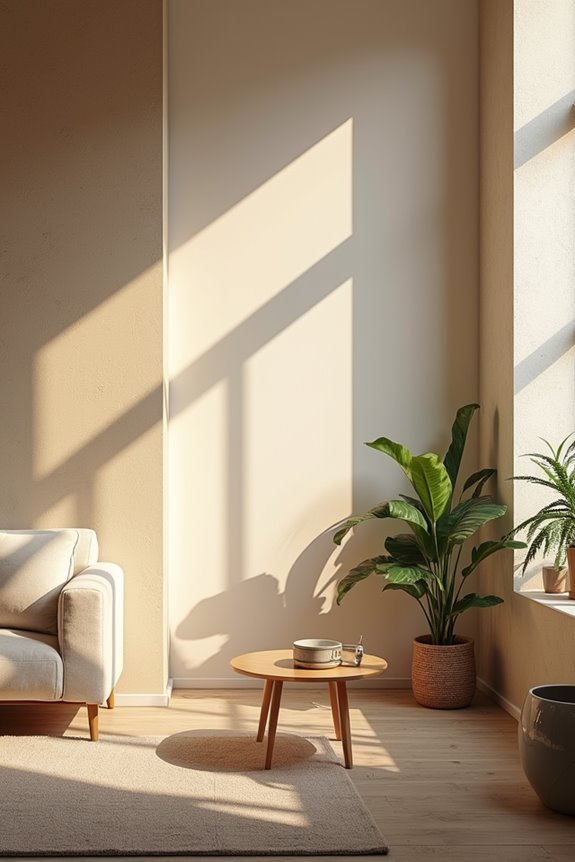
You’ll notice that the same paint color looks noticeably different depending on sheen level—glossier finishes reflect more light, making colors appear lighter and more vibrant than flat finishes. Your choice of sheen directly influences how your living room feels: a satin or eggshell creates a soft, welcoming glow, while semi-gloss options demand attention to wall imperfections and can feel too bright for relaxation. Strategic sheen pairing, like flat walls with glossy trim, lets you control where light lands and which colors truly command your space.
How Light Reflects Differently
Why does the same paint color look completely different in your friend’s living room than it does in yours? The answer lies in how paint sheen interacts with light reflection in your specific space.
Higher sheen finishes bounce more light around your room, making colors appear brighter and more vibrant. Lower sheens absorb light instead, letting pigments look deeper and more saturated. Your lighting conditions dramatically shift these effects. East-facing windows flood rooms with cool morning light, while west-facing exposure brings warm afternoon rays. Even your chair-side lamp creates different color perception depending on sheen choice.
Sampling paint on your actual walls matters tremendously. Test multiple times throughout the day. Morning, afternoon, and evening lighting each reveal how your chosen paint sheen truly performs in your living room’s unique environment.
Color Appearance Across Sheens
Now that you understand how light bounces around your room, it’s time to see how sheen actually changes the way your paint color looks on the wall. Your color perception shifts dramatically based on sheen levels. A flat finish deepens and mutes your chosen color, creating calm, sophisticated spaces. Eggshell and satin sheens brighten colors moderately while maintaining some depth. Semi-gloss finishes make colors appear lighter and more vibrant through increased light reflection.
The same paint color reads completely differently depending on sheen. This happens because higher sheens create specular highlights that amplify brightness. Consider your lighting conditions carefully. Rooms flooded with natural light benefit from satin or semi-gloss sheens that enhance that brightness. Dimmer spaces work better with flat or matte finishes, which preserve perceived color richness and warmth.
Creating Ambiance With Sheen
How does light dance across your living room walls? Your choice of sheen ambiance directly shapes the mood you’re creating. Higher sheens bounce more light around your space, making colors appear brighter and more energetic. Lower sheens absorb light, creating cozy, intimate feelings instead.
Consider your living room lighting. Bright natural sunlight pairs well with eggshell or satin finishes, which offer gentle light reflection without glare. These wall finish options enhance color depth beautifully while maintaining visual comfort.
In dimly lit rooms, slightly higher sheens help distribute artificial light more evenly, preventing dark corners. You’re essentially controlling how your space feels—energized or relaxed, open or enclosed.
The right sheen transforms your walls from simple backdrops into atmospheric elements that support your lifestyle and preferences perfectly.
The Best Sheens for Most Living Rooms: A Quick Recommendation

When you’re standing in the paint aisle staring at dozens of finish options, here’s the truth: eggshell and satin are your reliable picks for living room walls.
Both deliver balanced aesthetics without demanding perfection from your walls. Here’s why they work:
- Eggshell provides soft glow and hides imperfections while maintaining subtle sophistication
- Satin boosts light reflectivity and durability, protecting walls in everyday spaces
- Contrast potential pairs eggshell walls beautifully with semi-gloss trim for visual depth
You’ll appreciate their practical nature. Eggshell offers versatility across different lighting conditions. Satin resists cleaning marks better in high-traffic zones without looking overly shiny.
Neither choice feels wrong. Both create welcoming spaces that work with your lifestyle, not against it.
Flat Finish: Maximum Depth and Hiding Imperfections
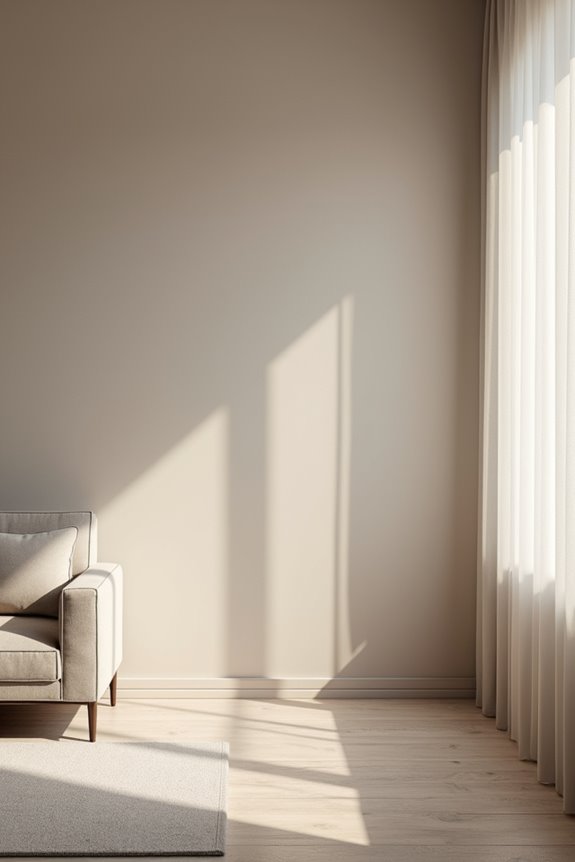
If your living room walls aren’t perfect—and honestly, whose are?—flat paint might be your answer. This finish hides imperfections brilliantly, masking minor cracks and uneven surfaces that other sheens would expose. You’re creating a forgiving canvas.
Flat finish delivers maximum depth and color saturation. Dark, richly pigmented colors appear velvety and immersive, transforming your space into something truly sophisticated. The paint absorbs light rather than reflecting it, which emphasizes texture and architectural details you’ve worked hard to showcase.
However, understand the trade-off. Flat paint’s lower durability means it stains more easily and requires careful cleaning in high-traffic living room areas. This finish works best on walls where durability matters less than visual impact. You’re choosing depth and elegance over practicality.
Matte Paint: Subtle Sophistication Without Shine
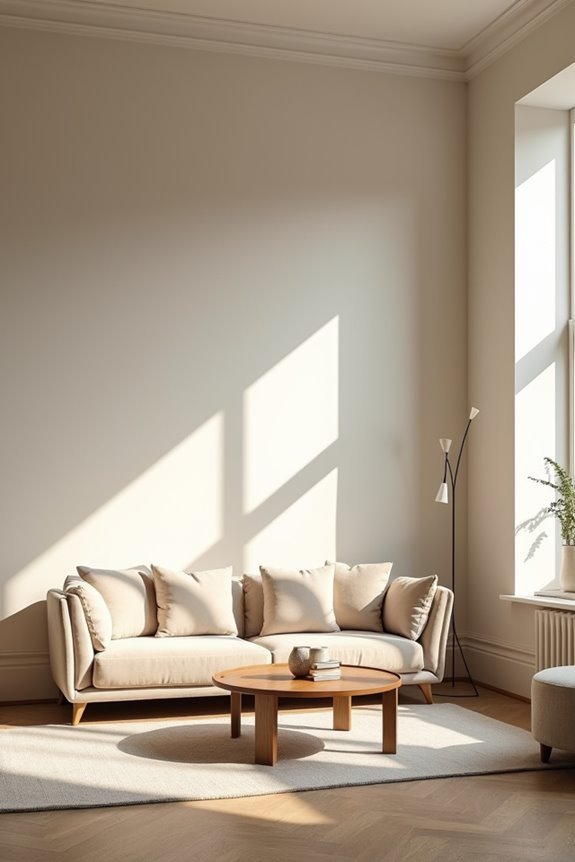
When you choose matte paint, you’re investing in rich, saturated colors that stay true without bouncing light around your living room. You’ll notice the depth and mood enhance naturally, though you should know that matte finishes demand a bit more care than glossier options—modern formulations are now washable and scrubbable, making them surprisingly practical for high-traffic spaces. The trade-off is worth considering: superior color richness and imperfection-hiding power in exchange for moderate durability that holds up well with regular maintenance.
Depth And Color Saturation
How do you create a living room that feels both inviting and refined? Matte finishes hold that answer through their unique relationship with light. When you choose matte, you’re selecting a paint that absorbs light rather than bouncing it back. This absorption transforms your color choices dramatically.
Your walls won’t just look different—they’ll feel deeper. Here’s what happens:
- Colors appear warmer and more muted than glossier finishes
- Light reflection decreases, enhancing wall paint durability perception
- Depth increases, creating sophisticated visual richness
Because matte minimizes shine, your chosen color saturation reads as more saturated yet subtle. Natural light won’t wash out your walls or create distracting reflections. Instead, you’ll notice how architectural details emerge without highlighting imperfections. This balance makes matte ideal for spaces where you want color to whisper rather than shout.
Maintenance And Durability Considerations
The trade-off with matte paint is real: you’re gaining sophisticated aesthetics while sacrificing some practical durability. You’ll find that matte finishes resist frequent washing far less effectively than eggshell or satin options, meaning touch-ups become routine maintenance rather than occasional tasks.
| Sheen Type | Cleaning Resistance | Durability | Touch-Up Frequency |
|---|---|---|---|
| Matte | Low | Lower | Often |
| Eggshell | Moderate | Moderate | Sometimes |
| Satin | High | High | Rarely |
Your living room’s traffic level determines whether you’ll embrace or regret matte finish durability. High-traffic spaces benefit from strategic trim pairing—using semi-gloss on trim while keeping matte walls creates practical balance. You’re essentially protecting vulnerable areas while maintaining that luxurious, rich color depth you love on expansive wall surfaces where wear and tear accumulates slowly.
Eggshell Sheen: The Versatile Middle Ground

Looking for a paint finish that strikes the perfect balance? Eggshell sheen delivers exactly that for your living room. It’s the Goldilocks option—not too flat, not too glossy.
Here’s why you’ll want eggshell in your space:
- Superior washability – You’ll clean scuffs and marks easily without damaging the finish
- Subtle light reflection – It creates a soft glow, enhancing color depth while hiding surface imperfections
- Long-lasting durability – High-traffic living rooms benefit from its resilient coating
Eggshell reflects more light than matte finishes, giving your walls dimension and warmth. Yet it shows fewer reflections than satin, keeping things understated. This sheen works wonderfully for families seeking a forgiving, low-maintenance solution. You’ll appreciate how it balances practicality with that polished, intentional look without demanding constant upkeep.
Satin Finish: When You Need Easy Cleaning
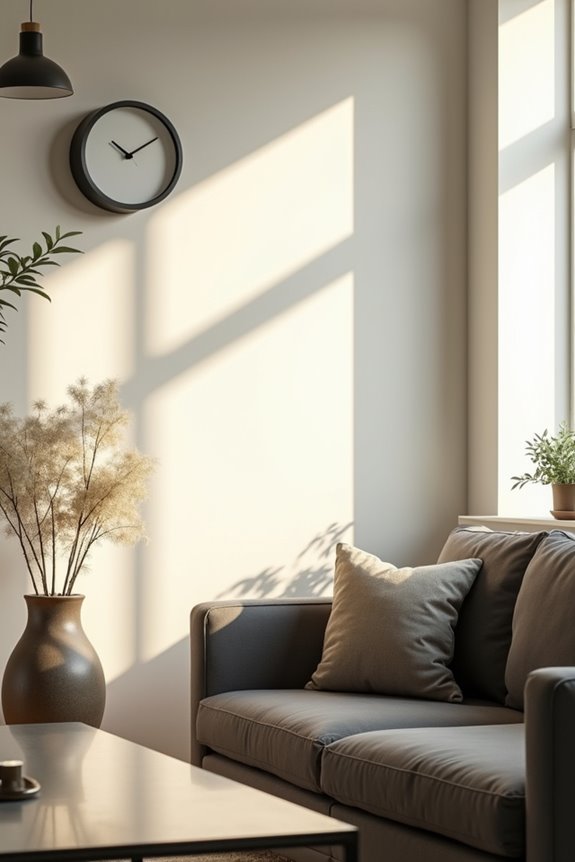
If you’re willing to step up from eggshell’s subtle sheen, satin paint can handle what your living room throws at it. You’ll get a finish that’s shinier than eggshell but still maintains a balanced, soft appearance.
Here’s what makes satin finish practical: superior stain resistance and effortless cleaning. Spilled coffee, dusty fingerprints, and scuff marks wipe away easily with a damp cloth. That durability makes satin ideal for high-traffic living spaces where life actually happens.
The light reflection from satin finish brightens your room without creating harsh glare. Your walls feel open and welcoming on living room walls, enhancing natural and artificial light beautifully.
One trade-off exists: satin reveals wall imperfections more readily than flat paint. Invest time in proper surface prep beforehand, and you’ll love the results.
Semi-Gloss on Trim: Creating Visual Contrast

Why does semi-gloss work so well for trim when flat finishes dominate your living room walls? The answer lies in sheen contrast—that strategic visual pop that makes your architectural details shine.
Semi-gloss trim creates professional-looking definition against matte or flat walls. Here’s what you’re gaining:
- Durability that withstands daily wear on baseboards and door frames
- Wipeable surfaces that resist fingerprints and dust buildup
- Enhanced architectural profiles that catch light and stand out
The noticeable shine highlights trim details without overwhelming your space. This balanced approach feels intentional, designer-quality. Just remember: semi-gloss reveals imperfections more readily than flatter finishes, so invest time in proper surface preparation. Different brands label trims differently, so verify exact sheen names before purchasing. You’ll appreciate the polished results.
Paint Your Walls and Trim Differently: Here’s Why

Should you really paint every surface in your living room the same way? The short answer is no. Your walls and trim serve different purposes, so they deserve different sheens.
| Surface | Best Sheen | Why |
|---|---|---|
| Walls | Flat or Eggshell | Hides imperfections and texture |
| Trim | Semi-gloss or Gloss | Resists moisture and stains |
| Doors | Semi-gloss | Withstands daily wear |
Lower sheen on walls creates depth and visual warmth. Higher sheen on trim highlights architectural details while offering superior durability and maintenance benefits. Semi-gloss trim resists fingerprints, dust, and moisture far better than flat finishes. You’ll spend less time cleaning and more time enjoying your space. This strategic contrast transforms ordinary rooms into thoughtfully designed spaces that look intentional and polished.
Best Sheens for High-Traffic Living Rooms
High-traffic living rooms need paint that actually stands up to real life—spills, fingerprints, pet paws, and constant foot traffic. You’ll want durability paired with easy-to-clean surfaces that won’t stress you out.
Your best choices are:
- Eggshell finish — offers soft, mid-level sheen with excellent durability and minimal maintenance
- Satin finish — provides more reflectivity than eggshell, enhancing natural light while maintaining easy cleaning
- Flat or matte — avoid these; they’re fragile and frustratingly difficult to clean
Satin does show wall imperfections more readily, so ensure your walls are prepped well. Both eggshell and satin balance practicality with warmth, creating spaces that look intentional while handling whatever your household throws at them. You’re investing in surfaces that work as hard as you do.
Adjusting Sheen Based on Your Natural Light
Your room’s light exposure fundamentally changes which sheen works best, so you’ll want to match them strategically. Bright, south- or east-facing rooms need lower sheens like flat or eggshell to prevent color washing and glare, while darker north-facing spaces actually benefit from satin or semi-gloss finishes that add warmth and visual depth. Since sunlight shifts throughout the day, you should test paint samples under your actual lighting conditions at different times to confirm the color and sheen hold their intended look from morning through afternoon.
Bright Rooms Require Lower Sheen
Why does that gorgeous paint color look completely different when sunlight floods your living room? Bright rooms demand low-sheen finishes like flat or matte paint. Here’s why this matters for your space:
- Prevents glare and color washing. Reflective finishes bounce light around, dulling your carefully chosen colors in natural sunlight.
- Maintains depth and richness. Low-sheen options preserve the true pigment you selected, keeping walls looking intentional and cohesive.
- Hides imperfections gracefully. Glossy surfaces highlight dust and bumps, while matte finishes stay forgiving throughout the day.
Consider pairing low-sheen walls with glossier trim for subtle contrast. Eggshell or satin work as middle-ground choices if you want slight softness without amplifying brightness. In bright rooms, restraint with sheen creates the professional, welcoming atmosphere you’re after.
Dark Spaces Benefit From Gloss
What happens when you paint a dim living room with the same flat finish you’d use in a sun-drenched space? You’ll trap light instead of bouncing it around. Dark rooms need higher-sheen finishes—think eggshell, satin, or semi-gloss—because they reflect more light and brighten your space naturally.
| Finish Type | Light Reflection | Best For Dark Rooms? |
|---|---|---|
| Flat | Minimal | No—darkens space |
| Eggshell | Moderate | Yes—good balance |
| Semi-gloss | High | Yes—excellent brightness |
Satin and semi-gloss enhance color depth while staying easier to clean than flat options. Skip high-gloss on walls though; it’s too reflective and shows every imperfection. These finish choices transform dark rooms into brighter spaces, helping you create the welcoming home you deserve.
Time Of Day Matters
Ever noticed how the same wall color looks completely different at 8 a.m. versus 3 p.m.? Natural light transforms your living room throughout the day, and your paint sheen choice directly impacts this transformation.
Morning sun hitting your walls differently than afternoon daylight means you’ll want to think strategically:
- East-facing rooms benefit from lighter sheens (flat to eggshell) that soften morning sun without overwhelming brightness
- Midday and afternoon light emphasizes satin or semi-gloss finishes, creating noticeable gloss differences and increased contrast
- Strong daylight at 2–3 p.m. can wash out lower-sheen walls, making subtle undertones either pop or disappear entirely
Higher-sheen finishes reflect more light, boosting perceived brightness. Pairing flat walls with glossier trim balances daylight reflections across all hours, creating consistent mood without dramatic shifts. Your sheen choice becomes your light control strategy.
Multi-Sheen Strategies for Monochromatic Living Rooms
How do you add visual interest to a room painted in a single color? You strategically layer different sheens. Start with eggshell on your walls—it’s durable, cleans easily, and offers a subtle glow that feels inviting. Then introduce satin or semi-gloss on trim, millwork, and crown molding to create depth and highlight architectural details.
This contrast matters. Pairing flat walls with glossier trim prevents awkward mid-range sheen mismatches that flatten your space. In open-concept living rooms, consider satin ceilings with eggshell walls. This combo maximizes light reflection while keeping your monochromatic scheme cohesive and unified.
Plan your sheen strategy before painting. Know where each finish goes. This approach transforms a single-color living room from boring into sophisticated and intentional.
Why Paint Sheen Dulls Over Time (and How to Prevent It)

Your beautifully layered sheen strategy—that eggshell wall paired with glossy trim—won’t stay perfect forever. Sheen dulling happens gradually as wear resistance weakens through daily life. Foot traffic, cleaning, and sunlight exposure create micro-scratches that scatter light differently, making colors appear lighter and duller.
Higher-gloss finishes show wear sooner than flat or eggshell options. You’ll notice the change faster on semi-gloss trim than on matte walls.
Protecting Your Finish
Smart cleaning impact matters tremendously. Use non-abrasive cleaners and gentle techniques:
- Avoid aggressive scrubbing that accelerates surface deterioration
- Remove dust regularly with soft cloths to prevent dirt buildup
- Choose pH-neutral cleaners designed for painted surfaces
Restoring Gloss Retention
Topcoat refreshment restores brightness effectively. Recoating with matching sheen levels prevents long-term dulling and keeps your layered design looking intentional and fresh for years ahead.
Fixing Uneven Sheen
When light hits your living room walls unevenly, you’ve probably spotted the culprit: mismatched sheens creating visible glare or dull patches where they shouldn’t exist. You’re not alone in noticing this frustration.
Identifying the Problem
Uneven sheen uniformity stems from varied number of coats, rushed surface prep, or previous repairs absorbing finish differently. Adjacent areas reflect light inconsistently, making transitions between walls and trim painfully obvious.
Your Solution Strategy
Repaint affected sections with matching finish to restore uniform light reflection. Test samples on small wall areas first, observing how your room’s lighting affects the sheen throughout different times of day. Proper surface prep prevents future inconsistencies. Apply consistent coats across all surfaces for seamless results that enhance your space’s polished appearance.
Test Paint Samples Before You Commit
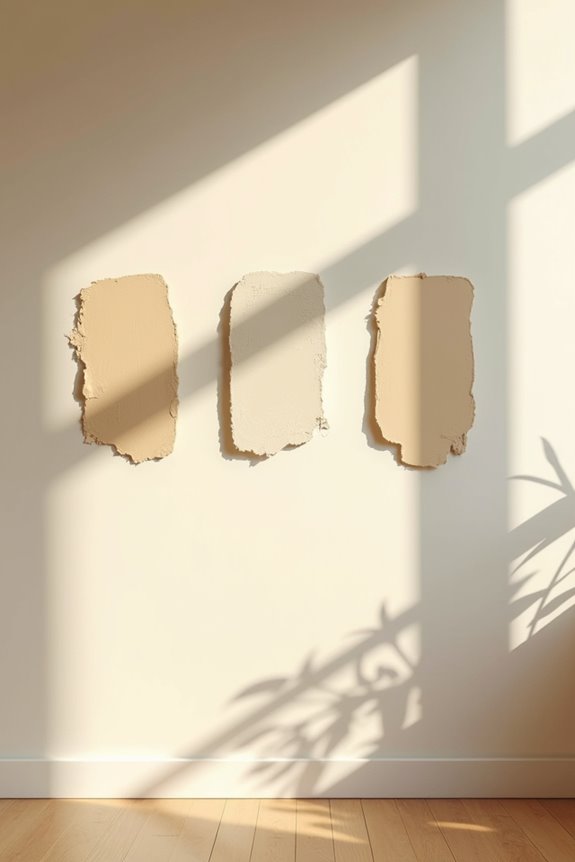
Once you’ve fixed those uneven sheens, the smartest move is testing your paint choices on your actual walls before buying five gallons. Paint samples reveal how light, color, and room conditions truly affect your final look.
Here’s your testing approach:
- Apply large patches (at least 4×4 feet) rather than small swatches to accurately gauge how finishes handle your walls and texture
- Compare two to three sheens on the same color to observe reflectivity testing and perceived color depth differences
- Observe samples under both natural vs artificial light at different times to catch color shifts
Label each sample clearly with sheen and finish names. This prevents confusion during selection. You’ll spot how eggshell, satin, and semi-gloss perform differently in your specific space. Testing eliminates expensive mistakes and builds your confidence in choosing the right sheen.